 Subscribe for ad free access & additional features for teachers. Authors: 267, Books: 3,607, Poems & Short Stories: 4,435, Forum Members: 71,154, Forum Posts: 1,238,602, Quizzes: 344
Foreword
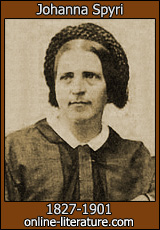
Many writers have suffered injustice in being known as the author of but one book. Robinson Crusoe was not Defoe's only masterpiece, nor did Bunyan confine his best powers to Pilgrim's Progress. Not one person in ten of those who read Lorna Doone is aware that several of Blackmore's other novels are almost equally charming. Such, too, has been the fate of Johanna Spyri, the Swiss authoress, whose reputation is mistakenly supposed to rest on her story of Heidi.
To be sure, Heidi is a book that in its field can hardly be overpraised. The winsome, kind-hearted little heroine in her mountain background is a figure to be remembered from childhood to old age. Nevertheless, Madame Spyri has shown here but one side of her narrative ability.
If, as I believe, the present story is here first presented to readers of English, it must be through a strange oversight, for in it we find a deeper treatment of character, combined with equal spirit and humor of a different kind. Cornelli, the heroine, suffers temporarily from the unjust suspicion of her elders, a misfortune which, it is to be feared, still occurs frequently in the case of sensitive children. How she was restored to herself and reinstated in her father's affection forms a narrative of unusual interest and truth to life. Whereas in Heidi there is only one other childish figure--if we except the droll peasant boy Peter--we have here a lively and varied array of children. Manly, generous Dino; Mux, the irrepressible; and the two girls form a truly lovable group. The grown-ups, too, are contrasted with much humor and genuine feeling. The story of Cornelli, therefore, deserves to equal Heidi in popularity, and there can be no question that it will delight Madame Spyri's admirers and will do much to increase the love which all children feel for her unique and sympathetic genius.
CHARLES WHARTON STORK
| Art of Worldly Wisdom Daily In the 1600s, Balthasar Gracian, a jesuit priest wrote 300 aphorisms on living life called "The Art of Worldly Wisdom." Join our newsletter below and read them all, one at a time. |
Sonnet-a-Day Newsletter Shakespeare wrote over 150 sonnets! Join our Sonnet-A-Day Newsletter and read them all, one at a time. |
