Originally Posted by Dark Muse

pffwwww. I picked this book up several times, I'm glad I didn't buy it. I did however get it free for my Kindle, luckily that can be easily remedied.





pffwwww. I picked this book up several times, I'm glad I didn't buy it. I did however get it free for my Kindle, luckily that can be easily remedied.
Do, or do not. There is no try. - Yoda
Dickens is depressing??? Practically all of his novels have a nauseatingly happy ending!
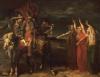
A Tale of Two Cities, all that death in the French Revolution and ends with a man sacrificing his life for another?
All the despair shown in the workplace and abuse in Oliver Twist and David Copperfield?
Even the greed in A Christmas Carol which was NOT written so much to be the easy-TV morality play it is, but rather a commentary on folks like Scrooge and how they think..."decrease the surplus population" and all that.
There isn't the adjective "Dickensian" for nothing...
The worst I've ever read?
Well, I read plenty of schlock books in high school because they required them (yes, that's good education...) but the "classic" that I honestly felt was the worst of that kidn that I've read, that I really would dispute calling a classic?
Ethan Frome by Edith Wharton.
ATROCIOUS pacing.
OVERLY-DESCRIPTIVE (and this from someone who doesn't care for that style from Hawthorne or Conrad but can at least respect that their form is decent, THIS is just a mess, description over storytelling.)
FLAT dialogue.
STILTED description (add that to the fact I think there's TOO MUCH description, and you can begin to see why I loathe this book so.)
DULL protagonist (I understand Frome is a very reserved man, but really he gomes across as being so reserved and so introverted that he honestly is not a very relatable character, his SITUATION is relatable, loves a woman that's not his wife and that wife is not-so-nice, but really we can identify with that not because Wharton makes Frome identifiable but because that's an age-old theme for mankind and literature itself, everyone from Homer to Shakespeare to the moderns have used that, FROME is just not a dynamic character.)
The ONLY thing I can credit Wharton for is her setting, not only where and when but the wintery scenery she plays Ethan Frome agaisnt, really does come across as not only a believable setting but also very much approporiate for the despair the novel TRIES to convey, that symbolsim isn't attained effectively as the other elements fall flat, but at least the setting gets us a bit of the way there.
But other than that, Ethan Frome is out in the cold.
Tomorrow and tomorrow and tomorrow...
That's 19th-century England for you. Would you rather he had written about well-fed, happy orphans who play in the meadows all day long? Dickens had to be at least a little bit realistic. At least his novels had a happy ending; most orphans didn't have that happy ending at the time, I assume.
One of the most powerful scenes in all of English literature is that of Sydney Carton giving his life for a man he considers his better, a man who still has a chance at happiness. How could you not love that ending?

300+ responses to the "Worst Book You've Ever Read"... with half the responses or more naming some classic book that has survived the for generations for some reason. Surely the real title of the thread should be "Books I Personally Didn't Like (for whatever reason... but rarely having to do with issues of artistic merit) or Understand."
Beware of the man with just one book. -Ovid
The man who doesn't read good books has no advantage over the man who can't read them.- Mark Twain
My Blog: Of Delicious Recoil
http://stlukesguild.tumblr.com/
Wait...I said all that defending Dickens' work, so...why are you asking ME if I'd rather the orphans were all happy and fed and everything was peachy-keen, I just went on about how thematic Dickens' work is.
I'd challenge that--I understand what Wharton was trying to accomplish with Ethan Frome, I just think she failed as the plot is slow to develop, unrewarding and trite when it does, the pacing is simply atrocious, nearly all of the characters unrelatable, flat, or both, Wharton's obsession with over-narration and over-description make the work feel even more distant, which CAN work if you've a protagonist like Frome who is by his very nature distant, but NOT when the pace and lack of convincing characterization have already made him so distant...
I don't dislike Wharton's work because of a personal reason, or a failure to "understand it," but rather because I view it as an artistic failure on Wharton's part. Wharton was a good writer, but Ethan Frome is simply a failed attempt and, to compound matters, many other, perhaps better writers have done the same sort of story--and better.
Tomorrow and tomorrow and tomorrow...
Catcher in the Rye, J.D. Salinger. Book about a spoiled brat being raised in New York, who's going through puberty and learns how to swear, and it was bad because everyone raves about it like it's mindblowing, and it's just a dated, mediocre, 6th grade reading level book about a spoiled brat whose familiarity with things like unemployment begins and ends with the letters U and T. Really, just a major, major disappointment, and that's what makes it so bad - if it had been a forgotten book, and I'd read it, I'd likely have a different assessment.
To paraphrase a comment about the book on Amazon: Why has everyone told me how fine his threads are when this emperor is wearing no clothes?
Last edited by LuggageFan; 10-18-2010 at 12:16 PM.
The argument from tradition is the weakest argument you could make. Next you'll tell us that Harry Potter is a masterpiece because it sold a jillion copies.
Last Exit to Brooklyn by Hubert Selby Jr.
Written in a terrible style.
Ever since I discovered ray carney, I've wondered if its actually possible to critically challenge any artistic canon. Don't get me wrong I have never hated a classic. At worst, a classic simply does not move me.
I vaguely remember feeling appalled by a copy of I spit on your graves.
Stopped reading it soon afterwards...
The argument from tradition is the weakest argument you could make. Next you'll tell us that Harry Potter is a masterpiece because it sold a jillion copies.
Sorry, but the argument as to the numbers sold is the worst possible argument you could possibly make. If a work survives the ages, on the other hand, it is because generations of literary critics and other "experts", subsequent writers, and subsequent generations of readers have found that the work continues to resonate. Your personal opinions or mine are largely meaningless as to whether a given work will survive as part of the "canon". The fact that a work of art has survived, however, leads one to suppose that it has some real merits whether a given individual is enthralled with the work or not. This does not mean we must, can, or even should be expected to like every work of art that has survived. However, one does open oneself to a certain degree of incredulity when one makes a proclamation that this "classic" novel or that "classic" poem is the "worst book I ever read" (as opposed to simply a book that I disliked). The tradition or canon need not be defended. It is the opinion that challenges the tradition that needs to make a argument that is somewhat better reasoned out than "It was boring" or "It sucks". Lacking this, the first thought that comes to mind when someone declares, "It was the worst book I ever read" is "Hmmm... I wonder what books this person actually has read... and which ones they actually understood."
Beware of the man with just one book. -Ovid
The man who doesn't read good books has no advantage over the man who can't read them.- Mark Twain
My Blog: Of Delicious Recoil
http://stlukesguild.tumblr.com/
Perhaps a lot of people can't really remember the worst books that they've ever read (as worst would imply unremarkable and boring too), but can only recall well-known ones that they didn't like?
I've wondered if its actually possible to critically challenge any artistic canon.
Certainly... but such a criticism demands more than the personal opinion: "I found it boring", "I didn't like the characters" "I didn't like the ending." It must also be understood that a work that has survived as part of the canon has done so because a great number of literary "experts"... be they academics, critics, "common readers" in the manner in which Virginia Woolf defined the term, and subsequent writers... felt and continue to feel the work is of real merit. You may find it difficult to convince these others and of course you open yourself to their counter opinions.
Beware of the man with just one book. -Ovid
The man who doesn't read good books has no advantage over the man who can't read them.- Mark Twain
My Blog: Of Delicious Recoil
http://stlukesguild.tumblr.com/
I find that Erewhon by Samuel Butler is one of the dullest books I've ever read. His satire is mostly amusing; however, his writing is terribly bland. I'd categorize reading Erewhon as cruel and unusual punishment...inflicted by myself, on myself. I suppose I'm a masochist now.
All hail Imperial Majesty Emperor Norton I, Emperor of the United States and Protector of Mexico.
 Posting Permissions


 Reply With Quote