
I don't know why I read! I think it's because I like the way books smell.


I don't know why I read! I think it's because I like the way books smell.
When the tupelo
Goes poop-a-lo
I'll come back to youp-a-lo
- Kilgore Trout
This is not like an animal, but like a human. Animals engage in sex to reproduce, and they don't do drugs and fight only to defend themselves, or defend their territory. Anyway, I think the general population is unhappy because they live these kinds of lives.Originally Posted by WICKES

What a horrible life that would be. You haven't gotten anything out of literature and wisdom if you think that soul killing life would be worth it. Also, saying you must take things in moderation is a contradiction to "doing anything to make money".
My mother is a fish.


Why I read? It is part of my nature to such an extent that I find it difficult to explain "the obvious", but basically it is curiosity. I have this insatiable craving for something to read. I just need it, and get very jittery when I deplete my book stash to much. As you can see I describe it like an addiction, and it is... One I intend to keep.Yes... A coworker once asked what I do in my free time. When I told her that I (among many other things) read an awful lot, she looked at me in a strange way and said: "-My, you must have a boring life..". She actually pitied me...I immediately realized that there was no way I could possibly make her understand what books has to offer me, and that I could not possibly understand her outlook. We were quite literally worlds apart, and had to accept that.
/Claes
Hanlon's Razor: "Never attribute to malice that which can be adequately explained by stupidity."
I seem to have mashed two of my ideas into one post and left it contradictory. I was going to make a point revolving around that but I seem to have forgetten. I am studying finance but have no plans to be an investment banker. My other post is a bit of a mess.
It really annoys me when people say that kind of thing. They have no idea how unbearably boring, petty and predictable people who never read anything of merit often seem to people who do.
I cannot either directly or indirectly say why I read. Yet I can vindicate a single reason, I think, and thats to say; reading is just my hobby, yeah hobby as everyone has his/her, e.g soccer/football, tennis, listening to music, etc as hobby. Thus, I do read for that and for many other reasons.
The source of any bad writing is the desire to be something more than a person of sense--the straining to be thought a genius. If people would say what they have to say in plain terms, how much eloquent they would be.
-S.T COLERIDGE

Don't you think that reading classics can be entertaining and a form of escapism too?Just joking, I get your point, and I don't always read just for fun either

Little Lotte thought of everything and nothing. Her hair was golden as the sun's rays and her soul as clear and blue as her eyes.
Gaston Leroux - The Phantom of the Opera

This is really interesting question and I read for a variety of reasons and of course one of the reasons why I read is self gratification. I enjoy reading and there is no other specific reasons than the love of reading. Reading in itself or onto it is a reason. For by reading we reach domains which otherwise not reachable.
“Those who seek to satisfy the mind of man by hampering it with ceremonies and music and affecting charity and devotion have lost their original nature””
“If water derives lucidity from stillness, how much more the faculties of the mind! The mind of the sage, being in repose, becomes the mirror of the universe, the speculum of all creation.

I can live with it: As long as nobody tries to force their views on me I am quite willing to accept our differences. If they do, I get a bit cranky.
/Claes
Hanlon's Razor: "Never attribute to malice that which can be adequately explained by stupidity."
Made a mistake. Please see post #27
Last edited by caesar; 08-27-2008 at 12:09 AM.
"Don't need a gun to blow your mind"
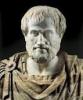
Literature, movies, visual art, and music are first and foremost entertainment. I don’t go to the movies or read a book or visit a museum because I want to improve my soul. If that was my goal I would be better off consulting a rabbi or spending my hours working in a soup kitchen or volunteering for the Peace Corps. No, I do these activities first and foremost because I want to keep occupied during the day in a way that gives me pleasure and prevents boredom from seeping into my life. I read to be entertained. Period.
But what do I mean by entertainment? Well since most of my words and ideas have thus far been ripped off from an essay by Michael Chabon introducing The Best American Short Stories of 2005 anthology perhaps he can explain better in his own words:
“Here is a sample, chosen at random from my career as a reader, of encounters that would be covered under my new definition of entertainment: the engagement of the interior ear by the rhythm and pitch of an original prose style; the dawning awareness that giant mutant rat people dwell in the walls of a ruined abbey in England; two hours spent bushwhacking through a densely packed argument about the structures of power as embodied in nineteenth-century prison architecture; the consummation of a great love aboard a lost Amazonian riverboat or in Elizabethan slang; the intricate fractal patterning of motif and metaphor in Nabokov and Neil Gaiman; stories of pirates, zeppelins, sinister children; a thousand-word-long sentence comparing homosexuals to the Jews in a page of Proust; a duel to the death with broadswords on the seacoast of ancient Zingara; the outrageousness of whale slaughter or mule slaughter in Melville or Cormac McCarthy. . .”
Chabon’s entertainment would cover the absorbing fascination of aesthetics that traditionalists harp on, while still finding enjoyment in the pure imagination often displayed in genre works of the fantastic, despite such works occasional weakness on a prose level. The beauty of Chabon’s essay is that a fantasy writer like Gaiman can sit side by side with Nabokov; Robert E. Howard’s barbarians prove just as interesting as the obsessive chase of Ahab and his Pequod hunting after Moby Dick.
Where a lot of people around here seem to take their page from Harold Bloom, I have more affinity with Bloom’s student, Camille Paglia. Like her I am unimpressed with the elitist attitude that implies one can only enjoy Madonna or Beethoven, Shakespeare or China Mieville, Citizen Kane or American Pie, classical music or punk rock. What I love about Paglia is that she can discuss the originality and importance she finds in the aesthetics of Madonna with the same acuity and depth she is able discuss traditional poetry.
For me it’s not about whether rock n’ roll is better than classical music, but rather simply recognizing they are different styles of music which produce different sounds and have depth in their own unique ways. So far this hasn’t overturned judging by aesthetics, but it does call into question whether there really are universal aesthetic qualities.
As a reader I began with genre fiction. Before I ever experienced the unforgettable poetry and characters of Shakespeare, before I ever read the playful tone of Philip Roth, before I ever knew the desperation of seeking true love with Jane Austen, there were spaceships and monsters and demons and chosen ones and the vast coldness of space stretching out with all its terrible mysteries and uncharted territories. Science fiction and fantasy taught me that the quality of prose is not the end all and be all of fiction—certainly I learned later in my life to enjoy aesthetics, to understand what it is that makes Shakespeare the best, to appreciate the rapture of reading a sentence by Hawthorne that epitomizes the very essence of good writing. However, I also learned that a great deal of fiction is about the imagination itself, whose quality cannot be entirely assessed by limiting oneself to focusing on aesthetics.
Of course the problem with using abstract terms like “aesthetics” is that everyone will have a slightly different understanding of what that term means. One could convincingly argue that the author’s imagination is intimately attached to their aesthetics. In the case of someone like Borges it isn’t a fault or a deficiency that his characters generally remain underdeveloped because that wasn’t the point of his work or what he was trying to do; the term as it is being used here implies that a writer’s goals and how they shape their art, the overall floor plan so to speak, is their aesthetics. However, if I defended the mediocre writing of many science fiction writers on the grounds of their imaginative vision most traditionalists would probably call foul. It seems then that by aesthetics we still in fact mean first and foremost good prose. I was fascinated by a conversation I had with a pal of mine from a different online forum who said what he liked about Rowling’s Harry Potter and Tolkien’s The Lord of the Rings was the same quality he enjoyed in Borges’s writing—the evocative worlds where so much hangs off the edge in limbo and lives in the language and the reader’s imagination.
I was very struck by one of JBI’s recent comments where he pointed out that it is not WHAT is said, but HOW it is said. This is some great insight, and yet I am not sure it ultimately works for me and my reasons for reading. The problem I have with emphasizing the "how" over the "what" is I feel it transforms the written word into a kind of visual art, in my opinion. The written word can transmit ideas in a way that static visual art with a character, figure or scene perpetually suspended in time cannot. It ignores precisely what is inherently and uniquely different between these art forms. The amount of time we spent trying to figure out what an author meant, what issues concerned him or her, what a symbol meant in a story, the historical background in a work, during my formal academic training has convinced me there are serious problems with overemphasizing aesthetics as the major criteria for judging the written word.
My formal training is in American Literature, I have a Masters in English, and I will soon be finished with an additional Masters in Library Science. I found in my literature classes that talking about an author’s aesthetics was devalued; students and professors hardly ever bothered to make aesthetic judgments. There was very little of Ring Cycle > Tolkien arguments. People studied Canonical figures, non-Canonical figures, pop culture, genres, and everyone respected each other's interests; you didn't fundamentally adopt a new methodology when discussing Science Fiction versus Melville. The same basic rules of exegesis applied.
That’s why I am always bemused when people seem to think what literary critics primarily do is sit around and make aesthetic judgments. Discussion in my classes revolved around deciphering the texts and making an interpretation of a work’s meaning and central ideas. Discussion of a work’s aesthetics only mattered in so far as it could help reveal the author’s meaning. Perhaps it is my training then, or perhaps it is my honest to G-d feelings on the subject, that makes me believe that ultimately the writing is but a means to an end, not the end in itself. This not to say the aesthetics of a writer should never be appreciated, but I ultimately get more out of literature by focusing on the exegesis. As I discussed briefly with Jozanny on a different thread, literature is like putting puzzle-pieces together where nothing less is at stake but the possible meaning of life itself.
I could have began my essay by saying art begins with meaning. We don’t tell ourselves oral myths to appreciate the texture of words in a story, we didn’t start drawing pretty cave paintings for the sake of aesthetic pleasure but rather to enchant the animal with magic and be able to eat that night (to draw on one theory); certainly, these things might have aesthetic qualities, but that wasn’t their primary purpose. The primary purpose was to convey meaning, to transmit truths, to accomplish something useful in this world. The only real major difference in my mind between myth and the contemporary novel is that the former generally transmitted societal truths and concerns, while the latter has since adopted the additional function of being able to harshly critique our accepted truths. I find Oscar Wilde's art for art's sake problematic to say the least.
To return to Chabon, I agree with him that literature is a way of bridging the gap between human beings by connecting the experiences we all share through what we call universal themes; it’s finding those experiences, fears, concerns, and frustrations we can all relate to. It’s a way of experiencing other continents, other time periods, other worlds, other possibilities, while always having some truth to offer about the here and now, a truth that may in fact teach us something new about ourselves and the world in which we live, but can also simply confirm what we already knew in an emotionally satisfying way; it seems in this last point we have come full circle and returned back to aesthetics. May I suggest we’re also back to entertainment. Entertainment can be escaping the mundane world through fantastical adventures, while it can also be sitting alone for hours considering the symbolism of whales in Moby Dick; entertainment can be the rapture of Shakespeare’s beautiful language or it can be the fantastical image of an Arthurian Knight riding down the street in a modern milieu to serve as a counterpoint to an Old woman having an existential crisis over her old age who must overcome the temptation of youth in a Neil Gaiman short story; entertainment can be watching Tony Soprano kick the snot out of some guy who gave him lip and it can also be watching a dying man whispering the words, “rose bud.” Maybe literature and art is for the good of improving your soul because entertainment itself is good for the soul.
Last edited by Drkshadow03; 08-26-2008 at 01:14 PM.
"You understand well enough what slavery is, but freedom you have never experienced, so you do not know if it tastes sweet or bitter. If you ever did come to experience it, you would advise us to fight for it not with spears only, but with axes too." - Herodotus
https://consolationofreading.wordpress.com/ - my book blog!
Feed the Hungry!
WICKES, reading your post made me feel glad that I became a member of Lit-Net. This is the only place I know of where I can find sensible people, though, since one year, due to work pressure, I've not been a very active member.
My reasons for being an avid reader are more or less the same as yours. I read anything and everything. Books have been my best friends and teachers all along. It must have been at the age of 7 that I developed an appetite for reading. There is a photo of me taken on my 7th birthday, deeply engrossed in a book someone had presented, unmindful of the birthday party and the kids playing around me. When a child, to me, books were merely a source of entertainment; during adolescence, they became a means of escape from reality (which I thought was not so pleasant. Now I don't know, and don't care, if any thing is good or bad, for I am as disenchanted and dejected by the thought of futility of life as you seem to be from what you have said. However, a new, but still inchoate, thought seems to be reviving my hope). It was only on the threshold of adulthood, when I was around 18, that I began to read to find answers to the many questions that were tormenting me. I'm fascinated by the skillful use of language in literature. I'm thrilled by the ideas of great thinkers. I am intrigued by mathematical concepts and the natural world so I read books on science. I read autobiographies, biographies and history to find out what made someone behave or think in a particular manner because, I believe, experience is the ultimate source of all knowledge and the definer of ones disposition. Today, reading is a integral part my calling. I read to earn a livelihood. They said, "Law is a jealous mistress." Three years into legal practice, I have now fully apprehended import of the aphorism. If I had one more hour in a day I will (for I have to) devout it to the service of the jealous mistress. I love my job, so I have no complaints.
I want to say more, but have little time. I want to end by saying that I can relate to what you have said in post # 20. Also, I think I can fully understand what you mean when you speak about people living an "unreflective and instinctive life" and about your not wanting to lead a mere "animal-like" existence. The expression "animal-like" strikes to me as having been used in a sense more profound than that in clichéd usage. Recently, in a online discussion with an old friend I remarked, "Some humans, I think, are more human than others and, hence, have a greater aesthetic sense than the latter. In other words, though, basically, humans are also animals, some humans are less animal than others who, owing to the preponderance of instinct over intellect, are more animal." However, I also share your sense of humility which flows from wisdom itself - as very beautifully put by someone - "The older and wiser I become, the more ignorant I know I am."
Last edited by caesar; 08-27-2008 at 12:14 AM.
"Don't need a gun to blow your mind"
it rips my life away, but it's a great escape
I read to challenge myself intellectually, mostly. Until university I'm stuck in English class with people who complain about reading a chapter of The Catcher in the Rye. I've always been a bit smarter than everyone else- in grade 4 my teacher called my parents and told them I had a behaviour problem, because I was reading a high school level book behind the book my classmates were struggling with. I'm not happy unless I'm challenged.
Well behaved women rarely make history.
-Laurel Thatcher Ulrich.


[QUOTE=WICKES;614693][QUOTE=Neely;614684]It was ever thus, only much more so now. At least you know you are not alone, thanks to this wonderful website.
Too true! I wish someone had told me that 10 years ago. This is why I kind of envy religious people- it is all so simple for them. They have one book with all the answers. All you need to do is re read it constanty and follow what it says and bingo. I have often wondered whether it would be a good thing to know all the answers- to know for sure whether there is a God, life after death and so on, or whether life is better with a bit of mystery and debate.
 Posting Permissions

 Reply With Quote

