Page 2 of 6 FirstFirst 123456 LastLast
Results 16 to 30 of 83

Thread: Any current books you think will become lasting literature?

  1. #16
    Registered User Desolation's Avatar
    Join Date
    Mar 2009
    Location
    Portland, OR
    Posts
    726
    I think that the four living writers that Harold Bloom referred to as the best - Pynchon, Roth, DeLillo, and McCarthy - all stand a good chance of holding up.

    Of course, I'm sure that there are some very good novelists out there working right now who won't start to receive acclaim until after they've passed on.

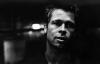
    Going outside of the realm of novels...If I were to give my honest opinion, I'd say that the figure working today with the best chance of being poured over by English students and professors for years to come (and I'm sure that not many people will agree with me, and that's ok) is this guy:

  2. #17
    Registered User
    Join Date
    Feb 2008
    Posts
    547
    Quote Originally Posted by Alexander III View Post

    While the first half of 20th century was undoubtedly dominated and stered by american writers, the second half has most of its great stars from south america.
    Really?! If you asked a neutral academic to list the great books of the first half of the 20th century it would certainly include American writers, poets etc but it would not be "undoubtedly dominated" by them. A list of the top 10 most important novels of the first half of the 20th century would have to find room for Proust (French), Joyce's Ulysses and possibly Portrait of the Artist (Irish), Huxley's Brave New World (English-British), Orwell's 1984 (English-British), Virginia Woolf (English-British), D H Lawrence's Sons and Lovers or Women in Love (English-British)...and what about Thomas Mann, Kafka, Joseph Conrad...? The only American novels in the top 10 would be Lolita (written by an upper class Russian who'd moved to the USA) and The Great Gatsby.

    It is even more ridiculous to claim that the literature of the second half of the 20th century has been dominated by South American writers.

  3. #18
    Bibliophile JBI's Avatar
    Join Date
    Feb 2007
    Location
    Toronto
    Posts
    6,360
    Quote Originally Posted by Desolation View Post
    I think that the four living writers that Harold Bloom referred to as the best - Pynchon, Roth, DeLillo, and McCarthy - all stand a good chance of holding up.

    Of course, I'm sure that there are some very good novelists out there working right now who won't start to receive acclaim until after they've passed on.

    Going outside of the realm of novels...If I were to give my honest opinion, I'd say that the figure working today with the best chance of being poured over by English students and professors for years to come (and I'm sure that not many people will agree with me, and that's ok) is this guy:
    Pynchon - I doubt it, seems to weird a gimmicky to last.

    Roth, maybe up until the 90s, but he has gone way downhill in the past while writing weirder, more shallower works.

    DeLillo, I think he has already faded to relative obscurity, at least in Canada, and he is no longer part of any real curriculum,

    McCarthy, probably. Of the four he seems the most likely to me, and probably the most interesting of the lot. Pynchon is way to gimmick, Roth way to weird and perverted, DeLillo way to synthetic.

    That being said, I have enjoyed books by all these authors, but in terms of longevity it is hard to think those as the most likely. Certainly Toni Morrison would be a more likely living author, especially her text Beloved. Likewise we need to factor in more genre into the works, as those works probably have the highest shelf-life for novels these days.

  4. #19
    Bibliophile JBI's Avatar
    Join Date
    Feb 2007
    Location
    Toronto
    Posts
    6,360
    Quote Originally Posted by WICKES View Post
    Really?! If you asked a neutral academic to list the great books of the first half of the 20th century it would certainly include American writers, poets etc but it would not be "undoubtedly dominated" by them. A list of the top 10 most important novels of the first half of the 20th century would have to find room for Proust (French), Joyce's Ulysses and possibly Portrait of the Artist (Irish), Huxley's Brave New World (English-British), Orwell's 1984 (English-British), Virginia Woolf (English-British), D H Lawrence's Sons and Lovers or Women in Love (English-British)...and what about Thomas Mann, Kafka, Joseph Conrad...? The only American novels in the top 10 would be Lolita (written by an upper class Russian who'd moved to the USA) and The Great Gatsby.

    It is even more ridiculous to claim that the literature of the second half of the 20th century has been dominated by South American writers.
    The real international problem is dealing with genre. Poetry is the major genre in many places of the world, whereas in the English speaking, and French speaking world, novel is still the dominant form. Likewise, for novels, there are many types, and the gimmick of post-modernity was experienced differently everywhere.

    At the same time, exposure and timing are so strange. Much of the best Latin American fiction was written around mid-century, far before the books themselves were widely available to the wider English audience.

    Chinese fiction was also in a ripe age in the early 20th century, as was Chinese poetry to an extent - this lasted well until mid-century. Nobody seems to mention that in modernism, nor Japan as modernism (which existed) or Korea, or...

    Anyone who talks of domination is probably just full of themselves. Every country has contributed if they have been read by enough people. The hardest thing to sell would be Estonian Modernist Literature or something of the like.

    People know American post-modernism, and 20th century in literature simply because they are probably anglophone, or speak English. That is the main reason for the apparent dominance. I think it is hardly fitting.

    What I am waiting for is the emergence of a Norton Arabic Poetry, but I think I will be waiting for a while.

  5. #20
    Artist and Bibliophile stlukesguild's Avatar
    Join Date
    Jul 2006
    Location
    The USA... or thereabouts
    Posts
    6,083
    Blog Entries
    78
    DeLillo, I think he has already faded to relative obscurity, at least in Canada, and he is no longer part of any real curriculum,

    And we all know that Canada is the center of the literary world where the canon is made or broken.
    Beware of the man with just one book. -Ovid
    The man who doesn't read good books has no advantage over the man who can't read them.- Mark Twain
    My Blog: Of Delicious Recoil
    http://stlukesguild.tumblr.com/

  6. #21
    Banned
    Join Date
    Mar 2008
    Location
    Illinois
    Posts
    5,046
    Blog Entries
    16
    I think, among living authors, Toni Morrison definitely has the best chance of being read far into the future. Hell, she's already practically a part of the canon.

    Aside from her, I think McCarthy has the best chance. Pynchon seems impossible to predict--I say his chances of remembrance are 50/50. I've yet to read Franzen, Roth, or Delilo.

    And I agree that the novel as an art form has been exhausted. It's not like they're read or talked about anymore.

  7. #22
    Artist and Bibliophile stlukesguild's Avatar
    Join Date
    Jul 2006
    Location
    The USA... or thereabouts
    Posts
    6,083
    Blog Entries
    78
    Anyone who talks of domination is probably just full of themselves. Every country has contributed if they have been read by enough people.

    This is true to an extent... but you know as well as anyone that the "canon" is defined by those nations that are the greatest economic/military/cultural powers. This more true of literature than the visual art or music... because of the limitations of language. If the Anglo-American texts "dominate" the discourse in the twentieth century and Canadian literature is ignored, it is because Canada is irrelevant as an economic/military/cultural power. British, French, American, German, Russian... and the a lesser extent Italian, Spanish, and Latin-American (thanks to their ties with the United States) were the major players in the last century in the international discourse of literature. Japan and China and India and the Middle East are now beginning to be heard. Will the Czech Republic or Estonia or Albania or Australia or Canada become major players in the future. That's somewhat doubtful. Of course in no way can that be taken as a value judgment... in terms of "good" or "bad". These terms are wholly subjective... while it is influence and continued relevance more than anything that defines what survives.
    Beware of the man with just one book. -Ovid
    The man who doesn't read good books has no advantage over the man who can't read them.- Mark Twain
    My Blog: Of Delicious Recoil
    http://stlukesguild.tumblr.com/

  8. #23
    Artist and Bibliophile stlukesguild's Avatar
    Join Date
    Jul 2006
    Location
    The USA... or thereabouts
    Posts
    6,083
    Blog Entries
    78
    And I agree that the novel as an art form has been exhausted. It's not like they're read or talked about anymore.

    I don't buy into that. I don't buy the notion that any art form can be "exhausted" except in the minds of those who cannot see further possibilities themselves. There's a great quote in one of John Barth's "Friday" books (collected essays) in which an author bemoans the fact that he was born so late that all the great narratives, all the great poems, all the great literary innovations have already occurred... and it is impossible for the writer to achieve anything new. The author of the quote was an Egyptian several centuries BC!

    In all reality it not like the novel has been replaced by a great resurgence of interest in poetry or drama or essay, etc...

    Predicting which contemporaries will survive is always a fool's game. How many of us can honestly admit to having done little more than skimmed the surface of what writing is out there... in all languages? I suspect Gabriel García Márquez, Yves Bonnefoy, Jose Saramago, Anne Carson, Philip Roth, Cormac McCarthy, among others may survive. Will their oeuvre as a whole survive... or rather will they be known for a single iconic book (McCarthy's Blood Meridian)?

    At other times, I suspect that Hermann Hesse was something of the visionary when he wrote The Glassbead Game in which he foresaw a world in which there is no new art, but rather the art of the past is rediscovered, restructured, and repackaged. I think how we as a a culture have more access to the whole of cultural/artistic achievements of the whole of history and across cultures to unlike any other culture in history. I can sit here before my computer and put my music library on "shuffle" and be serenades by a Beethoven symphony followed by a Gregorian chant followed by Miles Davis, George Gershwin, the Beatles, Johnny Cash, Japanese Shakuhachi flute, and Indian ragas. In other words... the music/culture of "our time" is the music/culture of all time. Discoveries of "lost" or "ignored" composers of the past may be as important if not more-so than the innovations of new music. I suspect something similar is underway in literature and painting. The "discovery" of the Shanameh and the great "forgotten" works of literature of Persia, the Arabs, India, China, Japan, and the rest of Asia may be as important or more important than the new literature of here and now. I don't think this is wholly unique if we consider how the rediscovery of Greek culture during the Romantic age may have been more important than many of the innovations of the time.

    Or not... just musing after a couple of martinis and an espresso laced with Frangelico.
    Beware of the man with just one book. -Ovid
    The man who doesn't read good books has no advantage over the man who can't read them.- Mark Twain
    My Blog: Of Delicious Recoil
    http://stlukesguild.tumblr.com/

  9. #24
    Bibliophile JBI's Avatar
    Join Date
    Feb 2007
    Location
    Toronto
    Posts
    6,360
    Military power never was a sign of artistic power. The Greek models haunted their Roman conquerors.

    Either way, my point was not that the US was so great or whatever, but that other countries are ignored because people love to yell about how great the US is.

    As for me commenting on Canada, you just love to jump on the bandwagon and bash, since I dared to comment on where I was judging from - maybe you should say that perhaps the US is not the be all and end all, and your own critical perspective is biased due to your local.

    As for the novel, of course narrative as a form is not done, I meant the novel as a genre. The same way that dominating forms fade into obscurity over time. The Shi moves into the Sao, the Sao into the Fu, the Fu into the Yue Fu, the Yue Fu into the regulated Shi, the Regulated Shi into the Ci, the Ci into the Qu, the Qu into the Open Form. None of the forms died (except for the Fu and Sao really) but they got exhausted and faded into obscurity, as a new dominant form emerged. Very few people were writing Yue Fu when the Qu was in its height.

    Take the Nouveau Roman as an example, the form itself saw the exhaustion of the 19th century model, and adapted a new genre of composition.

    Take then our novels today - very different than Pamela, or Walter Scott's or even Joseph Conrad's who is the forerunner of modernism.

    It is very possible than genres may be exhausted and move out of favor. That is what traditionally tends to happen as trends change. By me claiming that novels as inventive would pose a problem is a fair criticism - it is proving difficult these days to see such genre stretching, the same way it was shown that modernism really redefined genre, so too will novel be redefined in my time, into something else.

    Besides which, this doesn't imply that nobody will write novels, merely as a dominant discourse in high literature, they have passed their glory days.

  10. #25
    Artist and Bibliophile stlukesguild's Avatar
    Join Date
    Jul 2006
    Location
    The USA... or thereabouts
    Posts
    6,083
    Blog Entries
    78
    Military power never was a sign of artistic power. The Greek models haunted their Roman conquerors.

    But then were the Greeks not military powerhouses as well? I'm not suggesting that military strength alone is any assurance of artistic merit. In many ways the Roman/Greek dichotomy has been applied to Europe and the US with the Europeans as the Greeks... a culture that has seen its military dominance pass into the hands of a younger, dynamic nation that in many ways envies... is haunted by their older and richer culture. But I assume Mortal will be here momentarily to take you to task for underestimating Roman culture (although I tend to prefer the Greeks myself).

    What I am suggesting is that there is a link between money and power and art. Art has always flourished where it was supported. There is also a link between art and an influx of outside ideas. Athens, Rome, Constantinople, Venice, Florence, Paris, London, New York, Los Angeles... the major cultural cities have long benefited from the influx of foreigners and foreign ideas and art as a result of trade, immigration, and military conquest. If we look at the history of California we cannot help but recognize just how influential the influx of ideas and individuals from outside were to the evolution and growth of something as powerful as Hollywood and the American film industry.

    As for the novel, of course narrative as a form is not done, I meant the novel as a genre. The same way that dominating forms fade into obscurity over time. The Shi moves into the Sao, the Sao into the Fu, the Fu into the Yue Fu, the Yue Fu into the regulated Shi, the Regulated Shi into the Ci, the Ci into the Qu, the Qu into the Open Form. None of the forms died (except for the Fu and Sao really) but they got exhausted and faded into obscurity, as a new dominant form emerged. Very few people were writing Yue Fu when the Qu was in its height.

    ...your own critical perspective is biased due to your local.

    As is your own. Do you honestly believe that anyone here has the least idea just what WTF you are talking about when you start citing all these Chinese poets and movements... or cares? I have been accused of being pedantic... as have most of us who have read obsessively, but really, JBI, do you honestly imagine you can make a point by alluding to a body of knowledge that is as esoteric as this is to the majority here? Or is your point merely to impress others?

    Take the Nouveau Roman as an example, the form itself saw the exhaustion of the 19th century model, and adapted a new genre of composition.

    Take then our novels today - very different than Pamela, or Walter Scott's or even Joseph Conrad's who is the forerunner of modernism.

    It is very possible than genres may be exhausted and move out of favor. That is what traditionally tends to happen as trends change. By me claiming that novels as inventive would pose a problem is a fair criticism - it is proving difficult these days to see such genre stretching, the same way it was shown that modernism really redefined genre, so too will novel be redefined in my time, into something else.


    What is intriguing is that some of the elements of artifice that were so obviously played up in the early "novels"... Don Quixote or Tristram Sterne... seem more related to Modern and Post-Modern approaches to the novel than they do to the older, "naturalistic" approach to the novel.

    Again... my question to you... as you are placing yourself as the discerning critic... what do you see replacing the novel as we know it? certainly I see alternatives in Donald Barthleme, J.L. Borges, Italo Calvino, Homero Aridjis" and Anne Carson's blurring of novel and poem, W.S. Merwin's "prose", etc... but I'm not certain I see any clear heir to the position of the novel as we know it.
    Beware of the man with just one book. -Ovid
    The man who doesn't read good books has no advantage over the man who can't read them.- Mark Twain
    My Blog: Of Delicious Recoil
    http://stlukesguild.tumblr.com/

  11. #26
    Registered User
    Join Date
    May 2010
    Posts
    347
    Online Literature?

  12. #27
    Registered User Darcy88's Avatar
    Join Date
    Oct 2009
    Location
    British Columbia, Canada
    Posts
    1,963
    Blog Entries
    3
    McCarthy and Marquez are locks in my opinion to go down as great authors, some of their works as classics, comparable to any ever written.

  13. #28
    BadWoolf JuniperWoolf's Avatar
    Join Date
    May 2009
    Location
    The North
    Posts
    4,433
    Blog Entries
    28
    Oh yeah, Atwood too. She's so ancient I forget that she's still alive. She's very unilateral but I think that a few of her works have staying power, especially among feminists.

    Quote Originally Posted by stlukesguild View Post
    And I agree that the novel as an art form has been exhausted. It's not like they're read or talked about anymore.

    I don't buy into that.
    I'm pretty sure Mutatis was being sarcastic, we're talking about novels right now.
    Last edited by JuniperWoolf; 01-28-2012 at 04:36 AM.
    __________________
    "Personal note: When I was a little kid my mother told me not to stare into the sun. So once when I was six, I did. At first the brightness was overwhelming, but I had seen that before. I kept looking, forcing myself not to blink, and then the brightness began to dissolve. My pupils shrunk to pinholes and everything came into focus and for a moment I understood. The doctors didn't know if my eyes would ever heal."
    -Pi


  14. #29
    Alea iacta est. mortalterror's Avatar
    Join Date
    Mar 2008
    Location
    LA
    Posts
    1,914
    Blog Entries
    39
    Quote Originally Posted by WICKES View Post
    Really?! If you asked a neutral academic to list the great books of the first half of the 20th century it would certainly include American writers, poets etc but it would not be "undoubtedly dominated" by them. A list of the top 10 most important novels of the first half of the 20th century would have to find room for Proust (French), Joyce's Ulysses and possibly Portrait of the Artist (Irish), Huxley's Brave New World (English-British), Orwell's 1984 (English-British), Virginia Woolf (English-British), D H Lawrence's Sons and Lovers or Women in Love (English-British)...and what about Thomas Mann, Kafka, Joseph Conrad...? The only American novels in the top 10 would be Lolita (written by an upper class Russian who'd moved to the USA) and The Great Gatsby.

    It is even more ridiculous to claim that the literature of the second half of the 20th century has been dominated by South American writers.
    Is that so? Here's how I see the score:
    1996 Infinite Jest by William Foster Wallace (USA)
    1992 The Gospel According to Jesus Christ by Jose Saramago (Portugal)
    1991 Angels in America by Tony Kushner (USA)
    1990 Omeros by Derek Walcott (Saint Lucia)
    1987 Beloved by Toni Morrison (USA)
    1985 Blood Meridian by Cormac McCarthy (USA)
    1985 The Handmaid's Tale by Margaret Atwood (Canada)
    1981 Midnight's Children by Salman Rushdie (India)
    1980 The Name of the Rose by Umberto Eco (Italy)
    1979 If on a winter's night a traveler by Italo Calvino (Italy)
    1974 The Envoy of Mr. Cogito by Zbigniew Herbert (Poland)
    1973 The Master and Margarita by Mikhail Bulgakov (Russia)
    1973 The Gulag Archipelago by Aleksandr Solzhenitsyn (Russia)
    1970 The Temple of Dawn by Yukio Mishima (Japan)
    1969 Portnoy's Complaint by Philip Roth (USA)
    1969 Slaughterhouse-Five by Kurt Vonnegut (USA)
    1967 100 Years of Solitude by Gabriel Garcia Marquez (Columbia)
    1966 The Crying of Lot 49 by Thomas Pynchon (USA)
    1966 Death of a Naturalist by Seamus Heaney (Ireland)
    1965 Closely Watched Trains Bohumil Hrabal (Czechoslovakia)
    1965 The Green House by Mario Vargas Llosa (Peru)
    1964 The Homecoming by Harold Pinter (Britain)
    1963 Hopscotch by Julio Cortazar (Argentina)
    1962 Who's Afraid of Virginia Woolf? by Edward Albee (USA)
    1962 The Death of Artemio Cruz by Carlos Fuentes (Mexico)
    1961 Catch-22 by Joseph Heller (USA)
    1961 A House For Mr Biswas by V.S. Naipaul (India)
    1959 The Tin Drum by Gunter Grass (Germany)
    1958 The Leopard by Giuseppe Tomasi di Lampedusa (Italy)
    1957 Doctor Zhivago by Boris Pasternak (Russia)
    1957 On the Road by Jack Kerouac (USA)
    1957 Mihyar of Damascus: His Songs by Adonis (Syria)
    1956 Seize the Day by Saul Bellow (USA)
    1956 Long Day's Journey Into Night by Eugene O'Neill (USA)
    1956 The Devil to Pay in the Backlands by Joao Guimaraes Rosa (Brazil)
    1955 Lolita by Vladimir Nabokov (Russia)
    1955 The Emperor of Ice Cream by Wallace Stevens (USA)
    1955 Pedro Paramo by Juan Rulfo (Mexico)
    1954 Sunstone by Octavio Paz (Mexico)
    1954 Lord of the Flies by William Golding (Britain)
    1953 Gimpel, the Fool by Isaac Bashevis Singer (Poland)
    1953 Waiting For Godot by Samuel Beckett (Ireland)
    1952 The Old Man and the Sea by Ernest Hemingway (USA)
    1952 The Shield of Achilles by W.H. Auden (Britain)
    1952 Invisible Man by Ralph Ellison (USA)
    1952 The Financial Expert by R.K. Narayan (India)
    1951 Do Not Go Gentle Into That Good Night by Dylan Thomas (Britain)
    1951 The Catcher in the Rye by J.D. Salinger (USA)
    1951 Memoirs of Hadrian by Marguerite Yourcenar (France)
    1950 Canto General by Pablo Neruda (Chile)
    1950 The Bald Soprano by Eugene Ionesco (Romania)
    1949 1984 by George Orwell (Britain)
    1949 Death of a Salesman by Arthur Miller (USA)
    1948 The Makioka Sisters by Junichiro Tanizaki (Japan)
    1948 The Caucasian Chalk Circle by Bertolt Brecht (Germany)
    1948 A Streetcar Named Desire by Tennessee Williams (USA)
    1948 Snow Country by Yasunari Kawabata (Japan)
    1948 Death Fugue by Paul Celan (Romania)
    1947 Fortress Besieged Qian Zhongshu (China)
    1945 Rescue by Czeslaw Milosz (Poland)
    1944 No Exit by Jean-Paul Sartre (France)
    1944 Ficciones by Jorge Luis Borges (Argentina)
    1944 The Dwarf by Par Lagerkvist (Sweden)
    1942 The Stranger by Albert Camus (France)
    1942 Antigone by Jean Anouilh (France)
    1940 Requiem by Anna Akhmatova (Russia)
    1939 The Grapes of Wrath by John Steinbeck (USA)
    1938 The Odyssey: A Modern Sequel by Nikos Kazantzakis (Greece)
    1937 Out of Africa by Isak Dineson (Denmark)
    1937 The Blind Owl by Sadegh Hedayat (Iran)
    1935 Wings of Gabriel by Muhammad Iqbal (India)
    1935 Lament for Ignacio Sanchez Mejias by Federico Garcia Lorca (Spain)
    1934 Message by Fernando Pessoa (Portugal)
    1933 Man's Fate by Andre Malraux (France)
    1932 Journey to the End of the Night by Louis-Ferdinand Celine (France)
    1932 The Man Without Qualities by Robert Musil (Austria)
    1929 The Sound and the Fury by William Faulkner (USA)
    1928 Lady Chatterley's Lover by D.H. Lawrence (Britain)
    1927 Steppenwolf by Herman Hesse (Germany)
    1926 Capital of Pain by Paul Eluard (France)
    1925 Mrs. Dalloway by Virginia Woolf (Britain)
    1925 The Great Gatsby by F. Scott Fitzgerald (USA)
    1925 Cuttlefish Bones by Eugenio Montale (Italy)
    1924 The Magic Mountain by Thomas Mann (Germany)
    1924 Anabase by Saint-John Perse (France)
    1923 The True Story of Ah Q by Lu Xun (China)
    1923 The Prophet by Khalil Gibran (Lebanon)
    1923 Confessions of Zeno by Italo Svevo (Italy)
    1922 The Wasteland by T.S. Eliot (USA)
    1922 In Search of Lost Time by Marcel Proust (France)
    1922 Duino Elegies by Ranier Maria Rilke (Germany)
    1921 Six Characters in Search of an Author by Luigi Pirandello (Italy)
    1920 Main Street by Sinclair Lewis (USA)
    1920 Hugh Selwyn Mauberley by Ezra Pound (USA)
    1919 The Second Coming by William Butler Yeats (Ireland)
    1918 Ulysses by James Joyce (Ireland)
    1918 The Hellscreen by Ryunosuke Akutagawa (Japan)
    1918 The Black Heralds by Cesar Vallejo (Peru)
    1917 The Young Fate by Paul Valery (France)
    1915 The Metamorphosis by Franz Kafka (Czechoslovakia)
    1915 The Good Soldier by Ford Maddox Ford (Britain)
    1915 Of Human Bondage by W. Somerset Maugham (Britain)
    1914 Kokoro by Natsume Soseki (Japan)
    1914 Mending Wall by Robert Frost (USA)
    1913 Alcohol by Guillaume Apollinaire (France)
    1911 Ithaca by Constantine P. Cavafy (Greece)
    1910 Gitanjali by Rabindranath Tagore (India)
    1910 Peruvian Traditions by Ricardo Palma (Peru)
    1907 The Ghost Sonata by August Strindberg (Sweden)
    1907 The Travels of Lao Ts'an by Liu E (China)
    1906 Spring Awakening by Frank Wedekind (Germany)
    1905 Songs of Life and Hope by Ruben Dario (Nicaragua)
    1904 The Cherry Orchard by Anton Chekhov (Russia)
    1903 Man and Superman by George Bernard Shaw (Ireland)
    1903 The Call of the Wild by Jack London (USA)
    1903 The Ambassadors by Henry James (USA)
    1902 Heart of Darkness by Joseph Conrad (Britain)
    1902 The Immoralist by Andre Gide (France)
    1902 The Lower Depths by Maxim Gorky (Russia)
    1902 The Rain in the Pinewood by Gabriele D'Annunzio (Italy)
    1901 Kim by Rudyard Kipling (Britain)
    1900 La Ronde by Arthur Schnitzler (Austria)

    I think America did pretty well for herself last century. I don't think the claim could be made for any one country dominating though.
    Last edited by mortalterror; 01-28-2012 at 02:47 PM.
    "So-Crates: The only true wisdom consists in knowing that you know nothing." "That's us, dude!"- Bill and Ted
    "This ain't over."- Charles Bronson
    Feed the Hungry!

  15. #30
    Alea iacta est. mortalterror's Avatar
    Join Date
    Mar 2008
    Location
    LA
    Posts
    1,914
    Blog Entries
    39
    Quote Originally Posted by stlukesguild View Post
    Military power never was a sign of artistic power. The Greek models haunted their Roman conquerors.

    But then were the Greeks not military powerhouses as well? I'm not suggesting that military strength alone is any assurance of artistic merit. In many ways the Roman/Greek dichotomy has been applied to Europe and the US with the Europeans as the Greeks... a culture that has seen its military dominance pass into the hands of a younger, dynamic nation that in many ways envies... is haunted by their older and richer culture. But I assume Mortal will be here momentarily to take you to task for underestimating Roman culture (although I tend to prefer the Greeks myself).
    I think that during the time of the Roman Republic there was a great deal of envy for the works of Homer, and the dramatists of Greece. There were many who admired Greek painting and sculpture as well. But as the centuries piled up and Roman accomplishments did with them, they had less to envy. Virgil, Ovid, Lucan, and Statius supplied the place that Homer previously had occupied. Seneca, Terence, and Plautus took the place of Sophocles, and Aristophanes. Livy and Sallust built over Herodotus and Thucydides. And once the Forums, the Colosseum, the aqueducts, and the Baths of Diocletian cast their shadows, why would they envy the Acropolis? Cicero took over for Demosthenes. Tibullus, Propertius, Horace, and Lucretius supplied the want of Theocritus, Sappho, Hesiod, etc. Simply put, the Romans didn't stay in awe of the Greeks forever, and they did invent their own genres such as satire and mosaics.

    Quote Originally Posted by stlukesguild View Post
    What I am suggesting is that there is a link between money and power and art. Art has always flourished where it was supported. There is also a link between art and an influx of outside ideas. Athens, Rome, Constantinople, Venice, Florence, Paris, London, New York, Los Angeles... the major cultural cities have long benefited from the influx of foreigners and foreign ideas and art as a result of trade, immigration, and military conquest. If we look at the history of California we cannot help but recognize just how influential the influx of ideas and individuals from outside were to the evolution and growth of something as powerful as Hollywood and the American film industry.
    I think that Hollywood did gain by the introduction of foreign Jews, like Ernst Lubitsch, Fritz Lang, Samuel Goldwyn, and Louis B. Mayer; but I doubt it has gained as much artistically from the much larger Mexican immigration to California. As much as you love to tout an open immigration policy as the key to success, the facts suggest otherwise. I think that a handful of German scientists ie Albert Einstein, Niels Bohr, and Werner von Braun probably did more to advance American prosperity than all the illegal aliens picking fruit in Washington. We totally ought to let in people capable of winning the Nobel Prize like Nabokov, but we have enough people to run our 7 Elevens, and we can mow our lawns ourselves.

    Quote Originally Posted by stlukesguild View Post
    As for the novel, of course narrative as a form is not done, I meant the novel as a genre. The same way that dominating forms fade into obscurity over time. The Shi moves into the Sao, the Sao into the Fu, the Fu into the Yue Fu, the Yue Fu into the regulated Shi, the Regulated Shi into the Ci, the Ci into the Qu, the Qu into the Open Form. None of the forms died (except for the Fu and Sao really) but they got exhausted and faded into obscurity, as a new dominant form emerged. Very few people were writing Yue Fu when the Qu was in its height.

    ...your own critical perspective is biased due to your local.

    As is your own. Do you honestly believe that anyone here has the least idea just what WTF you are talking about when you start citing all these Chinese poets and movements... or cares? I have been accused of being pedantic... as have most of us who have read obsessively, but really, JBI, do you honestly imagine you can make a point by alluding to a body of knowledge that is as esoteric as this is to the majority here? Or is your point merely to impress others?
    I understood him, but then I did read up on Chinese literature last year. Perhaps you ought to do the same instead of criticizing him for being so knowledgeable. You are, after all, prone to being esoteric yourself. Or do you imagine everyone here is familiar with 10th century Persian poetry and 18th century Japanese painting?
    Last edited by mortalterror; 01-28-2012 at 02:04 PM.
    "So-Crates: The only true wisdom consists in knowing that you know nothing." "That's us, dude!"- Bill and Ted
    "This ain't over."- Charles Bronson
    Feed the Hungry!

Page 2 of 6 FirstFirst 123456 LastLast

Similar Threads

  1. We Need A Revolution In Literature!
    By WolfLarsen in forum General Writing
    Replies: 251
    Last Post: 01-10-2012, 06:56 PM
  2. Harry Potter
    By jessw in forum General Literature
    Replies: 550
    Last Post: 12-03-2011, 12:12 PM
  3. Harry Potter
    By goldenbee in forum General Literature
    Replies: 320
    Last Post: 06-23-2011, 02:34 PM
  4. What has literature in store for you?
    By hbacharya in forum General Literature
    Replies: 1
    Last Post: 04-21-2007, 06:03 PM

Posting Permissions

  • You may not post new threads
  • You may not post replies
  • You may not post attachments
  • You may not edit your posts
  •