DIONYSUS IDENTIFIED WITH FOREIGN GODS
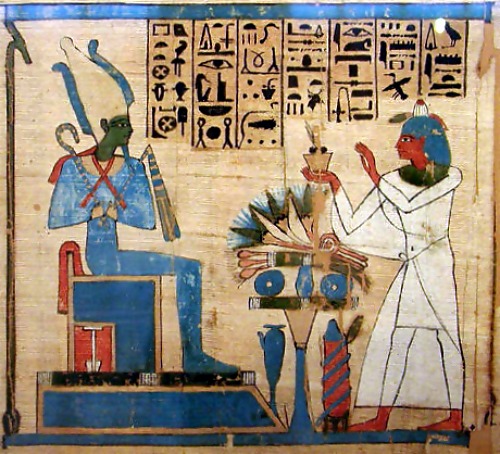
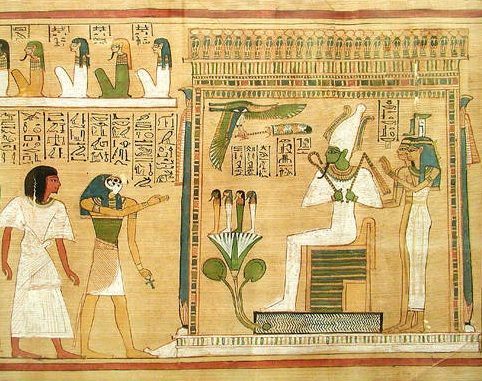
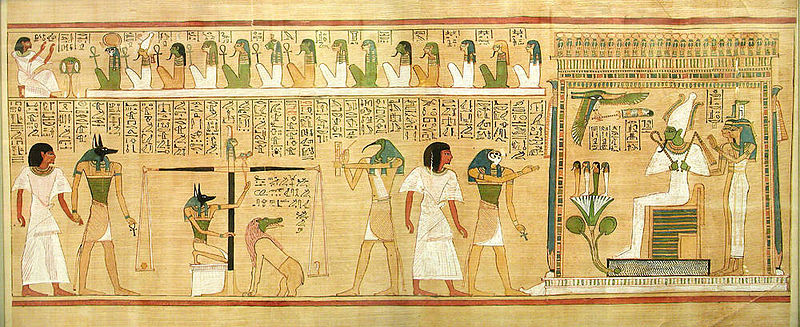
Dionysus was identified with the Thraco-Phrygian god Sabazios, Egyptian Osiris, Phoenician Tammuz and the Roman god Liber, amongst others.
Sabazios is the nomadic horseman and sky father god of the Phrygians and Thracians. In Indo-European languages, such as Phrygian, the -zios element in his name derives from dyeus, the common precursor of Latin deus ('god') and Greek Zeus. Though the Greeks interpreted Phrygian Sabazios with both Zeus and Dionysus, representations of him, even into Roman times, show him always on horseback, as a nomadic horseman god, wielding his characteristic staff of power.
http://en.wikipedia.org/wiki/Sabazios
SABAZIOS (THRACO-PHRYGIAN GOD)
Herodotus, Histories 5. 7 (trans. Godley) (Greek historian C5th B.C.) :
"They [the Thrakians] worship no gods but Ares, Dionysus [Sabazios], and Artemis [Bendis]. Their princes, however, unlike the rest of their countrymen, worship Hermes [Zalmoxis] above all gods and swear only by him, claiming him for their ancestor."
Cicero, De Natura Deorum 3. 21- 23 (trans. Rackham) (Roman rhetorician C1st B.C.) :
"The [god identified with Dionysus] father of the third [Phrygian Sabazios] is Cabirus; it is stated that he was king over Asia, and the Sabazia were instituted in his honor. The fourth [the Thraco-Orphic god Sabazios] is the son of Jupiter [Thrakian sky-god] and Luna [Bendis]; the Orphic rites are believed to be celebrated in his honor."
http://www.theoi.com/Olympios/Dionysos.html
Thracian/Phrygian Sabazios
It seems likely that the migrating Phrygians brought Sabazios with them when they settled in Anatolia (ca. 1200 BC?) and that the god's origins are to be looked for in Macedonia and western Thrace. The Macedonians were noted horseman, horse-breeders and horse-worshippers into the time of Philip II.
Transformation to Sabazios
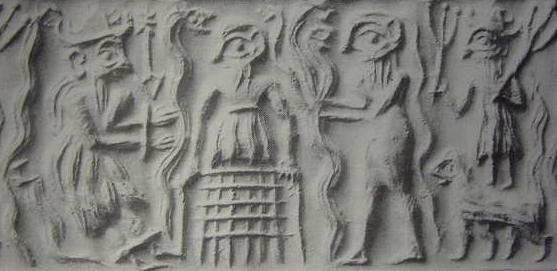
The naturally syncretic approach of Greek religion blurred distinctions. Later Greek writers, like Strabo, 1st century AD, linked Sabazios with Zagreos, among Phrygian ministers and attendants of the sacred rites of Rhea and Dionysus. (Strabo, 10.3.15). Strabo's Sicilian contemporary, Diodorus Siculus, conflates Sabazios with the secret 'second' Dionysus, born of Zeus and Persephone (Diodorus Siculus, 4.4.1). The Clement of Alexandria had been informed that the secret mysteries of Sabazios, as practiced among the Romans, involved a serpent, a chthonic creature unconnected with the mounted skygod of Phrygia: "‘God in the bosom’ is a countersign of the mysteries of Sabazios to the adepts, " Clement reports (Protrepticus, 1, 2, 16). "This is a snake, passed through the bosom of the initiates”.
Much later, the Greek encyclopedia, Sudas (10th century?), flatly states "Sabazios... is the same as Dionysus. He acquired this form of address from the rite pertaining to him; for the barbarians call the bacchic cry 'sabazein'. Hence some of the Greeks too follow suit and call the cry 'sabasmos'; thereby Dionysus [becomes] Sabazios. They also used to call 'saboi' those places that had been dedicated to him and his Bacchantes
http://www.mlahanas.de/Greeks/Mythology/Sabazios.html
Sabazios
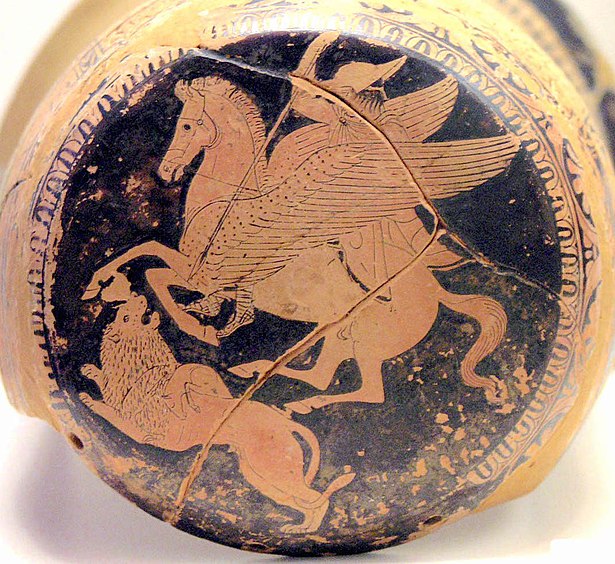
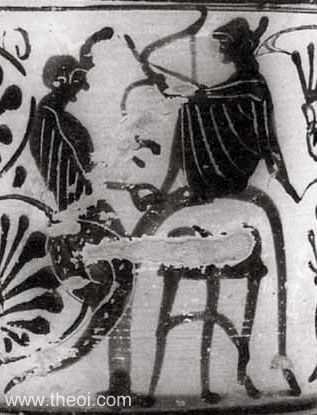
The god was represented on a horseback battling the chthonic serpent or he was often sitting on a throne holding his staff of power.
His appearance was a majestic one, another time a soft and an effeminate one because a part of his myth and cult was his self-castration, including the god´s annual death and revival. Sabazios was often surrounded by the goddess Cybele or (especially in Greek iconography) by Demeter and Persephone. His cult (similarly, like the one of Cybele or Dionysus) was also accompanied by some musicians and ecstatic dancers who were keeping the small snakes with heads raised up. Sometimes we can even observe a snake twisting near the god´s throne. The chthonic animals (including a horned snake, a frog, a tortoise, a lizard), as well as the triple Hecate, the bust of Mercury and the caduceus, the symbols of the sun and the moon, the zodiac symbols, and even a head of a ram on an altar, as a pine cone and some Greek inscriptions, appeared around the god on some representations. These attributes often decorated the reliefs and small votive hands which are associated with the cult of Sabazios in the Roman sites.
http://www.anistor.gr/english/enback...nistoriton.pdf

Bronze hand used in the worship of Sabazios (British Museum). Roman 1st-2nd century CE. Hands decorated with religious symbols were designed to stand in sanctuaries or, like this one, were attached to poles for processional use.
Early conflict between Sabazios and his followers and the indigenous Mother Goddess of Phrygia (Cybele) is reflected in Homer's brief reference to the youthful feats of Priam, who aided the Phrygians in their battles with Amazons.
http://www.mlahanas.de/Greeks/Mythology/Sabazios.html
Thracian horseman is the conventional term for a recurring motif from the iconography of Paleo-Balkanic mythology during the Roman era.
The tradition is attested from Thrace to Moesia and Scythia Minor, also known as the "Thracian Heros", at Odessos (Varna) attested by a Thracian name as Heros Karabazmos, a god of the underworld usually depicted on funeral statues as a horseman slaying a beast with a spear.
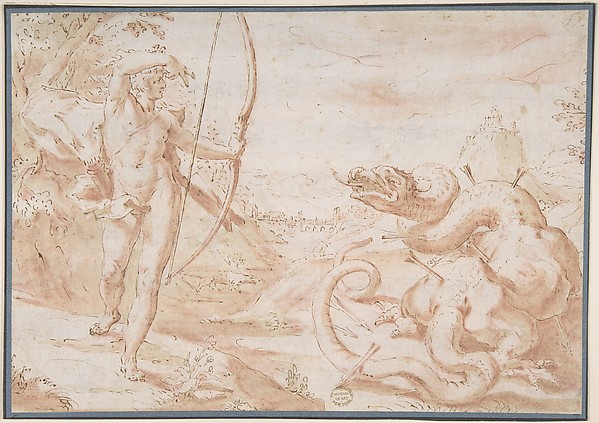
Sabazios, the Thracian reflex of Indo-European Dyeus, identified with Heros Karabazmos, the "Thracian horseman". He gained a widespread importance especially after the Roman conquest. After Christianity was adopted, the symbolism of Heros continued as representations of Saint George slaying the dragon (compare Uastyrdzhi/Tetri Giorgi in the Caucasus).
http://www.answers.com/topic/thracian-horseman
Heros /hero/ – a Thracian god of hunting, fertility, life and death, all-knowing and all-hearing god – all-god.
The cult of the Thracian horseman was widely spread during the Roman Age, which indicates a renaissance of the Thracian religion at that time – something unknown for the other peoples under Roman domination. Its figure is well known thanks to the numerous historical records from the Roman Age, 1st-4th century AD – young horseman with a spear and shield or with killed game in his hands, followed by a servant, dog and a lion. As an all-knowing and all-hearing god he was portrayed with two or three faces. Due to the mixture of various religions the Thracian horseman was often depicted as a Greek god – Apollo, Asclepius, Zeus, Dionysus, etc., and as the Old Iranian god Mithra, as well as with some of their attributes – lyre (Apollo), single snake staff (Asclepius), impressive beard (Zeus), Phrygian cap (conical cap with its top pulled forward – Mithra), etc. The image of the Thracian horseman served as a base for Christian Saint George.
http://ancient-treasure.info/ancient...-horseman.html
 "Thracian horseman" relief with Latin inscription at Philippi.
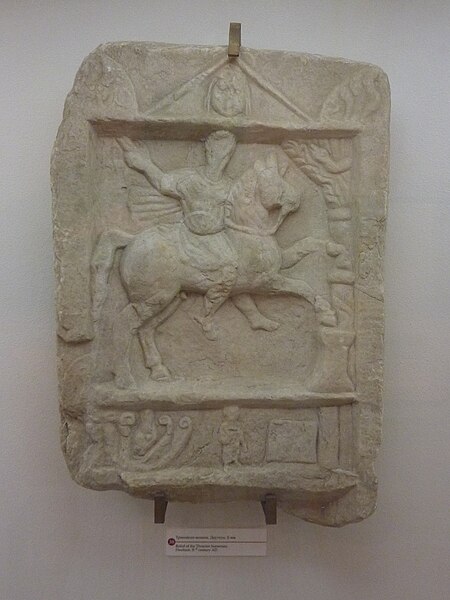 A "Thracian rider" relied from the collection of the Burgas Archaeological Museum. 2nd century AD
 Romanian National History Museum Thracian horseman
 Thracian horseman in National Historical Museum Bulgaria
 Raffaello Sanzio, Saint George and the Dragon
 Saint George, Gustave Moreau.
 Vitale da Bologna, St. George 's Battle with the Dragon
 Paolo Uccello
 Paolo Uccello
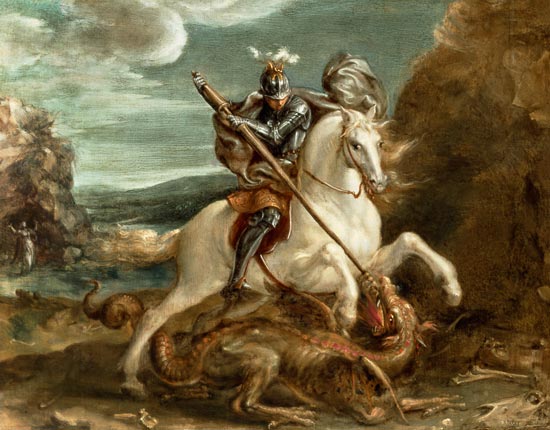 Hans von Aachen "St. George slaying the dragon"
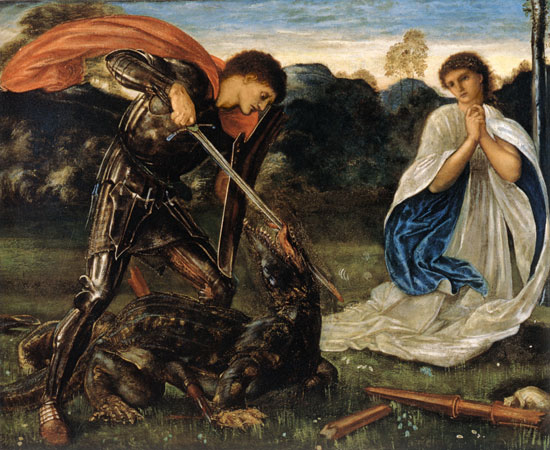 St. George and the Dragon, Edward Burne-Jones
 Saint George and the Dragon at Casa Amatller
 St. George in the New Church St. Margaret, Munich-Sendling, early 16th century.
 Liberty Monument (St George slaying the dragon) in Tbilisi





 Originally Posted by ftil



 But I will look at dragons later.