Buying through this banner helps support the forum!
-

Originally Posted by
stlukesguild

BTW, this art is disturbing. I guess I feel the impact of occult symbolism on Super Bowl and Grammy.
I hope that you can post art that will fill the soul not drain it.
As you certainly know, Art is employed toward a vast array of ends. Considering that Faitakis is confronting some of the pressing social/political/economic issues of our time, I would be surprised if his art didn't have a degree of edginess to it that some might find disturbing. Indeed, I suspect the artist intended his work to be disturbing just as the poverty, drug abuse, the increasing gaps between the rich and the poor, the abuse of power, the American involvement in the Middle-East, etc... are themselves disturbing. As a whole, however, (unlike such political artists as Otto Dix or George Grosz) the work retains (I feel) a definite sense of beauty in the employment of the rich, yet harmonious coloring, the patterns and stylization, and the use of gold leaf.
Perhaps I shall look for some "soul enhancing" works of contemporary art later today.
Well, I didn’t find beauty at all. When I don’t look at mythology or religious themes, I am interested in feelings and emotions that the paintings evoke.
I was picking up quite negative feelings. Art is a powerful medium of expression and artists may address political or social issues. But the way they express it tells a lot about the artist. I have found many contemporary artists whose art is ugly even though they have talent.
I would like to learn about artists whose art enhances our souls. We are bombarded with ugly images on TV, video music, or advertisement and I am very aware how images affect us. Giordano Bruno’s work was utilized in full. 
-
Artist and Bibliophile
You still haven't learned your lesson from Oscar Wilde:
The highest as the lowest form of criticism is a mode of autobiography. Those who find ugly meanings in beautiful things are corrupt without being charming. This is a fault.
Those who find beautiful meanings in beautiful things are the cultivated. For these there is hope. They are the elect to whom beautiful things mean only beauty.
There is no such thing as a moral or an immoral book. Books are well written, or badly written. That is all.
All art is at once surface and symbol. Those who go beneath the surface do so at their peril. Those who read the symbol do so at their peril. It is the spectator, and not life, that art really mirrors.
In other words, the fact that you find no beauty in a good deal of Modern Art says more about you than it does about the artists for the simple reason that "criticism" is a form of autobiography. The notion that the work of art reveals much of the inner thoughts and emotions of the artist is an idea rooted in Romanticism and reinforced by Freud. As Wilde states elsewhere in his famous Preface to Dorian Gray, the goal of art is to reveal art and conceal the artist. The artist and the art work are not one and the same. Goya is not necessarily obsessed with horror. Shakespeare is not Hamlet or Polonius or Lear. They are but characters invented by Shakespeare.
Beware of the man with just one book. -Ovid
The man who doesn't read good books has no advantage over the man who can't read them.- Mark Twain
My Blog: Of Delicious Recoil
http://stlukesguild.tumblr.com/

-
LOL! Why would I want to learn from Oskar Wild? You should have known by now that I am not a follower and I choose from whom I want to learn.  I have better words of Giordano Bruno that express my approach to art and beauty. It has always been my approach as I have written it here and on my tread. I didn’t know about Bruno’s work until recently and it is nice to find another soul who understood art and beauty as I do.
BTW, I know modern artists whose art I love. Don’t make assumptions again. I just have a very different taste then you have. The art we choose express who we are. I love beauty and art is much more for me than colors and lines.
You need to understand that not everybody is like you and to appreciate individuality of others.
The real religion of Bruno was the religion of analogy. He did not believe that the meanings of words, images, sounds and symbols could be defined semantically but could be understood intuitively and analogically through other words, images, sounds and symbols. The world of the mind is the world of the phantasy for which understanding occurs- not through rationality, as rationality is impossible but through the contemplation of images:
"For the philosophy, music or poetry is also painting, and the painting is also music and philosophy, and true poetry or music is a kind of divine wisdom and painting."Elsewhere I have discussed how any painter is naturally an establisher of infinite images who, by means of his image forming power, constructs from sight and sounds by combining in a multiplicity of ways.
http://www.scribd.com/doc/77006735/B...ano-Bruno-1991
Last edited by ftil; 02-21-2012 at 06:38 PM.
-
Artist and Bibliophile
I haven't read much by Bruno... and it was some time ago. I tend to lean toward a more aesthetic/formalist interpretation of art: Zola, Gautier, Baudelaire, Pater, Wilde, Paul Valery, Mallarme, Ruskin, Robert Hughes, David Sylvester, Donald Kuspit, etc... although I do admire William Blake's spiritual take on art (among others).
The interpretations I most abhor are those that employ art as little more that something to illustrate a given bias or those that employ art in a utilitarian manner toward a given "larger" goal with little concern for what is actually there.
Beside an aesthetic view of art, I mostly value the historical view. By this I don't mean to suggest that I am interested in interpretations based upon a knowledge of the artist's personal history... or biography... but rather I am interested in looking at the work of art within the historical context. It is nearly impossible to appreciate a great deal of Modern or Contemporary art without some concept of historical context because of the centrality of formal innovation to much of this art. In other words, a great majority of Modern art builds off of its predecessors to the point of developing a new visual language as opposed to employing a well-known and understood visual language as a means of communicating with a larger audience.
Interestingly enough, Stelios Faitakis, like the German Expressionists, employs an older visual language in order to assure that his message might be accessible to the largest possible audience. Of course the work is disturbing because the message is disturbing. The artist is conveying a degree of anger at the economic and social injustices of the world, violence, the abuse of sex and drugs, etc...
Beware of the man with just one book. -Ovid
The man who doesn't read good books has no advantage over the man who can't read them.- Mark Twain
My Blog: Of Delicious Recoil
http://stlukesguild.tumblr.com/
-
Everybody is unique. We are inspired by wise people. Ideally, people should make own decision who is wise or not and who they want to listen or not.
I don’t look for any interpretation of art. If I don’t look at mythology and religion in art, I enjoy the beauty and feelings the art evokes. The healing aspect of art can’t be underestimated. I still need to read more Bruno’s books to understand the depth of the impact of the images and sound upon our soul. I am excited that I have found his books as his books will expand my understanding of our psyche from a magician point of view as well as explain my observations and experience. I see it as a journey.
Ralph Waldo Emerson expressed the quintessence of life as he said,” Do not go where the path may lead, go instead where there is no path and leave a trail.”
I couldn’t say it better. 
Oh, I did lot’s of talking…….not talking but writing and I hate writing.
-
Artist and Bibliophile
Yes... I remember Emerson asking the question as to whether it was better to live in a culture that was at the peak of its achievement... but quite likely facing a long, slow decline... or whether it was better to be living in a nation at it's birth... lacking a history or tradition... and this have the chance to be one of those who forms that tradition. Of course Emerson chose the latter... imagining the United States as this virgin nation without a history. Unfortunately, the reality is that the United States was never a nation without a history. We adopted a great majority of our culture from Western Europe... especially Britain... but of course this was merged with traditions from elsewhere: Eastern Europe, the Native Americans, Africa, Latin-America, Asia, etc...
The idea of going where there is no path... no predecessors... is ideal... but largely an unrealistic fantasy as an artist. Cezanne said it best, declaring "One enters into the Louvre through Nature, but one enters into Nature through the Louvre." In other words... Art of real merit is achieved through a response to life... but the artist develops that language needed to respond to life through his or her experience of the history and tradition of art.
I would be hard-pressed to name any art without precedent. Whether the artist is aware of said precedent of not is an individual choice. I choose to know what I am building upon.
I'm still looking for an example of a contemporary artist that I think you might like... which I would also like enough to post images and write about.
Beware of the man with just one book. -Ovid
The man who doesn't read good books has no advantage over the man who can't read them.- Mark Twain
My Blog: Of Delicious Recoil
http://stlukesguild.tumblr.com/
-
The idea of going where there is no path... no predecessors... is ideal... but largely an unrealistic fantasy as an artist. Cezanne said it best, declaring "One enters into the Louvre through Nature, but one enters into Nature through the Louvre." In other words... Art of real merit is achieved through a response to life... but the artist develops that language needed to respond to life through his or her experience of the history and tradition of art.
I would be hard-pressed to name any art without precedent. Whether the artist is aware of said precedent of not is an individual choice. I choose to know what I am building upon.
I'm still looking for an example of a contemporary artist that I think you might like... which I would also like enough to post images and write about.
His words are a metaphor, not to follow others but go where nobody has gone yet. Many people are followers and conformists. I see it as a way of our programming. I was laughing out loud yesterday when I read an article that discussed research according to which followers have more grey matter than rebels. We are living in interesting times……so many pseudo scientists and pseudo research.
I have 800+ posts of art on another forum and I don’t want to talk about artists I know. I would like to learn about artists I don’t know. 
Last edited by ftil; 02-22-2012 at 05:51 PM.
-
Clinging to Douvres rocks
-
Clinging to Douvres rocks
-
I was in the brera in milan today and Canova's sculpture of napoleon truley struck me, i must have spent a good half hour staring at it like an idiot, first peice of Canova that I have ever encountered. Has any one else seen his napoleon or is aquainted with his other works?
-
Clinging to Douvres rocks
Alexander,
I have not seen the Napoleon sculpture myself, but you drove my curiosity to briefly research what you are referring to. I see that a bronze copy is located in the courtyard and the original stone is in London. It looks impressive based on photos.
According to Wiki, Napoleon was apparently not pleased with the sculpture, stating that it was “too athletic”. If you haven't scanned this entire thread, you will find a few references to Canova a few pages back.
The only Canova sculpture I have seen in the flesh, is a modest piece at the Kimbell Art Museum (Fort Worth) collection. It is titled “Ideal Head of a Woman”.
Here is a photo I took during a recent visit:

Cropped detail:

The painting in the background is: “The Allen Brothers (Portrait of James and John Lee Allen)” by
Henry Raeburn, (Scottish) (1756–1823)
.
-
Baroque Art
It's funny how much my tastes have changed within the last couple years. Ask me then what my favorite kind of art is, or what my favorite era is, I'd have replied, "Modern," with no hesitation. But since I've started browsing pictures on the internet, I've found that the Baroque era is by far my favorite. I've always admired technical skill when it comes to any form of art, and possibly barring some contemporary artists, it seems like the Baroque masters just had so much skill. On top of that, I just love the images--the tone, the mood, the color. It's always so alive. My two favorite artists are Caravaggio and Rembrandt, among others (principally Brueghel, Lorrain, and David). Here are some of my favorite paintings I've come across (I'm sure some of these may not be exactly within the baroque period). I'd love to get some other people's opinion on the era. I don't know much more about it than that I like the pictures.
Caravaggio


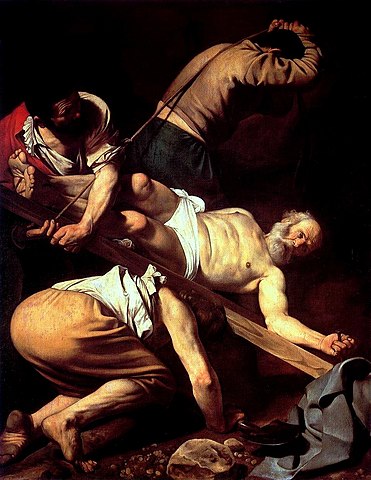


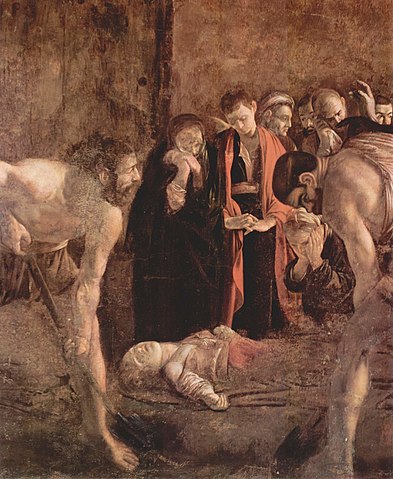
Rembrandt


Claude Lorrain (I've always loved art dealing with the sea)


Pieter Brueghel the Elder
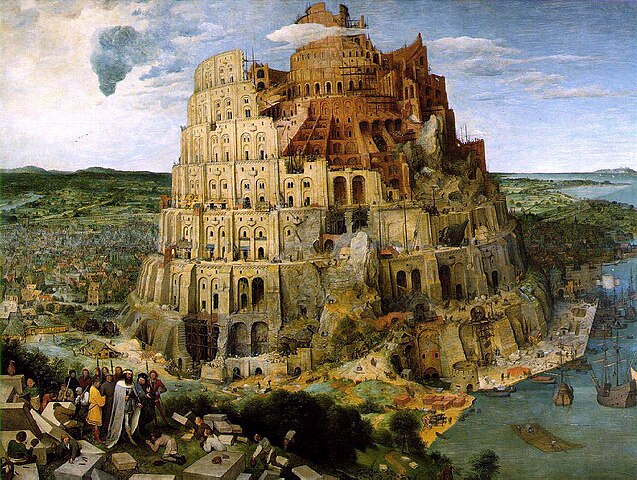


Jacques-Louis David
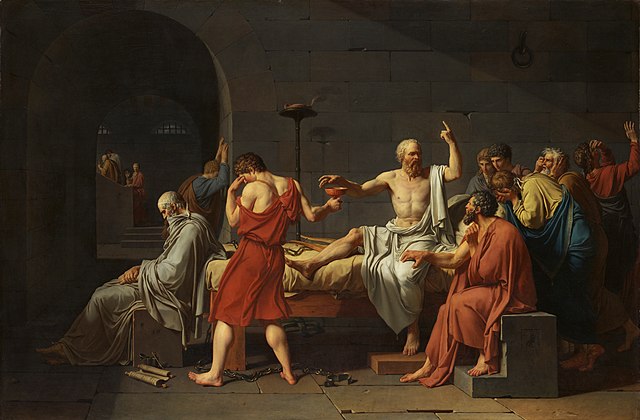


Paolo Veronese

(got to see this at the Louvre-it was awe-inspiring)
Frans Francken the Younger (this piece is just so meta)

(this serves as my current iPad background)
David Teniers the Younger (again, meta)

Hendrick Van Cleve

-
Clinging to Douvres rocks
Nice range of examples Mutatis and I applaud your sense of discovery, finding a new favorite among the periods of art. Free flowing, exuberant decoration, use of curvaceous forms (less orthogonal/ rigidity), ornate precision, are the first impressions that come to mind when I think of the Baroque period.
Caravaggio’s paintings to my neophyte eye, appear to exemplify the characteristics of Baroque, but to be precise, I believe he falls in the transition between the Late Renaissance and Baroque. Mannerism?. He certainly had major influence on the Baroque period artists and architects. Of course the lines are typically fuzzy along the edges of one style to the next.
Veronese too was late Renaissance with influence on the Baroque. Speaking of Veronese, you might be interested in his fresco paintings in Andrea Palladio’s villas. Take a look at Villa Barbaro and Veronese “trick of the eye”.
Perhaps St. Lukes will stop by to expound on the topic.
There’s no particular favorite period of art for me, but I’ll share a few examples of sculpture, architecture and painting from the Baroque period that are still fresh on my mind either from recent museum visits or posts elsewhere:
Salvator Rosa
Death of Atilius Regulus 1662
From Art Institute of Chicago website:

Pythagoras Emerging from the Underworld
From Kimbell Art Museum website:

Jason Charming the Dragon

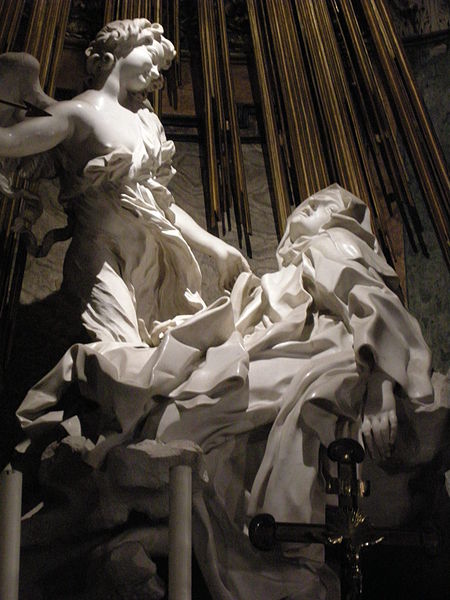
Giovanni Lorenzo Bernini:
Ecstasy of St. Teresa
From Wikipedia:
Portion of the Fountain of the Four Rivers as it appeared in 1988.
The figure shown represents the Danube River reaching up to touch the Papal Coat of Arms.

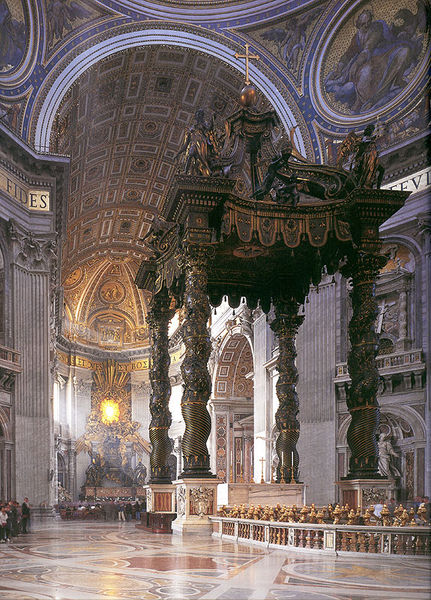
The Baldichino (canopy) over alter at St. Peters in Rome.
From Wikipedia:
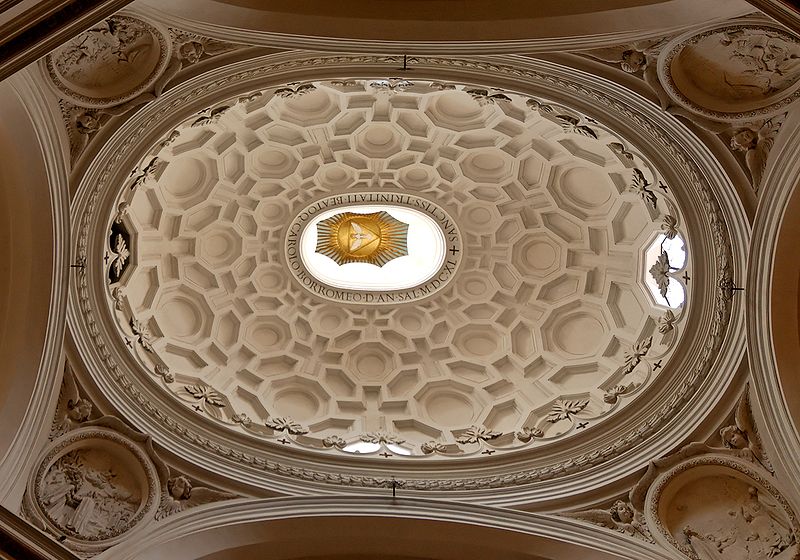
Francesco Borromini
San Carlo alle Quattro Fontane
From wikipedia:

Eustache Le Sueur Meekness
Photo taken at Art Institute of Chicago

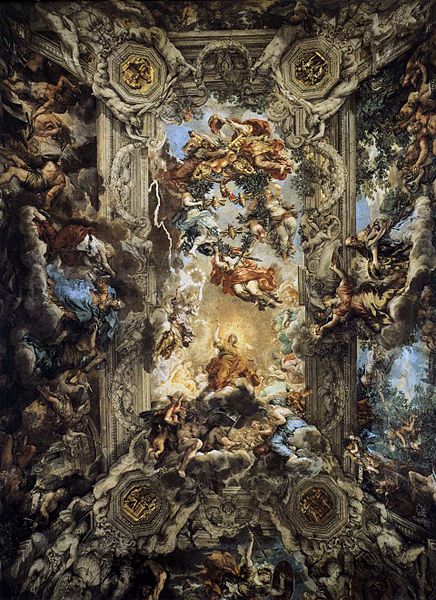
Pietro da Cortona
Allegory of Divine Providence and Barberini Power
From Wikipedia
-
Beautiful pictures, Gilliat. I especially like Allegory of Define Providence and Barberini Power and Jason Charming the Dragon, both of which shall go into my iPad's pictures folder (I wonder how many people use the pictures folder of their iPad strictly for art?).
-
Artist and Bibliophile
Caravaggio’s paintings to my neophyte eye, appear to exemplify the characteristics of Baroque, but to be precise, I believe he falls in the transition between the Late Renaissance and Baroque. Mannerism?. He certainly had major influence on the Baroque period artists and architects. Of course the lines are typically fuzzy along the edges of one style to the next.
Caravaggio is actually considered to be the key linchpin... in the shift from Mannerism to the Baroque. Quite commonly he is credited as the father of the Baroque. His earliest works exhibit certain Mannerist tendencies. In many ways Mannerism can be compared with Modernism. Following upon the heels of the Renaissance, the Mannerists rejected naturalism and stressed the artificial. Proportions were distorted and abstracted, the sense of space was confused, and the compositions often revolved around a central void:

-Bronzino-Allegory

Pontormo-Descent from the Cross

Parmagianino-Madonna Enthroned (Note the bizarre proportions of the Mother, the leg of the figure to the left, and especially the child. Note the confusing spatial construction with the smaller figure in the distance seen lower down)

Rosso Fiorentino-Deposition
The Mannerist paintings often dealt with a certain "decadent" sexuality:

And graphic violence... both often quite gratuitous in nature:

There was also a sarcastic, mocking view of heroism and nobility. Hercules might become absurdly bloated... like a 16th century Michelin tire man:

Or the Greco-Roman God, Mercury might be turned into an effeminate, prancing, pretty-boy:

Caravaggio began his career painting his own pretty-boys... often for high-ranking, clergy:

Like the Mannerists, his early works were often sarcastic or mocking in nature... such as in the Conquest of Amor in which Michelangelo's famous sculpture representing the heroic Triumph of Justice is reduced to the triumph of the smug and sexually alluring boy cupid over the arts and sciences.


Yet already Caravaggio has brought something new to painting. His figures exhibit a masterful naturalism that is more "photographically" real than anything seen up to this time. He also brings a new drama of light.
His mature paintings, on the other hand, take things to a whole new level. He brings an unrivaled naturalism, and explosive and theatrical use of the contrast of light and dark, and fully rejects the artifice of Mannerism:


The changes wrought by Caravaggio are more influential than those of almost any artist in the whole of art history save but a few (Picasso, Michelangelo...) Nearly every major Baroque painter was profoundly impacted by his work: Rubens, Van Dyck, Velazquez, Del La Tour, Le Nain, Rembrandt, etc... and this influence carried over into the Romantic movement with the paintings of Delacroix, Jacques Louis David, etc...
Beware of the man with just one book. -Ovid
The man who doesn't read good books has no advantage over the man who can't read them.- Mark Twain
My Blog: Of Delicious Recoil
http://stlukesguild.tumblr.com/
Similar Threads
-
By The Atheist in forum General Chat
Replies: 7032
Last Post: 03-10-2018, 02:20 PM
-
By burmesedays in forum Author List:
Replies: 4
Last Post: 11-16-2014, 11:54 PM
-
By The Atheist in forum Shakespeare, William
Replies: 115
Last Post: 03-02-2014, 04:00 PM
-
By The Comedian in forum General Literature
Replies: 2
Last Post: 04-05-2009, 06:19 PM
-
By IWilKikU in forum General Chat
Replies: 2
Last Post: 02-26-2004, 02:05 PM
Tags for this Thread
 Posting Permissions
- You may not post new threads
- You may not post replies
- You may not post attachments
- You may not edit your posts
-
Forum Rules