I think there was an anti-enid blyton period where her books were removed from the shelves, yet she has stood the test of time nevertheless.

I think there was an anti-enid blyton period where her books were removed from the shelves, yet she has stood the test of time nevertheless.
Before sunlight can shine through a window, the blinds must be raised - American Proverb

I have never had any trouble with Carroll. Not when I was nine, and certainly not now.Originally Posted by JCamilo

I'm amazed that Rowling's books provoke such controversy on this lit forum. They are good Kid/ teen books.
Anything that encouraged/ encourages kids reading is good with me. The later books had more adult covers too, but I think this was a response to the adult readership they developed.
(Ok - I'm behind the anti-flak settee now waiting for the fire.)
Just so you know, the bulk of Potter's readers even around the release of the last few books was shown to be significantly more adults than Children. The idea of getting kids to read is only half true.
Even so, though originally a hater, I recently decided to take a different stance. There will always be books that people dislike that are popular, Potter just fills the hole right now.
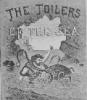
Paul’s illustration exemplifies a similar path toward a passion for reading my son followed, along with a little prodding my his parents. He was captivated by Harry Potter. His reading interests soon branched out beyond Potter into the world of H.G Wells, Jules Verne, Walter Scott (Ivanhoe) and several others.
.
Good literature is not troublesome. It can be understood in many layers, because anyone arguing Caroll is simplistic because they had no trouble with him as a kid must have forgotten that your mommy jumped Jabbewocky while reading to you.
I'm not sure why you've acquired this condescending tone in addressing me, but I'll put that aside for now.
Your claim is that Carroll is complex with regard to structure and diction (which does indeed mean word choice), which is rather tangential to the discussion at hand. Let's indulge you, though. I'm assuming, and correct me if I'm wrong, that your thoughts on structural complexity rely on the circularity of the narrative and the ambiguity of conflict resolution in the text. As for your opinion of the diction, it very likely is geared towards the use of polysemous words, as indicated by your insistence on "layers" in the text.
I would like to point out that these are the views espoused by "open interpretation" theorists (phenomenological theory), which has taken over the world of literary theory in more recent years. Accordingly, the number of interpretations that can be yielded from a given work is proportionate to the work's likelihood of "greatness." I should probably just redirect you to the True Art Is Incomprehensible page of tvtropes, but that could be likened to condescension, so I won't.
Instead, I'll bring up classics of children's literature/folklore that have stood the proverbial test of time without being referentially ambiguous and have a decidedly more finite set of interpretations. These include various fairy tales ranging from both the folk collections of the Grimm brothers to Hans Christian Anderson's own creations. With that said, these stories are primarily considered didactic, almost never concerned with a discursive definition of morality and show a reliance on formulaic tautology. Yet why are they so important? Oh, that's right. Because the layers that you insist are so important are still present.
Now how this relates to HP is important because Rowling's implementation of certain archetypal situations can be argued as just as heavily layered as you claim Carroll to be.
It is hilarious.
Yes, Carroll vocabulary cannt be classificated as simplistic if he is using a technique of vocabulary construction that increases the complexity of vocabulary, which is basically what James Joyce would do (with more intensity), trying to dismiss it as something recent (It is not, this trait of Carroll was addressed on early XX century already and appropriated by several authors) of a particular form of theory is not going to change it.By the way, the circularity of the text is medieval and so is complexity of structure affecting reading interpretation. Dante wrote about it.
It is a matter of fact. Carroll vocabulary is not simplistic. (Even when He is using basic english, he is not simplistic at all. As I addressed in the first post in this reggard, simplistic text do not means use of simple vocabulary or not, illeterate people could understand Ariosto, yet, he is far from simplistic).
As the theme and interpretations of the text, the existence of different layers of significance have nothing to do with simplistic. It is not saying a simple symbolism, but Carroll text does not resume to the literal interpretation (a girl goes to an adveture, it is dream) but allow several readings. From his joke with paradoxes , mathematical enigmas, psychology (as one of the influences of surrealism), the plaything with chess, the concepts as identidy, time and espace, Carroll complexity is comparable to those he had influence upon, from Chesteron, Borges, Joyce, Cortazar, Breton, Bataile, etc. There is nothing simplistic about him and saying that as a kid (a childish meaningless comment, how you can afirm you have no problem reading Carroll or any text when you first read is beyond me. The text must be awful like the phone list) enjoying Carroll. It is well writen. It works. But that is far from being able to understand it or reducing it to the be something simple. Very far from Rowling (some possibilities exist there, but nowhere as near as inventive or variated as Carroll) which is basically a structure of best-seller. But I did not even compared or argued anything about Rowling - I said it didnt matter, I said Caroll is not simplistic and however argues it is just ignoring the obvious history of Alice. Those works are not similar. And unlike you propose, I wasn't the one who brought Alice and Carroll to the argument.
As faerie tales, they are not didact at all. Faeries tales origens are from mythological themes being appropried by rural areas when the religious themes were lost to a new dominating religion and intelectual production. Faeries tales are most likely born from Ovid than anything else as Eros and Psyche (Apulleio) in this case is considered one forefather of it. They were just histories, with the same histories as today. Grimms, aimed didact funtion (Perrault a little too but Gallant did not, and 1001 Nights is a prime example of collection of faery tales) but those two did not invented faery tales.
And they are extremelly ambiguous (if not by the form, variations from popular culture) by interpretation. Red Hidding Hood with all his plot simplicity is ambiguos and allow more interpretations than almost all works of literature. As Andersen (which style is his prime work), His Emperor and the Nightingale is extremelly complex, as the guy is not talking about a single theme, but also the romantic notions of art (Years before the guys from Frankfurt school are talking about mechanical repetiion of art), so I have no idea what you mean about simplicity or finite interpretations.
Obviously, as I have no intention of Rowling comment in my previous post, I am sure she uses several well stabilished symbolic patters of fantasy in her texts. But this wont make Carroll (or Anderson) anywhere near simplistic and they can not be used to defend/attack her texts. The arguement that her books are simple because of children stories is false. Just it. Children literature does not need to be simplistic. Andersen and Carroll are evidences of that. (JBI pointed, her later works were not even children literature).
"Live with your century but do not be its creature." - Friedrich Schiller
Sometimes there are people creative enough to think of the wide scheme of things and sometimes it is sheer happenstance. Some of the layers we attribute so various authors just happened and some were actually thought of and intended.
So as not to disturb the Rowling/Carroll debate with regard to this point, I'll use a non-literary example, Bugs Bunny cartoons. They were filled with adult humor and propaganda that did not disturb the young viewers as those messages went over their heads while they were still able to enjoy the lesser (if you will) content, but it gave the parents something they might enjoy, as well.
Now to give my two cents on the Rowling/Carroll discussion:
I read both the entire Harry Potter set as well as Carroll's two Alice books and Sylvie's to my children, even though by the end of the Potter series the children might have been considered, by many, too old to read to, but it was a family time beside a fire, even one of my married children would come home for "reading time" when she could. Sadly, that ended with the Harry Potter series because of their ages at the end of the series, so I suppose I have a soft spot for that reason.
My oldest daughter is a Lewis Carroll fan (well perhaps not quite a fanatic, but he is her favorite author). The others have many and varied interests.
Personally, I enjoyed them both. Lewis Carroll offered some thoughts to think and was entertaining, too. Harry Potter was escapism and purely entertaining for me.
I'd rather have questions that I can't answer than answers that I can't question.
I have very little interest continuing a discussion with someone who can't help but be pretentious, belittling and rude. Having said, that I will not hesitate to address you the same way that you've been addressing me. I would like to point out that, contrary to your responses, my original post did not imply in any way that Carroll is simplistic. My original post concerning Carroll is this:
People on this forum like to crucify J.K. Rowling for being too simplistic. In reality, these books were marketed to a younger audience. They may not be "great literature" on the scale of the typical literary canon, but they could easily become classics of children's literature, much aligned in the tradition of Carroll, Baum or Dahl. None of these authors utilized stylistically difficult structure or diction (one could argue against a cohesive narrative strand in several of their works), but they are important to children's literature nonetheless.
My original post dealt with difficulty, not complexity. Hence the mention of not encountering difficulty when reading Carroll. My argument is not that Carroll is not complex but that children's literature need not be incredibly complex. Having said that, let me quote the good users of the gamefaqs forums: Learn to read. Your post was irrelevant to what I said and was meant either to incite an argument or to be pedantic. In either case, it's rather disagreeable.
Also, if you're going to mention and embrace the multiple-interpretation theories of literature, then I'd recommend not making such concrete statements as essentializing opinions as facts, which you've consistently done. It's self-contradictory and makes for a poor argument.
Oh, and to assert that fairy and folk tales are not or were not intended as a didactic medium is naive at best, outright ignorant at worst.
Sorry, but I was never rude with you.
You wrote: "None of these authors utilized stylistically difficult structure or diction (one could argue against a cohesive narrative strand in several of their works), but they are important to children's literature nonetheless."
None of those authors were Baum, Caroll, etc. So, unlike you said, You did claimed he was simple (You said Rowling came from the same tradition, first pointing that members like to say she is simplistic) then said they had no difficult structure or diction. I corrected it and you now You are having a fit because unlike you may have intented, you did not argued Children Literature must be not complex, You added one Author that is considerable complex. You should just accept that you are wrong (You provided no argument against Carroll complexity). Instead you are offended and only because you are pointed as wrong (I did not even said anything personal towards you, how offensive can this be?).
By the way, anyone vaguelly familiar with the multiple interpretations of texts know it does not imply in any lack of objective argumentation or even of concrete statments. Quite otherwise - the awareness of those traits pass by most simple concrete statment: each reading experience is different from another.
And Faery tales are not didact. That is like arguing art is didact. Before calling me ignorant or naive, argue what is didact nature of Eros and Psyche or even of 1001 Nights. (The variation of use and forms of faery tales would be strong argument enough to dismiss anyone who thinks faery tales is only the form given by Grimm) or try to work with oral storytellers, from societies where writting is not present and see if stories there were more than Hamlet is too us: an aesthetic experience.
Now, Children Literature does not need to be complex (I have no idea how something will be difficult without causing the impression of complexity), just like any literature does not. Children Literature is exactly like any literature. What happens is that good literature is complex. That simple.
Last edited by JCamilo; 08-21-2010 at 04:59 PM.
With regard to any writing and it's didactic intent; only the author knows for certain, the intent to teach, unless one is reading a text book, in my opinion.
This should not be confused with what a reader can learn, whether a reader does learn and what tools are used for learning. For this I hope there is no limit, exclusion or obstacle that prevents one from the ability to learn from any and everything.
I'd rather have questions that I can't answer than answers that I can't question.
None of those authors were Baum, Caroll, etc. So, unlike you said, You did claimed he was simple
Again, you're confusing difficult with complex. I never said that they were not complex. I said that complaints AGAINST ROWLING involve her being simplistic.
(You said Rowling came from the same tradition, first pointing that members like to say she is simplistic)
Saying that they come from the same tradition does not mean that they have identical merits. What I meant is that the actual events of the story are not all that complicated. They all follow the monomythic tradition. Person goes to other world. Person conquers trials. Person returns. Joseph Campbell. That simple.
then said they had no difficult structure or diction.
They don't. Recall that "difficult" and "complex" are different terms.
I corrected it and you now You are having a fit
We'll come to this in a moment.
because unlike you may have intented, you did not argued Children Literature must be not complex,
I DID NOT USE THE TERM "COMPLEX" IN MY INITIAL POST. Seriously, I do not want this to become an issue of semantics, but you have fastened yourself to the idea that I said something I did not.
You added one Author that is considerable complex. You should just accept that you are wrong (You provided no argument against Carroll complexity).
I don't have to address an argument that I didn't make in the first place.
Instead you are offended and only because you are pointed as wrong
Your argument is based on something I didn't even say.
(I did not even said anything personal towards you, how offensive can this be?).
Let's start with the infantilizing tone of these statements:
It can be understood in many layers, because anyone arguing Caroll is simplistic because they had no trouble with him as a kid must have forgotten that your mommy jumped Jabbewocky while reading to you.
There is nothing simplistic about him and saying that as a kid (a childish meaningless comment, how you can afirm you have no problem reading Carroll or any text when you first read is beyond me.
Then there's the above trivializing of my end of the discussion by calling it "a fit." So thanks for dishonesty, but always remember that practically anything you post on the internet is universally available.
By the way, anyone vaguelly familiar with the multiple interpretations of texts know it does not imply in any lack of objective argumentation or even of concrete statments.
Yet nowhere does phenomenological theory say that any singular opinion is correct. You happen to posit your own feelings about an author as factual, which is an arrogant fallacy.
And Faery tales are not didact. That is like arguing art is didact. Before calling me ignorant or naive, argue what is didact nature of Eros and Psyche or even of 1001 Nights.
I understand that mythology and Scheherezade form a basis for fairy tales, but you're asking me to prove that the foundational tales have a didactic tilt. Those tales, although foundational, are not necessarily the same as fairy tales. Your request is in itself an illogical attempt to disprove my points by forcing me into an impossible discourse.
And fairy tales have a didactic element to them. As anyone who has studied elementary oral lit can tell you, these types of formulaic folktales had an educational purpose. That makes it a didactic.

Why does "good" literature have to be "complex"?
 Posting Permissions

 Reply With Quote