


Yesterday I heard and interview with the inventor and futurist Ray Kurzweil on the BBC Worldservice. I'd like to post a link but I can't find it, so I'll summarize his main points:
- human genes/ evolution are deficient, e.g. in that life expectancy hasn't
increased as much as it should (in his opinion)
- merging biological and artificial intelligence is a natural part of human
evolution because we invented those technologies ourselves and they are not
imposed on us by an outside agency (aliens etc.)
- it's already possible for Parkinson's sufferers to have a pea sized computer
in their brain, that can even be updated without an operation by wireless
access
- in the near future these technologies will develop rapidly and we will have
blood cell sized nanobots in our blood, which can clean up cancer cells or
diabetes
- we will also have nanobots in our brains and our brains will be part organic
part artificial; we'll be able to download information from the internet
directly to our brain and will update our software every day; we'll be able to
create a virtual environment inside our brain
- we will be able to download our memories/consciousness/personality onto a
computer or virtual environment and will be immortal; death is not 'natural'
in that death is not what gives meaning to life; it's creativity and
relationships and positive ..stuff that gives meaning to life and death is a
robber of these things
I found all of this very intriguing and appealing, but I'm a bit skeptical. About downloading info from the internet: I tend to think that the human brain needs to acquire information the hard way, i.e. by studying, categorizing, evaluating and making connections. Even if you pick up a lot of information without much of an effort, this sort of information is useless if you can't embed it in your prior knowledge and make connections. So I'm not sure this internet-in-the-brain would work. Personally speaking, it annoys me immensely when I forget things, but then I also find it extremely rewarding to learn new things. If we didn't have to make an effort to find things out, would we lose our curiosity and thus the urge to learn? Maybe if information was that easily accessible, we wouldn't value it that much and no one would be bothered to create new knowledge?
About downloading your consciousness: Ray Kurzweil himself said that consciousness cannot be explained by science and we need philosophy to speculate about it. So how can we be sure this will work? Even if it works, won't the original person 'die' anyway and the newly awakened virtual person will be someone else? I.e. would there be continuity of consciousness?
Nanobots: I can only say this: Imagine you've got a nanobot malfunction and see an NHS doctor about it?
Doctor: "How can I help you?"
Patient: "My nanobots are malfunctioning."
Doctor: "Oh well... just drink a lot of water to flush them out."
Patient: goes home and dies a slow and painful death
What are your views? Please take the poll (you can choose more than one option)


 Reply With Quote



 Originally Posted by Virgil




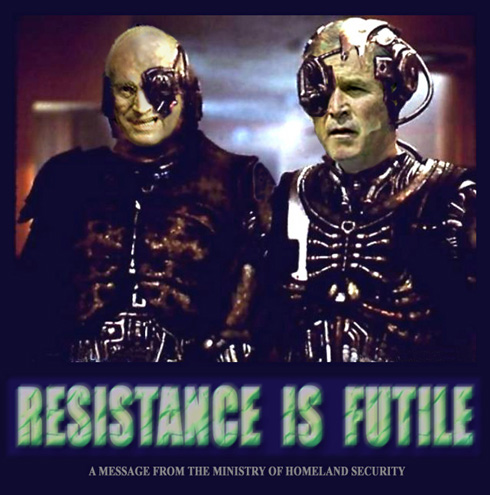





 Now that is actually funny. Can you imagine what would happen if the brain got a computer virus? Would we go into convulsions like an epilectic or would we go catatonic? Now that could be a funny sci-fi story.