
I kind of liked it, yo.Originally Posted by Babbalanja


I kind of liked it, yo.
I like A Clockwork Orange, but it is by no means Anthony Burgess best book despite the fact its the one that appears in all those top 100 lists. Earthly Powers is better, in my opinion. Its in the first person too. The narrator (who is a fictional author) is "self-conscious" and makes comments about how he tells the story.
Trivia: the American edition of A Clockwork Orange contained a glossary whereas the British edition (and thus the one I read) didn't. I would disagree with the idea of a glossary. I think part of the fun of the novel is subconsciously learning the language.
Although I did enjoy that aspect of Clockwork quite a bit, I have to agree with the Humbert Humbert over Alex. By the way I've noticed that most people don't make the effort to read his other novels when in my opinion The Doctor is Sick was better than A Clockwork Orange (just my opinion).
 Someone said the movie was banned in the UK ....
I thought the US always did the banning in those days. I saw the film when it first was released, and liked it very much. I started the book once, but was turned off by having to keep using a glossary to look up language. I will have to return to it soon.
Me too. I thought it was key to Burgess' critique to have Alex just want to settle down and have a family like that. It was a better address to attempts to engineer morality than if Burgess had just plumped for the idea that evil is endemic and ineradicable. It suggested instead that people actually can and do change, and that the attempt to treat them as wind-up dolls whose personalities can be altered to suit society is a violence against this capacity.
Holden Caulfield is another very strong first person voice. Also Patrick Bateman in American Psycho.

I thought the narrative voice in A Clockwork Orange was very effective. I don't know if the author's intention is for the reader to feel 'closer' to the narrator more than it is to express the ideas in the novel more effectively.
I also don't think the purpose of creating any particular narrative voice is to create a voice with which the reader 'can identify.' Narrative voice is a tool, one of the devices an author uses to convey the ideas of the work. I think the purpose of the close 1st person narrative in A Clockwork Orange is, in part, to create an experience for the reader that puts him/her into Alex's shoes in order for the meaning to have more effect. The voice is chatty, ironic, personal, profane, etc. He's a character you would normally dislike, but because the reader is drawn in so closely to the workings of his mind and because his tone is so chillingly childish and self serving, there is far more effect than third person narrative would have. The narrative voice in A Clockwork Orange helps to convey the grotesque, frightening and yet human Alex and what he experiences; narrative technique in the novel helps Burgess convey his ideas about the human condition, what man does or might do to each other, etc.
I don't have a 'favorite' novel or narrator and don't think about literature in those terms or in the terms of a favorite type of narrative voice. Narrative voice is a tool, a technique; a good writer uses the narrative perspective best suited to convey his or her ideas.
Last edited by myrna22; 03-21-2010 at 05:20 AM.
The answers you get from literature depend upon the questions you pose.
- Margaret Atwood
Of course the UK banned things too.
As far as I know, Kubrick withdrew it here himself because he was disturbed by the way it had spawned copy-cat violence – kids actually dressing up like Alex and his droogs and going out and beating up old ladies. It remained banned here until his death, resulting in the closure of London's last great art house cinema, The Scala in King's Cross, which showed it pre-ban-lifting and then went bust due to legal fees. A great shame. It's now a nightclub. Like we really need another one of those.
Last edited by blp; 03-23-2010 at 10:49 AM.
I can't say I like Anthony Burgess much, as I've never delved into his other work. Mostly because his feud with Kubrick made him come off as a pompous ***.
Still, this was a fantastic read, and perhaps one of the most unique and inventive uses of language in a novel.
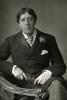
Burgess wrote several other novels (and some music as well), but his fame rests with A Clockwork Orange, which was made famous by the Kubrick film of the same name.
One of the most remarkable things is just how accurate and faithful (in this case) the film is to the book: virtually a direct 'translation' from one medium to another.
Both are brilliant.
Burgess' novel requires a little turning to the glossary at the beginning, but as one proceedes through the book the language becomes more familiar.
Considering the film was released in 1971, it's remarkable how well it stands up.
I don't know that I felt closer to the story because of the narrator's voice, but it did have an effect on me.
Oh, and I agree with the Humbert Humbert being the best, Lolita is such a misunderstood novel.
I'd rather have questions that I can't answer than answers that I can't question.
To me the whole purpose (/meaning) of the novel was to pose the question: Is it better to choose to be bad or to be forced to be good?
Anyone else have thoughts on the purpose/meaning of the novel?
It's a futuristic dystopian novel in the vein of The Time Machine, 1984, and Brave New World, etc.
Because of the corruption of society Alex and his droogs are beastly devils; but Brugess comes down on the side of free will in opposing that criminals be treated with this insidious Ludivico Technique whereby they are physically transformed (via a Pavlovian treatment).
http://en.wikipedia.org/wiki/Classical_conditioning
My version of the novel didn't have a glossary and I didn't think one was needed. I actually think that a glossary would have distracted me and taken a lot of enjoyment out of reading it. I loved both the book and the film, but am still undecided as to how I feel about the last chapter.

Another really great novel that features a first person, kind of hacked English, narration is Trainspotting by Irvine Welsh. It focuses on a group of Heroin addicts and their friends. The first person chapters are written in slang English and can be hard to follow, but totally worth it.
Currently Reading: Anathem, Finnegan's Wake, The Brothers Karamazov
 Posting Permissions

 Reply With Quote