Buying through this banner helps support the forum!
-
02-24-2010, 10:56 PM
#166
Registered User

I hit the motherlode of bleep-bloop today at the lovely 110-year-old library in Wayland, Massachusetts! My wife is going to need an Advil drip.
Stimmung - Karlheinz Stockhausen
This vocal work is just hypnotic: a sextet of voices singing hymns to either the deities of world religions or the key of B-flat, depending on your slant.
Wilson's Ivory-bill - Lee Hyla
John Zorn's Tzadik Records released this CD of Massachusetts native Lee Hyla's chamber music. I've always respected Hyla's eccentric work.
Flashbacks - Mario Davidovsky
Piano Trio and Schwartzes Madrigal - Mauricio Kagel
Chamber music from two expert Argentine Modernists.
Matthias Pintscher
This Teldec disc has Christoph Eschenbach conducting Hamburg ensembles in three orchestral works of the upstart German composer.
The Garden of Cosmic Speculation - Michael Gandolfi
This Massachusetts composer's symphonic ode to an oddball Scottish gardener is actually sort of cheesy. But hey, I like the subject matter.
Symphony #3 - John Harbison
This CD also has Harbison's Flute Concerto. He's long been one of the premier composers in the USA, and this contains some of his Nineties work.
Modern Woodwind Quintets - Barber/Carter/Cage/Schuller
I've always loved Barber's wistful Summer Music, but I'm interested to hear the selections from the other Modernist masters.
Regards,
Istvan
"It is time we realized that to presume knowledge where one has only pious hope is a species of evil."
— Sam Harris
-
02-25-2010, 01:12 AM
#167
Artist and Bibliophile

The fact of the matter is that you have to have some prior knowledge or you're not truly appreciating the music for what it is. This could be as basic as knowing the instruments of the orchestra; knowing what sonata form is; knowing what a theme-and-variations structure means. I'm sorry if having to undergo even this minimal amount of education scares people away from listening to classical music, but that's what's necessary. You know this, too, but for some reason you can't admit that true appreciation comes at a price.
One of our chief areas of disagreement seems to be centered upon the idea that one can only appreciate a work of art (a work of music specifically) after having gained a degree of formal knowledge of the structures of the music, the artist's intentions, and the innovations he or she brought to these formal traditions. Again, I must disagree. I read poetry for years without ever having formally studied the poetic structures (beyond sonnet form... and perhaps haiku and limerick). I would need a guidebook to discern Dactylic hexameter from Dactylic tetrameter or to know what the hell an Antistrophe or an Amphibrach is... although I do know what an Epithalamium is. By the same token, I feel that one need not be knowledgeable of iconography, the history of painting, or visual compositional structure to appreciate this...

(Raphael)
this...

(Ingres)
this...

(Bonnard)
or even this...
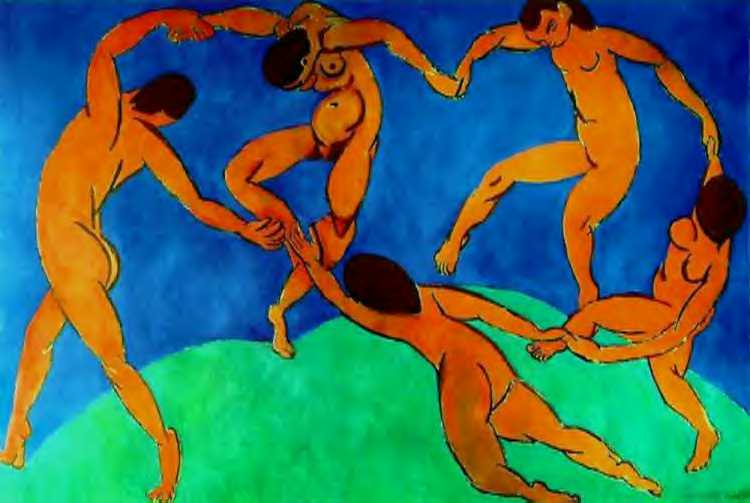
(Matisse)
but this...

(Jack Tworkov)
this...

(Pollack)
this...

(Sean Scully)
and certainly this...

(Jane Edden)
... all begin to leave the viewer without a background in the history of art, art theory, art criticism, etc... baffled. On on hand we must admit that the artistic vocabulary of the older art works has been absorbed into the larger visual culture. They are a common language, if you will. Even the formal distortions of Picasso and Matisse have been absorbed to a certain degree into commercial illustration, cartoons and comics, etc... This is not true of certain examples of more recent art. But one might also point out that this is not true of all examples of more recent art... or all examples of the strongest contemporary art. Artists like Andrew Wyeth...

Chuck Close...

Lucian Freud...

Will Cotton...

Richard Diebenkorn...

Al Held...

and even Francis Bacon...

all rank among the leading figures of Post-War painting... in spite of the fact that they clearly utilize elements of older traditions... and as a result they are among the most accessible of later artists... certainly in comparison to various aspects of abstraction and conceptual art installations. I would suggest that beyond the use of elements of traditional forms... of an understood or recognizable language... what these works also have going for them is a clear content beyond the purely formal. They are recognizably works of art about people, human emotions and experiences... and not merely (or primarily) works of art about art... works of art about formalist innovations. It is hard for the average viewer to recognize the above paintings by Albers or Pollack as being about anything except painting. As a result these works rely deeply upon the viewer's knowledge of the formal and theoretical history of painting... and as a result are quite forbidding or inaccessible to the viewer lacking such.
Now don't get me wrong. I am not making a value judgment here. I quite like Pollack (and Rothko, and Guston) and Sean Scully is one of the strongest living painters, by my standards... but I clearly recognize why such art is not more popular and I'm not about to kid myself by suggesting that it's all the fault of a lazy or ignorant audience. I think the same holds true of certain examples of contemporary music. While I'm quite intrigued personally by John Cage's Sonatas and Interludes for Prepared Piano I find the work intrigues me mostly on an intellectual level... that in a certain way it is an academic exercise that doesn't grab me on other levels.
You seem to have political reasons for getting annoyed by arrogant composers not seeing the realities of the market.
I'm not suggesting that an artist makes pandering to the largest possible audience a goal. We'll leave that to Thomas Kinkade, Dan Brown, and Lady Gaga. I believe that virtually anything an artist creates will have its audience. Let's face it, if we consider the sales of CDs on Amazon and other such sites, even a composer such as John Cage and Stockhausen probably reaches an audience far larger than J.S. Bach ever knew in his lifetime. On the other hand, we need to recognize that if as an artist I elect to aim my art solely at that audience with a deep knowledge of the history and development of art and of contemporary art theory, form, and criticism, I cannot bemoan the fact that the larger audience doesn't appreciate my works or blame them for their laziness or ignorance. I can't believe that James Joyce thought that Finnegan's Wake was going to reach the masses or that Webern ever truly imagined that serialism or atonal music would be whistled by the postman. If the artist does wish to reach a larger audience we either need to invest greatly in artistic education (although this still leaves us with the problem that even within those knowledgeable of contemporary art, there are huge discrepancies of opinion)... or the artist needs to consider the wants and needs of the audience.
In most art forms, I've seen a retreat from real innovation during my lifetime. And in serious music, even the composers who are working in accessible forms are lumped in with the avant-garde. What does this indicate except that audiences haven't kept up with developments over the past few decades?
Here is perhaps our largest disagreement. You suggest that you have witnessed a retreat from real innovation and a ("shocking"?) lumping of "less innovative" artists/composers in with the avant garde. What you fail to recognize is that there is no clear definition of who or what represents the avant garde. The example or what some may assume to be the most experimental art works I show above... examples of Abstract Expressionism (Pollack), Minimalism (Scully), and Conceptual Art (Edden) are all styles that have been embraced and taught by academia for years. The Chuck Close (Photo-realism/Process Painting) and the Will Cotton (Post-Modernist irony) may be the most avant garde by some standards... just as the embrace of older (even medieval traditions) may be more avant garde among composers than is a continual rehash of Modernism. I would also again suggest that the extremes of innovation are not the sole measure of artistic merit. Schoenberg, in many ways, wrought a far more drastic rethinking of the tradition of music than J.S. Bach ever did... indeed, it is quite arguable that Bach's son, C.P.E.... one of the leading figures of the development away from the Baroque and toward classical form... may have wrought more innovation than old J.S. And yet in spite of the fact that Bach stayed clearly within the tradition he was born into, I have no doubt as to who was the greatest composer... and it ain't C.P.E. or Arnie.
By the way... I've been listening to some bits and pieces of Stockhausen's Stimmung, and indeed it piques my interest. Of course I am a great follower of vocal and choral music... including some rather Modern and Post-Modern examples. I've also been listening to a bit of John Harbison lately... although right now I'm listening to Elina Garanca's Bel Canto... a lovely collection of beautiful arias:

Beware of the man with just one book. -Ovid
The man who doesn't read good books has no advantage over the man who can't read them.- Mark Twain
My Blog: Of Delicious Recoil
http://stlukesguild.tumblr.com/

-
02-25-2010, 05:33 AM
#168
Alea iacta est.

Stlukes, let me just start by saying that that is my favorite Ingres painting. As for the Klee you posted yesterday, when I look at his work I always think, "Hmm, I got a rug looks like that." Patterns make a fine background, but they shouldn't be content. Then again, that Wyeth is very skillfully done, but he needs more than an empty house with clothes in it. Not all subjects are equal and they can make the difference between a decent painting and a great painting. You know that Caravaggio is my favorite artist, but his paintings of fruit do nothing for me. And while the Held painting isn't hard on the eyes, it belongs more in a geometry textbook, than hanging in a gallery. Doodle a figure in there and at least you're contemplating man's relationship to something.
If there are two contemporary artists who are at least on the right track, they would probably be Nerdrum and Giger. However, their work is so unwholesome that I really can't get behind what they do. I still wouldn't match them against:

Death of Talos

King Tut Bust

Paulo Uccello's Deluge

King Tut relief on back of throne

Persepolis Bulls

Five Hundred Luohan by Daohong

Terracotta Army

Ludovisi Sarcophagus
EDIT: One artist whom I do enjoy, though he died recently, is Hans Feibusch. He did some really nice murals. Andrew Conklin does stuff I don't actually hate. Freud I'd class with Nerdrum in the "Fine effort but ewe!" category. Cotton and Close need to realize there is a difference between wit and beauty. And Wyeth's colors are dull.
Last edited by mortalterror; 02-25-2010 at 07:53 AM.
"So-Crates: The only true wisdom consists in knowing that you know nothing." "That's us, dude!"- Bill and Ted
"This ain't over."- Charles Bronson
Feed the Hungry!
-
02-25-2010, 07:38 AM
#169
Registered User

Originally Posted by
Petrarch's Love

I think the problem I'm having with this is probably not what you are suggesting would be helpful for people to learn, which is innocuous enough, but the way you are asserting it as the duty of the listener...factual knowledge makes people nervous. They're afraid of being challenged on that ground in even seemingly innocuous ways because it presents the possibility of being wrong and looking stupid.
I'm sorry if it seems horribly cruel to suggest that people need some minimum amount of background in music before they can appreciate serious music. It just happens to be true. You're selling music short by claiming that there's no intellectual component to the experience.
Don't get me wrong, I don't expect people to read scholarly books before they listen to a note of Beethoven. By all means, they should listen to a CD or a concert of Beethoven's works and see if they are interested in taking the next step in learning to appreciate them.
Originally Posted by
stlukesguild
One of our chief areas of disagreement seems to be centered upon the idea that one can only appreciate a work of art (a work of music specifically) after having gained a degree of formal knowledge of the structures of the music, the artist's intentions, and the innovations he or she brought to these formal traditions. Again, I must disagree. I read poetry for years without ever having formally studied the poetic structures (beyond sonnet form... and perhaps haiku and limerick). I would need a guidebook to discern Dactylic hexameter from Dactylic tetrameter or to know what the hell an Antistrophe or an Amphibrach is... although I do know what an Epithalamium is. By the same token, I feel that one need not be knowledgeable of iconography, the history of painting, or visual compositional structure to appreciate this...
Your own analogies hurt your case. When you started reading poetry, you didn't merely experience the verses in some pre-rational way. You had already learned to read. That's all I'm saying about music appreciation: you have to learn to listen, otherwise it's just pretty sounds.
I mentioned before that you're expecting your visual art analogies to do work for which they're not equipped (the visual experience and the listening experience have a lot of relevant differences), but since you continue to do so, I'll answer on those terms.
I agree that that wonderful Matisse is very easy to appreciate on a non-intellectual level. My wife likes to say that great paintings should strive for beauty, and that's a fine example. But people without the background in aesthetics and art history necessary for true appreciation would say the exact same thing about Thomas Kinkade. Even in the history of art, there are kitchmeisters whose work would no doubt please a viewer without discernment. This is my point: the intellectual facet to appreciation is important.
What you fail to recognize is that there is no clear definition of who or what represents the avant garde.
I don't mean that we can predict which composers' work will endure for centuries. All I mean is that for the vast majority of listeners to serious music, everything that isn't old-fashioned and diatonic gets lumped together and demonized as avant-garde. Schoenberg may as well be Lachenmann for all most people know. A mainstream composer like John Corigliano isn't widely known for his substantial music, but for his soundtrack work. But according to you, the blame lies with the composers for not striving hard enough to be accessible and marketable!
It seems obvious to me that any challenge is too demanding for modern audiences. I'm not expecting listeners to take courses in composition. However, I don't think it's too much to ask that they make a minimum of effort to understand what's been happening in serious music for the past hundred years before dismissing it all as horrible, scary noise.
Regards,
Istvan
"It is time we realized that to presume knowledge where one has only pious hope is a species of evil."
— Sam Harris
-
02-25-2010, 10:04 AM
#170
However, this is only one way that a person may arrive at such a substantial appreciation of music, and where I continue to disagree with you is in the claim that formal knowledge and understanding are necessary to appreciate complex music. Again, I’m not saying knowledge doesn’t enhance a person’s listening experience or that it can’t be a way into developing appreciation. I'm also not saying that it may not take some time and attentive listening to get into certain kinds of music. What I’m saying is that formal knowledge is not the only way into deepening one’s understanding of music.
I would certainly agree with Petrarch here about not necessarily having to understand the full workings of classical music to be able to like and appreciate it on some level, though that a further understanding of form and method would probably no doubt enhance the listening of it is some way as it would for almost anything, art, books, sculpture, fishing...
This conversation also made me think of the time in my life when I was possibly the most profoundly appreciative (in more senses than one) of music. When I was 18 I went through a period of several months when I was unable to walk, periodically unable to see, and generally confined to bed without the ability to read, but one of the things I was able to do was to listen to music (and to remember the poetry I had memorized—always memorize your favorite poems. They come in handy in near death situations and long lines at the supermarket! ).
Blooming heck! That must have more than a little scary – though I certainly agree about memorising poems for those near death experiences and supermarkets, though often they can amount to the same thing.
Meanwhile, maybe the whole group can unite in a sing along of "Hey Jude."
As long as this is not going to collide with my plans to write a melodramatic stage adaptation of Hardy’s Jude the Obscure, where I’m going to intersperse several refrains from “Hey Jude” and build-up to a full crescendo of the whole song as Jude walks off stage head held down in misery. I thought of the idea while watching Ibsen last week, for some reason - the whole thing just came to me in a flash! This could be the beginning of a beautiful new career...
The fact of the matter is that you have to have some prior knowledge or you're not truly appreciating the music for what it is. This could be as basic as knowing the instruments of the orchestra; knowing what sonata form is; knowing what a theme-and-variations structure means. I'm sorry if having to undergo even this minimal amount of education scares people away from listening to classical music, but that's what's necessary. You know this, too, but for some reason you can't admit that true appreciation comes at a price.
But I don’t know (at least I don’t think I do) what a theme and variation structure is, does that mean that I don’t feel a profound sense of calm and beauty when I listen to Bach?
Sure, as I said earlier investing time in learning about anything is going to perhaps further you appreciation of it, but it isn’t any different from music to anything else, in fact music one of the beauties of music is that it can speak to you directly with absolutely no formal training at all – really it is a little absurd position to take placing "formal training" with "listening" together in such a way – as long as you are lucky enough not to have been born deaf then music is open for you, for all. Even with literature you have to be able to read first, music is instantaneous.
It's the difference between standing in a pool and actually swimming. With just a minimum of training, kids learn to swim. If they don't make that effort, they can't swim.
Don’t think that I am defending my ignorance of the formal aspects of music, I am not, but neither does it mean that I am going to drown if I attempt to listen to Bach or Mozart. As ever I will always seek to learn more of what interests me, but there is only so much that you can do and if my personal educational has taught me anything at all, it is how little I actually do know, and how much there really is out there to try to comprehend.
That's all I'm saying about music appreciation: you have to learn to listen, otherwise it's just pretty sounds.
"Just pretty sounds" is rather an understatement here don't you think?
-
02-25-2010, 11:27 AM
#171
Registered User
Originally Posted by
Neely
Don’t think that I am defending my ignorance of the formal aspects of music, I am not, but neither does it mean that I am going to drown if I attempt to listen to Bach or Mozart.
You know that's not what I meant. Anyone can stand waist-deep in a pool and enjoy the water. But if you haven't learned how, you can't swim.
It's a matter of degree, no doubt about it. If your level of music appreciation is just enjoying the 'profound feeling' that the tones produce in you while you listen, then you're just standing in the water. Someone with a little knowledge of the structure and context of the work is doing a dog paddle. And someone who studies scores and has a keen understanding of composition is like Michael Phelps.
"Just pretty sounds" is rather an understatement here don't you think?
Well, a profound sense of calm and beauty isn't that much more substantial an understanding of staggeringly complex music like Bach's. Don't sell his genius short.
Regards,
Istvan
"It is time we realized that to presume knowledge where one has only pious hope is a species of evil."
— Sam Harris
-
02-25-2010, 11:50 AM
#172
Alea iacta est.
Originally Posted by
Babbalanja
You know that's not what I meant. Anyone can stand waist-deep in a pool and enjoy the water. But if you haven't learned how, you can't swim.
It's a matter of degree, no doubt about it. If your level of music appreciation is just enjoying the 'profound feeling' that the tones produce in you while you listen, then you're just standing in the water. Someone with a little knowledge of the structure and context of the work is doing a dog paddle. And someone who studies scores and has a keen understanding of composition is like Michael Phelps.
At the risk of being the kid who peed in the pool... I don't get your analogy.
"So-Crates: The only true wisdom consists in knowing that you know nothing." "That's us, dude!"- Bill and Ted
"This ain't over."- Charles Bronson
Feed the Hungry!
-
02-25-2010, 01:07 PM
#173
in angulo cum libro

Originally Posted by
Babbalanja
I'm sorry if it seems horribly cruel to suggest that people need some minimum amount of background in music before they can appreciate serious music. It just happens to be true. You're selling music short by claiming that there's no intellectual component to the experience.
Don't get me wrong, I don't expect people to read scholarly books before they listen to a note of Beethoven. By all means, they should listen to a CD or a concert of Beethoven's works and see if they are interested in taking the next step in learning to appreciate them.
I am not saying that there cannot be an intellectual component to music, I am saying that formal, intellectual knowledge is not necessary in order to appreciate the complexity of music. Again, I wonder if we are employing the term "intellectual" in a different way, with you aligning it with any sort of active engagement that helps us to take note of the various features of a piece of music, and me aligning it with more rational secondary analysis? (See the second half of my extensive response above).
As I've tried to say before, I am also not saying that you are being "horribly cruel" in making the suggestion that people need some musical background. I am saying that: 1) I don't think this is a successful approach to getting people into music (or any other art form for that matter) because it leads to misunderstanding and turns them off (They think you're saying they are mindless cretins etc.) I am not saying this is solely a problem with you. It's something I've learned the hard way from my own experience as an apologist for the arts.
2) It's always better to provide people with formal knowledge you have and they don't than to draw attention to the fact that you have formal knowledge that they don't and then tell them it's their duty to go forth and obtain it.
Originally Posted by
Babbalanja
You know that's not what I meant. Anyone can stand waist-deep in a pool and enjoy the water. But if you haven't learned how, you can't swim.
It's a matter of degree, no doubt about it. If your level of music appreciation is just enjoying the 'profound feeling' that the tones produce in you while you listen, then you're just standing in the water. Someone with a little knowledge of the structure and context of the work is doing a dog paddle. And someone who studies scores and has a keen understanding of composition is like Michael Phelps.
Well, a profound sense of calm and beauty isn't that much more substantial an understanding of staggeringly complex music like Bach's. Don't sell his genius short.
Regards,
Istvan
Perhaps a problem we're having is that you see a hierarchy to "intellectual" versus "non-intellectual" experiences of music, whereas I see them as simply different experiences of music. Would Bach feel that he was being sold short because a person had received a "profound sense of calm and beauty" form listening to his music? Or might he think that this was a rewarding payoff for all that hard work, even if the listener didn't appreciate the scaffolding by which he ascended to those heights? I think most artists would be very satisfied to think their art had the power to move people in the way Bach does, even if it meant someone hadn't noted the counterpoint. This is not to say that a composer wouldn't also be happy to have someone appreciate his or her work for its formal qualities, but that I don't know that not being analytical of genius is selling it short.
Yes, there are absolutely things you can get out of a more educated experience with music that you won't get without that formal knowledge, but there are also things that you can get out of a non intellectually inflected listening experience that the most extensive formal training could not give. I don't get privileging one over the other in the way you seem to be doing. I could just as easily characterize the formal training as the "wading in" stage before you reach the heights by adding the emotional component, but I actually don't think the metaphor is an apt one. I think we're talking about different means of appreciating music, both of which can be rewarding in their own ways, both independent of the other or blended together as part of the listening experience. I think there is a great deal of value to both modes of listening, and I absolutely would encourage any listener to explore both the emotional/intuitive and the more formal intellectual means of engaging with music.
Last edited by Petrarch's Love; 02-25-2010 at 01:24 PM.
"In rime sparse il suono/ di quei sospiri ond' io nudriva 'l core/ in sul mio primo giovenile errore"~ Francesco Petrarca
"Follies and nonsense, whims and inconsistencies do divert me, I own, and I laugh at them whenever I can."~ Jane Austen
-
02-25-2010, 01:12 PM
#174
You know that's not what I meant. Anyone can stand waist-deep in a pool and enjoy the water. But if you haven't learned how, you can't swim.
It's a matter of degree, no doubt about it. If your level of music appreciation is just enjoying the 'profound feeling' that the tones produce in you while you listen, then you're just standing in the water. Someone with a little knowledge of the structure and context of the work is doing a dog paddle. And someone who studies scores and has a keen understanding of composition is like Michael Phelps.
That seems a very callous and scientific way to view music. Certainly if a work of art is going to give me a 'profound feeling' a sense of beauty, then I will take that with both hands and be very thankful for the experience.
I don't disagree with your argument that developing knowledge of form and structure or whatever else, is going to further your understanding of it, as with anything in life, but I can't fathom how you seem to reject the instantaneous effect that genius can have on an individual. Genius needs no explanation.
Well,
a profound sense of calm and beauty isn't that much more substantial an understanding of staggeringly complex music like Bach's. Don't sell his genius short.
Well that's perhaps due to my lack of any formal classical training - I know not what I hear...
-
02-25-2010, 01:22 PM
#175
in angulo cum libro
Originally Posted by
mortalterror
Stlukes, let me just start by saying that that is my favorite Ingres painting. As for the Klee you posted yesterday, when I look at his work I always think, "Hmm, I got a rug looks like that." Patterns make a fine background, but they shouldn't be content. Then again, that Wyeth is very skillfully done, but he needs more than an empty house with clothes in it. Not all subjects are equal and they can make the difference between a decent painting and a great painting. You know that Caravaggio is my favorite artist, but his paintings of fruit do nothing for me. And while the Held painting isn't hard on the eyes, it belongs more in a geometry textbook, than hanging in a gallery. Doodle a figure in there and at least you're contemplating man's relationship to something.
So if there isn't a human figure it just doesn't get to you, eh Mortal? I personally had just been thinking what a profound statement about people the Wyeth St. Luke's posted was making. Something about the way he's painted the empty clothes, the empty house, instantly spoke to me about the people who were absent. It's something Wyeth does incredibly well, creating paintings in which what is not there is almost more present than what is. Anyway, I felt a real psychological tension conveying a very profound statement about man's relationship to something in that image, so I found your response interesting. Can't non-human objects still make a comment about the human experience? Not really a disagreement, just some thinking in response to your opinion.
Originally Posted by
Neely
Blooming heck! That must have more than a little scary –
Not on my top ten list of life's great moments.
though I certainly agree about memorising poems for those near death experiences and supermarkets, though often they can amount to the same thing.
You die a little every time
You're standing in the check-out line? :P
As long as this is not going to collide with my plans to write a melodramatic stage adaptation of Hardy’s
Jude the Obscure, where I’m going to intersperse several refrains from “Hey Jude” and build-up to a full crescendo of the whole song as Jude walks off stage head held down in misery. I thought of the idea while watching Ibsen last week, for some reason - the whole thing just came to me in a flash! This could be the beginning of a beautiful new career...
I like it. Broadway, make way for Neely!
"Just pretty sounds" is rather an understatement here don't you think?
Yes.
"In rime sparse il suono/ di quei sospiri ond' io nudriva 'l core/ in sul mio primo giovenile errore"~ Francesco Petrarca
"Follies and nonsense, whims and inconsistencies do divert me, I own, and I laugh at them whenever I can."~ Jane Austen
-
02-25-2010, 02:23 PM
#176
Registered User
I don't know how many more ways I can express my ideas if people aren't going to pay attention anyway. If it pleases you to characterize me as a "callous," emotionally stunted killjoy, have a ball.
I stand by what I've said here. I don't consider reading a few paragraphs in a concert program or CD liner notes so unthinkably grueling that it scares the majority of prospective listeners away. I have too much respect for the genius of JS Bach to reduce his staggeringly complex music to aural wallpaper. And I'm not so narcissistic as to think that modern composers have to pander to my urge for instant, effortless gratification or I'll refuse to listen to them.
Here are some wise words from Charles Wuorinen, one of the greatest composers alive today:
In any medium – music, literature, poetry, theatre, dance, the visual arts – entertainment is that which we can receive and enjoy passively, without effort, without our putting anything into the experience. Art is that which requires some initial effort from the receiver, after which the experience received may indeed be entertaining, but also transcending as well. Art is like nuclear fusion: you have to put something into it to get it started, but you get more out of it in the end than what you put in. Entertainment is its own reward, and generally doesn’t last.
Regards,
Istvan
"It is time we realized that to presume knowledge where one has only pious hope is a species of evil."
— Sam Harris
-
02-25-2010, 04:06 PM
#177
Alea iacta est.
Originally Posted by
Petrarch's Love
So if there isn't a human figure it just doesn't get to you, eh Mortal? I personally had just been thinking what a profound statement about people the Wyeth St. Luke's posted was making. Something about the way he's painted the empty clothes, the empty house, instantly spoke to me about the people who were absent. It's something Wyeth does incredibly well, creating paintings in which what is not there is almost more present than what is. Anyway, I felt a real psychological tension conveying a very profound statement about man's relationship to something in that image, so I found your response interesting. Can't non-human objects still make a comment about the human experience? Not really a disagreement, just some thinking in response to your opinion.
So you were wondering where the people were too? They're running around somewhere without any clothes on. Why couldn't he paint that?
I get it. It's a big spooky house, and there's a lot of shadowy empty space to underscore that feeling of solitude. I just don't find it as profound as all that. Maybe if there were some clues about why the people are absent or where they went. Are they dead? Are they coming back? Why should I even care? There just isn't enough information in that painting to make a hypothesis or hang a concern on. Seriously though, I like sepia tone as much as the next guy; but if color is a feast for the eyes, a person could starve on a diet of Wyeths.
Do I need figures in my paintings in order to like them? With a few notable exceptions: architecture, sunsets, fractals, and three of the pictures in my slideshow, yes. I'm not a guy who collects a lot of pictures of flowers, rocks, and telephone poles. I don't own a lot of photos of cats. When it comes down to it, the only really interesting subject is man. But even portrayed the wrong way that can be dull as well.
I think the Chinese tradition of portraiture stinks. The backgrounds are blank, with the figure seated rigidly in the center, arms at their sides, staring straight ahead. There's not an ounce of character or novelty to them. These interchangeable rag dolls might as well be propped up with a stick, Weekend at Bernie's fashion.
Not just any figure will do, either. There's a hierarchy, and as with most things in life, it starts with good looking famous people on the top.

Normal people have to be remarkable or dynamic in some way

Or the motherload, there's an important historical story behind the picture and the characters are grappling with a universal predicament

I give Van Gogh and Magritte a pass just because they do so much other stuff I love. A work of art's got to have a lot of positives to make up for a major negative like that.
Originally Posted by
Babbalanja
I don't know how many more ways I can express my ideas if people aren't going to pay attention anyway. If it pleases you to characterize me as a "callous," emotionally stunted killjoy, have a ball.
So... are there like sharks in the water?
"So-Crates: The only true wisdom consists in knowing that you know nothing." "That's us, dude!"- Bill and Ted
"This ain't over."- Charles Bronson
Feed the Hungry!
-
02-25-2010, 07:00 PM
#178
-
02-25-2010, 08:39 PM
#179
Registered User
"It is time we realized that to presume knowledge where one has only pious hope is a species of evil."
— Sam Harris
-
02-25-2010, 09:26 PM
#180
Artist and Bibliophile
Stlukes, let me just start by saying that that is my favorite Ingres painting.
It is a stunner... and even far greater in person (it's in the Frick Collection in New York).
As for the Klee you posted yesterday, when I look at his work I always think, "Hmm, I got a rug looks like that." Patterns make a fine background, but they shouldn't be content.
So you can appreciate the purely abstract art of music... and even architecture... but painting must be a picture of something? Why?
Then again, that Wyeth is very skillfully done, but he needs more than an empty house with clothes in it. Not all subjects are equal and they can make the difference between a decent painting and a great painting. You know that Caravaggio is my favorite artist, but his paintings of fruit do nothing for me.
Do I need figures in my paintings in order to like them? With a few notable exceptions: architecture, sunsets, fractals, and three of the pictures in my slideshow, yes. I'm not a guy who collects a lot of pictures of flowers, rocks, and telephone poles. I don't own a lot of photos of cats. When it comes down to it, the only really interesting subject is man. But even portrayed the wrong way that can be dull as well.
I think the Chinese tradition of portraiture stinks. The backgrounds are blank, with the figure seated rigidly in the center, arms at their sides, staring straight ahead. There's not an ounce of character or novelty to them. These interchangeable rag dolls might as well be propped up with a stick, Weekend at Bernie's fashion.
Not just any figure will do, either. There's a hierarchy, and as with most things in life, it starts with good looking famous people on the top.
My God! Mortal! You're a 19th century academician!! Your concept of the heirarchy of artistic subject matter was dominant in the early 19th century and was the very thing against which the great landscape painters, J.M.W. Turner, John Constable, Casper David Friedrich as well as the Impressionists... and later painters such as Cezanne and the Modernists rebelled.
And while the Held painting isn't hard on the eyes, it belongs more in a geometry textbook, than hanging in a gallery. Doodle a figure in there and at least you're contemplating man's relationship to something.

If there are two contemporary artists who are at least on the right track, they would probably be Nerdrum and Giger.
Nerdrum is interesting... very good... but I agree that he is not worthy of comparison with the greatest of the past masters. Giger is better than Frazetta, but still little more than an illustrator.
Freud I'd class with Nerdrum in the "Fine effort but ewe!" category.
Of course he has been described as "the Ingres of Existentialism." The image he paints of humanity is never flattering. I agree that the work inspires a duality of responses: an absolute sense of awe and admiration at the power of his imagery and the absolute splendor of his handling of paint... and a repulsion at what he reveals about humanity.
Cotton and Close need to realize there is a difference between wit and beauty.
Seriously, I see very little "wit" in Close. He is coolly analytical. Cotton's subject matter is certainly light and witty... but his splendid and equally light and fluid handling of paint perfectly suits the subject. Essentially, he is a Neo-Rococo painter: all powder puffs and candy canes.
And Wyeth's colors are dull.
Not "dull"... rather muted. But then again, so are Rembrandt's. The criticism is meaningless as Wyeth never aspire to be a colorist. To criticize his lack of color is rather like criticizing Hemingway for his lack of a rich, sensuous vocabulary.
Seriously though, I like sepia tone as much as the next guy; but if color is a feast for the eyes, a person could starve on a diet of Wyeths.
It is intriguing that you speak of the lack of color, considering that brilliant color has long been connected in the minds of some critics with light-weight art. I'm also intrigued that you criticize Wyeth's color... and yet admit that Caravaggio is your favorite painter... an artist who rarely used little more color than Wyeth. Most of his paintings are limited to earth-tones, white, and red.
There are many other fascinating painters within the figurative/narrative tradition that you would seemingly follow. You might wish to check out:
William Beckman...

Beckman is a phenomenal painter. His absolute stunning details and sensuous surfaces make him a worthy heir of Ingres.
David M. Lenz...

Ian Faulkner...

Stephen Assael...

F.Scott Hess...

Margaret Bowland...

David Bowers...

I agree that that wonderful Matisse is very easy to appreciate on a non-intellectual level. My wife likes to say that great paintings should strive for beauty, and that's a fine example. But people without the background in aesthetics and art history necessary for true appreciation would say the exact same thing about Thomas Kinkade. Even in the history of art, there are kitchmeisters whose work would no doubt please a viewer without discernment. This is my point: the intellectual facet to appreciation is important.
Oh, I agree. Those without much of an eye or experience of art my fall for the commercial or sentimental schlock (rather like Mortal's Frank Frazetta?) along with Raphael and Ingres because they are seduced by the surface "eye candy"... the pretty colors and attractive subject matter and the artist's apparent technical facility. But then again... is this not part of what draws them in initially so that they may wish to invest further effort in learning about or exploring the art so that at some point they may have a deeper understanding. Very few people with little knowledge of art are going to be seduced by Pollack or Tworkov or Duchamp and wish to learn more... to delve deeper. Very few people with a limited understanding of classical music are going to listen to Schoenberg or Ligeti or Philip Glass and be drawn in. Of course, beyond the question of accessibility there is the question of "beauty". Bach, Mozart, and Schubert are in no way less complex than Schoenberg or Ligeti... but they have the added advantage of having complex unabashedly gorgeous. One needs to really stretch the meaning of the term "beautiful" to count Ligeti and Pendercki or Kline and Pollack as "beautiful". There's is a beauty that is most certainly an acquired taste.
In any medium – music, literature, poetry, theatre, dance, the visual arts – entertainment is that which we can receive and enjoy passively, without effort, without our putting anything into the experience. Art is that which requires some initial effort from the receiver, after which the experience received may indeed be entertaining, but also transcending as well. Art is like nuclear fusion: you have to put something into it to get it started, but you get more out of it in the end than what you put in. Entertainment is its own reward, and generally doesn’t last.
I largely agree... but then again that which we define as mere entertainment or in the visual arts, "decoration", is part of what seduces the audience and draws them in from the start so that they are willing to invest the effort to delve deeper. This is true of Mozart, Raphael, Bach, Shakespeare, etc...
I would also note that the key phrase of this quote is that which I highlighted and that is where the dispute as to which individual artists are worth the effort begins. For all of us there are works of art which we deem as not being worth the effort. Chinese opera is not something I wish to explore. What I have heard of it and read of it leads me to believe that I will need to invest far more than I am willing to before I gain any real aesthetic pleasure from it. Finnegan's Wake... which I have read in part several times... leaves me frustrated and seriously doubting if it is worth the effort. For a great many... even a great many who are enamored of and rather knowledgeable of classical music, certain aspects of Modernist and Contemporary classical music leave them doubting whether their time might not be better invested elsewhere. It may ultimately come down to the fact that the appreciation of contemporary art... which often demands we suspend our expectations and be willing to accept something that goes against what we have long thought of as "beautiful"... is something far different from the appreciation of the "classics"... in art, music, or literature.
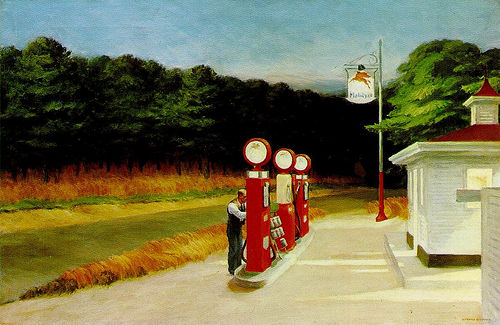
Funny you should mention Hopper...
Funny YOU should mention Hopper. Hopper, after all, was dismissed by a great many of the most influential critics of the time as provincial, conservative, and most certainly ignorant of the innovations in contemporary art and far from being part of the avant garde.
Beware of the man with just one book. -Ovid
The man who doesn't read good books has no advantage over the man who can't read them.- Mark Twain
My Blog: Of Delicious Recoil
http://stlukesguild.tumblr.com/
Similar Threads
-
By subterranean in forum General Chat
Replies: 36
Last Post: 02-06-2011, 04:00 PM
-
By quasimodo1 in forum General Literature
Replies: 13
Last Post: 12-17-2007, 05:21 PM
-
By worldwalker in forum Poems, Poets, and Poetry
Replies: 15
Last Post: 09-21-2007, 01:39 PM
-
By arabian night in forum General Literature
Replies: 1
Last Post: 10-02-2005, 12:52 PM
-
By IWilKikU in forum General Chat
Replies: 12
Last Post: 04-17-2004, 11:54 PM
 Posting Permissions
- You may not post new threads
- You may not post replies
- You may not post attachments
- You may not edit your posts
-
Forum Rules



 Reply With Quote