
What are the best books and authors from those literary movements and WHY do you think they are the best?


What are the best books and authors from those literary movements and WHY do you think they are the best?
When it comes to Naturalism I love Emile Zola's 'Les Rougon Maquart' Series. I have only read 7 out of the 20 so far, however, each book strengthens my resolve.
My first encounter with him was through the 13th novel 'Germinal'. I enjoy reading about characters struggling through life in conceivable ways. Zola's tone in narrating comes across as non-judgemental in regards to the decisions the characters make and every action is able to be traced back to it's origin.
Theodore Dreiser is also paired with naturalism. I have only read one of his books, 'The Financier', and while I enjoyed it, I didn't find myself driving to the store to buy another book by him.
John Steinbeck is another big name especially when it comes to labor struggles. I have read 9 of his books and would highly recommend 'The Grapes of Wrath'. The book follows a family of poor sharecroppers through a series of events that land them in hopeless circumstances. It is interesting to see the family as well as the individual characters evolve throughout the story.
Since naturalism stems from realism I would think it would be important to read samples of both, although I tend to be less familiar with realism, I think the two would be relatively similar.
Last edited by Mariamosis; 12-08-2009 at 12:29 PM.
-Mariamosis
 I've only read two by Zola...
Therese Racquin and Nana. I really enjoyed Nana, but I'm not sure how you clasify it since I just read what I enjoy and don't bother a lot with classification and literary merit. Two of Dreiser's I liked very much were Sister Carrie and An American Tragedy. I suppose these would be classified under realism.
I've read most of Steinbeck, including The Grapes of Wrath. I suppose In Dubious Battle would be a labor struggle book.
The Jungle by Upton Sinclair would certainly be classified under Realism.
Last edited by dfloyd; 12-18-2009 at 08:19 PM.
As far as naturalism is concerned I think Emile Zola is one of the best writers representing this trend in lit.
As someone noticed, realism is connected with naturalism. Honore de Balzac is though to be pioneer of realism in French literature. 'Madame Bovary' by Flaubert can be another example of an excellent realist novel, as well as 'The Red and the Black' by Stendhal.
Hardy is also Naturalism, althouh certainly his frist book Far from the Madding Crowd is not really. I don't know what it is though... It is not really romantic in the sense of Brontë, but it's not like Eliot, it's alittle in the middle: more positive than Realism, but less 'feeling' and emotional than true romantic literature.
Romanticism:
early: JW Goethe, GF Schiller (them two are ravingly romantic), ETA Hoffmann (sweet and quiet Biedermeier), Byron (raving early), W Scott (not really raving, but romantic certainly)
mid: A Dumas (historic romances), V Hugo, the Brontë sisters (particularly Charlotte as the most known), WM Thackeray (very popular in England at the time)
One has to laugh before being happy, because otherwise one risks to die before having laughed.
"Je crains [...] que l'âme ne se vide à ces passe-temps vains, et que le fin du fin ne soit la fin des fins." (Edmond Rostand, Cyrano de Bergerac, Acte III, Scène VII)
The first novel Hardy published under his own name was A Pair of Blue Eyes, although he had published Under the Greenwood Tree & Desperate Remedies earlier. Much as I love Hardy, I don't think that he was a naturally gifted writer. He seemed to struggle a lot with style & would experiment regularly, often with what seem like strange affectations. He did develop immensely later though & I think about half way through The Return of the Native he seems to find his own voice. His paradigmatic determinism didn't really overcome his inability to overcome character stereotypes & intrinsic plot development either. It also seems to me that he had some difficulties fully developing & sustaining metaphors & allegories in his works.Originally Posted by kiki1982

His personal favourite was The Woodlanders & I think that it is mine as well. The Mayor of Casterbridge is also a great read. Of course, we all know what happened after Jude the Obscure was published.
docendo discimus
I really recommend Germinal.
docendo discimus
Walden Pond by Thoreau has some intersting comments on nature.
One day I'll get around to reading Thoreau, if only because Americans keep discussing the bloke!
I think the OP was referring more to Naturalism in literature. I believe it was originally a French 19th century literary movement but is often used to describe Naturalism in drama. It can be compared & contrasted with Realism (which preceded it).
Probably the greatest exponent of Naturalism in literature was Emile Zola with his Les Rougon-Macquart series of novels. Theatrically it was designed to be a step more advanced than Ibsen's realism & mirror life with a directness & even a certain crudity.
Its downfall as a theory is that it was essentially deterministic & although was influential in portraying 'common people' as serious subjects for literature, & wasn't oblivious to cultural & economic milieu (an important part of it in fact) , it relied too heavily on the theories of inherited characteristics in my opinion. It always reminds me of the now discredited Victorian concept of phrenology.
Last edited by Red-Headed; 12-11-2009 at 10:52 PM.
docendo discimus
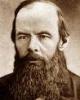
Realism - Dostoevsky - Brothers Karamazov
Romanticism - Hugo - Les Miserables
Naturalism - Zola - Germinal
At thunder and tempest, At the world's coldheartedness,
During times of heavy loss And when you're sad
The greatest art on earth Is to seem uncomplicatedly gay.
To get things clear, they have to firstly be very unclear. But if you get them too quickly, you probably got them wrong.
If you need me urgent, send me a PM
Theres Raquin is such a flawed novel, I am surprised people like it - "temperaments," the theoretical backbone of the novel which make it a "scientific study" even in Zola's time were discredited.
Still, I have a liking for Nana, and Germinal, and La Terre.
If anybody is planning to read him, don't read the books on this site - the translations are the first ever translations, and were subject to huge amounts of censorship when they were translated.
I must admit that I quite enjoyed Thérèse Raquin when I first read it. You can't really compare it to Germinal or L'Assommoir though. The irony is that when the first theatrical performances of Thérèse Raquin were produced around 1873 they seemed to rely somewhat on melodrama, which sort of negated the whole concept of the banishment of artifice promoted by 'naturalism'.
docendo discimus

Majar Barbara is one of the best books that reflects Realism VS Idealism
Shall I go to the left where nothing is right or to the right where nothing is left???
Romantics: Charlotte Bronte, Emily Bronte, Mary Shelley, Percy Shelley, William Blake, John Keats, Nathaniel Hawthorne, Herman Melville, Walt Whitman, William Wordsworth
Realism: Leo Tolstoy, Fyodor Dostoevsky, Honoré de Balzac, Stendhal, Charles Dickens, George Eliot
 Posting Permissions

 Reply With Quote

