Page 3 of 5 FirstFirst 12345 LastLast
Results 31 to 45 of 68

Thread: German Poetry

  1. #31
    Registered User Lulim's Avatar
    Join Date
    Dec 2007
    Posts
    499
    Blog Entries
    2
    I post two of my favourite poems, one is by Theodor Fontane and one by Friedrich Nietzsche. I post them in german because I am in no way able to achieve an adequate translation -- and I hope you do not mind.


    ***************************

    Herr von Ribbeck auf Ribbeck im Havelland
    (Theodor Fontane)


    Herr von Ribbeck auf Ribbeck im Havelland,
    Ein Birnbaum in seinem Garten stand,
    Und kam die goldene Herbsteszeit
    Und die Birnen leuchteten weit und breit,
    Da stopfte, wenn's Mittag vom Turme scholl,
    Der von Ribbeck sich beide Taschen voll,
    Und kam in Pantinen ein Junge daher,
    So rief er: »Junge, wiste 'ne Beer?«
    Und kam ein Mädel, so rief er: »Lütt Dirn,
    Kumm man röwer, ick hebb 'ne Birn.«


    So ging es viel Jahre, bis lobesam
    Der von Ribbeck auf Ribbeck zu sterben kam.
    Er fühlte sein Ende. 's war Herbsteszeit,
    Wieder lachten die Birnen weit und breit;
    Da sagte von Ribbeck: »Ich scheide nun ab.
    Legt mir eine Birne mit ins Grab.«
    Und drei Tage drauf, aus dem Doppeldachhaus,
    Trugen von Ribbeck sie hinaus,
    Alle Bauern und Büdner mit Feiergesicht
    Sangen »Jesus meine Zuversicht«,
    Und die Kinder klagten, das Herze schwer:
    »He is dod nu. Wer giwt uns nu 'ne Beer?«


    So klagten die Kinder. Das war nicht recht -
    Ach, sie kannten den alten Ribbeck schlecht;
    Der neue freilich, der knausert und spart,
    Hält Park und Birnbaum strenge verwahrt.
    Aber der alte, vorahnend schon
    Und voll Mißtraun gegen den eigenen Sohn,
    Der wußte genau, was damals er tat,
    Als um eine Birn' ins Grab er bat,
    Und im dritten Jahr aus dem stillen Haus
    Ein Birnbaumsprößling sproßt heraus.


    Und die Jahre gingen wohl auf und ab,
    Längst wölbt sich ein Birnbaum über dem Grab,
    Und in der goldenen Herbsteszeit
    Leuchtet's wieder weit und breit.
    Und kommt ein Jung' übern Kirchhof her,
    So flüstert's im Baume: »Wiste 'ne Beer?«
    Und kommt ein Mädel, so flüstert's: »Lütt Dirn,
    Kumm man röwer, ick gew' di 'ne Birn.«


    So spendet Segen noch immer die Hand
    Des von Ribbeck auf Ribbeck im Havelland.

    ***************************


    Vereinsamt (Friedrich Nietzsche)

    Die Krähen schrein
    Und ziehen schwirren Flugs zur Stadt:
    Bald wird es schnein, -
    Wohl dem, der jetzt noch - Heimat hat!

    Nun stehst du starr,
    Schaust rückwärts, ach! wie lange schon!
    Was bist du Narr
    Vor Winters in die Welt entflohn?

    Die Welt - ein Tor
    Zu tausend Wüsten stumm und kalt!
    Wer das verlor,
    Was du verlorst, macht nirgends Halt.

    Nun stehst du bleich,
    Zur Winter-Wanderschaft verflucht,
    Dem Rauche gleich,
    Der stets nach kältern Himmeln sucht.

    Flieg, Vogel, schnarr
    Dein Lied im Wüstenvogel-Ton! -
    Versteck, du Narr,
    Dein blutend Herz in Eis und Hohn!

    Die Krähen schrein
    Und ziehen schwirren Flugs zur Stadt:
    Bald wird es schnein, -
    Weh dem, der keine Heimat hat!

    Life is either a daring adventure or nothing.
    To keep our faces toward change and behave like free spirits
    in the presence of fate is strength undefeatable.”

    Helen Keller

  2. #32
    Registered User quasimodo1's Avatar
    Join Date
    Feb 2007
    Location
    Bensalem, PA 19020
    Posts
    3,267

    Paul Celan


  3. #33
    Registered User quasimodo1's Avatar
    Join Date
    Feb 2007
    Location
    Bensalem, PA 19020
    Posts
    3,267

    Hildegard von Bingen

    Columba aspexit / Sequence for Saint Maximin
    by Hildegard of Bingen
    (1098 - 1179) Timeline

    English version by
    Barbara Newman

    Original Language
    Latin
    Christian : Catholic

    12th Century


    A dove gazed in
    through a latticed window:
    there balm rained down on her face,
    raining from lucent
    Maximin.

    The heat of the sun blazed out
    to irradiate the dark:
    a bud burst open, jewel-like,
    in the temple of the heart
    (limpid and kind his heart).

    A tower of cypress is he,
    and of Lebanon's cedars --
    rubies and sapphires frame his turrets --
    a city passing the arts
    of all other artisans.

    A swift stag is he
    who ran to the fountain --
    pure wellspring from a stone
    of power -- to water
    sweet-smelling spices.

    O perfumers! you who dwell
    in the luxuriance of royal
    gardens, climbing high
    when you accomplish the holy
    sacrifice with rams:

    Among you this architect
    is shining, a wall
    of the temple, he who longed
    for an eagle's wings as he kissed
    his foster-mother Wisdom
    in Ecclesia's garden.

    O Maximin,
    mountain and valley,
    on your towering height
    the mountain goat leapt
    with the elephant,
    and Wisdom was in rapture.

    Strong and sweet in the sacred
    rites and the shimmer
    of the altar,
    you rise like incense
    to the pillar of praise --

    where you pray for your people
    who strive toward the mirror
    of light. Praise him!
    Praise in the highest!


    -- from Symphonia: A Critical Edition of the Symphonia armonie celstium revelationum, by Hildegard of Bingen / Translated by Barbara Newman

  4. #34
    Registered User quasimodo1's Avatar
    Join Date
    Feb 2007
    Location
    Bensalem, PA 19020
    Posts
    3,267

    Georg Philipp Friedrich (Novalis)

    LONGING FOR DEATH


    Into the bosom of the earth,
    Out of the Light's dominion,
    Death's pains are but a bursting forth,
    Sign of glad departure.
    Swift in the narrow little boat,
    Swift to the heavenly shore we float.

    Blessed be the everlasting Night,
    And blessed the endless slumber.
    We are heated by the day too bright,
    And withered up with care.
    We're weary of a life abroad,
    And we now want our Father's home.

    What in this world should we all
    Do with love and with faith?
    That which is old is set aside,
    And the new may perish also.
    Alone he stands and sore downcast
    Who loves with pious warmth the Past.

    The Past where the light of the senses
    In lofty flames did rise;
    Where the Father's face and hand
    All men did recognize;
    And, with high sense, in simplicity
    Many still fit the original pattern.

    The Past wherein, still rich in bloom,
    Man's strain did burgeon glorious,
    And children, for the world to come,
    Sought pain and death victorious,
    And, through both life and pleasure spake,
    Yet many a heart for love did break.

    The Past, where to the flow of youth
    God still showed himself,
    And truly to an early death
    Did commit his sweet life.
    Fear and torture patiently he bore
    So that he would be loved forever.

    With anxious yearning now we see
    That Past in darkness drenched,
    With this world's water never we
    Shall find our hot thirst quenched.
    To our old home we have to go
    That blessed time again to know.

    What yet doth hinder our return
    To loved ones long reposed?
    Their grave limits our lives.
    We are all sad and afraid.
    We can search for nothing more --
    The heart is full, the world is void.

    Infinite and mysterious,
    Thrills through us a sweet trembling --
    As if from far there echoed thus
    A sigh, our grief resembling.
    Our loved ones yearn as well as we,
    And sent to us this longing breeze.

    Down to the sweet bride, and away
    To the beloved Jesus.
    Have courage, evening shades grow gray
    To those who love and grieve.
    A dream will dash our chains apart,
    And lay us in the Father's lap.

  5. #35
    Artist and Bibliophile stlukesguild's Avatar
    Join Date
    Jul 2006
    Location
    The USA... or thereabouts
    Posts
    6,083
    Blog Entries
    78
    Columba aspexit / Sequence for Saint Maximin
    by Hildegard of Bingen
    (1098 - 1179) Timeline

    tr. from original Latin
    12th c.

    A dove gazed in
    through a latticed window:
    there balm rained down on her face,
    raining from lucent
    Maximin.

    The heat of the sun blazed out
    to irradiate the dark:
    a bud burst open, jewel-like,
    in the temple of the heart
    (limpid and kind his heart).

    A tower of cypress is he,
    and of Lebanon's cedars --
    rubies and sapphires frame his turrets --
    a city passing the arts
    of all other artisans.

    A swift stag is he
    who ran to the fountain --
    pure wellspring from a stone
    of power -- to water
    sweet-smelling spices.

    O perfumers! you who dwell
    in the luxuriance of royal
    gardens, climbing high
    when you accomplish the holy
    sacrifice with rams:

    Among you this architect
    is shining, a wall
    of the temple, he who longed
    for an eagle's wings as he kissed
    his foster-mother Wisdom
    in Ecclesia's garden.

    O Maximin,
    mountain and valley,
    on your towering height
    the mountain goat leapt
    with the elephant,
    and Wisdom was in rapture.

    Strong and sweet in the sacred
    rites and the shimmer
    of the altar,
    you rise like incense
    to the pillar of praise --

    where you pray for your people
    who strive toward the mirror
    of light. Praise him!
    Praise in the highest!...

    -- from Symphonia: A Critical Edition of the Symphonia armonie celstium revelationum, by Hildegard of Bingen / Translated by Barbara Newman


    Hidegard of Bingen (1098 – 17 September 1179) is one of the most fascinating women in history. Also known as Saint Hildegard, and Sybil of the Rhine, Hildegard was a Christian mystic, German Benedictine abbess, author, counselor, linguist, naturalist, scientist, philosopher, physician, herbalist, poet, channeller, visionary, artist, composer, and polymath. Elected a magistra by her fellow nuns in 1136, she founded the monasteries of Rupertsberg in 1150 and Eibingen in 1165.

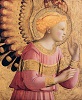
    Hildegard's designs for paintings and tapestries and illuminated manuscripts... inspired by her mystical visions (which some modern psychologists and medical experts have speculated were related to the migraine headaches from which she is known to have suffered) are among some of the most fascinating creations of the middle ages:


    To the present day, Hildegard stands virtually unrivaled among women as quite probably the greatest female composer... certainly one of the most important known composers of the entire middle ages.

    Here is the performance of her Columba aspexit by the Gothic Voices:

    http://www.youtube.com/watch?v=jdVcKfAZJMU

    Intriguingly... right from the very start... Hildegard seemingly falls into the role that will seemingly follow the German's throughout history: that of being far more recognized for her (their) music than for her (their) poetry.
    Beware of the man with just one book. -Ovid
    The man who doesn't read good books has no advantage over the man who can't read them.- Mark Twain
    My Blog: Of Delicious Recoil
    http://stlukesguild.tumblr.com/

  6. #36
    Serious business Taliesin's Avatar
    Join Date
    Jun 2004
    Location
    The West Pole
    Posts
    2,228
    Blog Entries
    3
    Thanks for this thread.
    You know, most English poetry doesn't work for me. For me, it often has an artificial, formal tone.
    Yet German poetry, it seems, does work for me. I have quite enjoyed a number of poems I read in this topic. Maybe it is the influence German culture and language have had on Estonian.
    I remember having this poem in my German book. I copied it from there a long time ago so I might have some typos. Sorry for that.

    Als mein Vater
    mich zum erstenmal fragte,
    was ich mal werden will,
    sagte ich nach kurzer Denkpause
    "Ich möchte mal glücklich werden."
    Sa sah mein Vater sehr unglücklich aus
    aber dann bin ich
    doch was anderes geworden
    und alle waren mit mir zufrieden.
    I think the author was noted to be Liselotte Raune.

    And, of course, this little poem that a number of people claim to be "the only thing they remember from German"

    Ich bin Peter,
    du bist Paul.
    Ich bin fleißig,
    du bist faul.
    If you believe even a half of this post, you are severely mistaken.

  7. #37
    Serious business Taliesin's Avatar
    Join Date
    Jun 2004
    Location
    The West Pole
    Posts
    2,228
    Blog Entries
    3
    And how could I forget this one.


    An die Freude
    Friedrich Schiller


    Freude, schöner Götterfunken,
    Tochter aus Elysium!
    Wir betreten feuertrunken,
    Himmlische, Dein Heiligtum.
    Deine Zauber binden wieder,
    Was die Mode streng geteilt,
    Alle Menschen werden Brüder,
    Wo Dein sanfter Flügel weilt.
    Chor.
    Seid umschlungen, Millionen!
    Diesen Kuß der ganzen Welt!
    Brüder, überm Sternenzelt
    Muß ein lieber Vater wohnen!

    Wem der große Wurf gelungen,
    Eines Freundes Freund zu sein,
    Wer ein holdes Weib errungen,
    Mische seinen Jubel ein!
    Ja, wer auch nur eine Seele
    Sein nennt auf dem Erdenrund!
    Und wer's nie gekonnt, der stehle
    Weinend sich aus diesem Bund!
    Chor.
    Was den großen Ring bewohnet,
    Huldige der Sympathie!
    Zu den Sternen leitet sie,
    Wo der Unbekannte thronet.

    Freude trinken alle Wesen
    An den Brüsten der Natur;
    Alle Guten, alle Bösen
    Folgen ihrer Rosenspur.
    Küsse gab sie uns und Reben,
    Einen Freund, geprüft im Tod;
    Wollust ward dem Wurm gegeben,
    Und der Cherub steht vor Gott.
    Chor.
    Ihr stürzt nieder, Millionen?
    Ahnest du den Schöpfer, Welt?
    Such' ihn überm Sternenzelt!
    Über Sternen muß er wohnen.

    Freude heißt die starke Feder
    In der ewigen Natur.
    Freude, Freude treibt die Räder
    In der Großen Weltenuhr.
    Blumen lockt sie aus den Keimen,
    Sonnen aus dem Firmament,
    Sphären rollt sie in den Räumen,
    Die des Sehers Rohr nicht kennt.
    Chor.
    Froh, wie seine Sonnen fliegen
    Durch des Himmels prächt'gen Plan,
    Laufet, Brüder, eure Bahn,
    Freudig, wie ein Held zum Siegen.

    Aus der Wahrheit Feuerspiegel
    Lächelt sie den Forscher an.
    Zu der Tugend steilem Hügel
    Leitet sie des Dulders Bahn.
    Auf des Glaubens Sonnenberge
    Sieht man ihre Fahnen wehn,
    Durch den Riß gesprengter Särge
    Sie im Chor der Engel stehn.
    Chor.
    Duldet mutig, Millionen!
    Duldet für die beßre Welt!
    Droben überm Sternzelt
    Wird ein großer Gott belohnen.

    Göttern kann man nicht vergelten;
    Schön ist's, ihnen gleich zu sein.
    Gram und Armut soll sich melden,
    Mit den Frohen sich erfreun.
    Groll und Rache sei vergessen,
    Unserm Todfeind sei verziehn,
    Keine Träne soll ihn pressen,
    Keine Reue nage ihn.
    Chor.
    Unser Schuldbuch sei vernichtet!
    Ausgesöhnt die ganze Welt!
    Brüder, überm Sternenzelt
    Richtet Gott, wie wir gerichtet.

    Freude sprudelt in Pokalen,
    In der Traube goldnem Blut
    Trinken Sanftmut Kannibalen,
    Die Verzweiflung Heldenmut--
    Brüder, fliegt von euren Sitzen,
    Wenn der volle Römer kreist,
    Laßt den Schaum zum Himmel spritzen:
    Dieses Glas dem guten Geist.
    Chor.
    Den der Sterne Wirbel loben,
    Den des Seraphs Hymne preist,
    Dieses Glas dem guten Geist
    Überm Sternenzelt dort oben!

    Festen Mut in schwerem Leiden,
    Hilfe, wo die Unschuld weint,
    Ewigkeit geschwornen Eiden,
    Wahrheit gegen Freund und Feind,
    Männerstolz vor Königsthronen, --
    Brüder, gält' es Gut und Blut--
    Dem Verdienste seine Kronen,
    Untergang der Lügenbrut!
    Chor.
    Schließt den heil'gen Zirkel dichter,
    Schwört bei diesem goldnen Wein:
    Dem Gelübde treu zu sein,
    Schwört es bei dem Sternenrichter!


    Ode to Joy

    Friedrich Schiller

    Joy, beautiful sparkle of the gods,
    Daughter of Elysium,
    We enter, fire-drunk,
    Heavenly one, your shrine.
    Your magics bind again
    What custom has strictly parted.
    All people will be brothers
    Where your tender wing lingers.
    Chorus
    Be embraced, millions!
    This kiss for the entire world!
    Brothers, above the starry canopy
    Must a loving Father reside.

    Whoever has succeeded in the great attempt
    To be a friend's friend;
    Whoever has won a lovely woman
    Add in his jubilation!
    Yes, who calls even one soul
    His own on the earth's sphere!
    And whoever never could achieve this,
    Let him steal away crying from this gathering!
    Chorus
    Those who occupy the great circle,
    Pay homage to sympathy!
    It leads to the stars
    Where the unknown one reigns.

    All creatures drink joy
    At the breasts of nature,
    All good, all evil
    Follow her trail of roses.
    Kisses she gave us, and the vine,
    A friend, proven in death.
    Pleasure was given to the worm,
    And the cherub stands before God.
    Chorus
    Do you fall down, you millions?
    Do you sense the creator, world?
    Seek him above the starry canopy,
    Above the stars he must live.

    Joy is the name of the strong spring
    In eternal nature.
    Joy, joy drives the wheels
    In the great clock of worlds.
    She lures flowers from the buds,
    Suns out of the firmament,
    She rolls spheres in the spaces
    That the seer's telescope does not know.
    Chorus
    Happy, as his suns fly
    Through the heaven’s magnificent plain
    Run, brothers, your track
    Joyfully, as a hero to victory.

    From the fiery mirror of truth
    She smiles upon the researcher,
    Towards virtue’s steep hill
    She guides the endurer’s path.
    Upon faith’s sunlit mountain
    One sees her banners in the wind,
    Through the opening of burst coffins
    One sees her standing in the chorus of angels.
    Chorus
    Endure courageously, millions!
    Endure for the better world!
    There above the starry canopy
    A great God will reward.

    Gods one cannot repay
    Beautiful it is, to be like them.
    Grief and poverty, acquaint yourselves
    With the joyful ones rejoice.
    Anger and revenge be forgotten,
    Our deadly enemy be forgiven,
    No tears shall he shed
    No remorse shall gnaw at him
    Chorus
    Our debt registers be abolished
    Reconcile the entire world!
    Brothers, over the starry canopy
    God judges, as we judged.

    Joy bubbles in the cup,
    In the grape’s golden blood
    Cannibals drink gentleness
    The fearful, courage --
    Brothers, fly from your perches,
    When the full cup is passed,
    Let the foam spray to the heavens
    This glass to the good spirit
    Chorus
    He whom the spirals of stars praise,
    He whom the seraphim’s hymn glorifies,
    This glass to the good spirit
    Above the starry canopy!

    Courage firm in great suffering,
    Help there, where innocence weeps,
    Eternally sworn oaths,
    Truth towards friend and foe,
    Mens’ pride before kings’ thrones --
    Brothers, even if it costs property and blood, --
    The crowns to those who earn them,
    Defeat to the lying brood!
    Chorus
    Close the holy circle tighter,
    Swear by this golden vine:
    Remain true to the vows,
    Swear by the judge above the stars!
    I think
    is
    to be expected after the poem.
    Last edited by Taliesin; 11-30-2009 at 12:42 PM.
    If you believe even a half of this post, you are severely mistaken.

  8. #38
    defying description inbetween's Avatar
    Join Date
    Nov 2009
    Location
    germany
    Posts
    131
    since I am german and therefor tortured with schiller and goethe I can tell you that they don't sound so great when you have to analyse them again and again... every language got its good poets I guess (well perhaps not all but many) but about german poets I prefer christian morgenstern, or ringelnatz and so on ... there are lots of good poets and if you are cappable of the german language you may try this http://www.literaturforum.de
    perhaps it helps (I hope so)
    Friends help you move. Good friends help you move bodies.

  9. #39
    Artist and Bibliophile stlukesguild's Avatar
    Join Date
    Jul 2006
    Location
    The USA... or thereabouts
    Posts
    6,083
    Blog Entries
    78
    One of the most powerful post-war poets of Germany was the Romanian-born Jewish poet, Paul Celan (born Paul Antschel). Where the philosopher and musicologist, Theodor Adorno had famously written, "There can be no poetry after Auschwitz," Celan dares to actually write poetry about Auschwitz. His most famous poem is the harrowing death fugue in which the poet creates a fugue-like interweaving and variation upon the central images much as Bach might have done with musical themes. The poem gains its intensity through the contrast of the horrific theme and the emotions it arouses in contrast to the rigorous and even detached... aesthetic nature. Yet Celan was certainly anything but an objective or detached bystander. He had been rounded up into a ghetto after the German invasion of Romania and his parents deported to a camp. His father died of typhus and his mother was shot. Celan would eventually commit suicide years later in Paris.

    Death Fugue

    Black milk of daybreak we drink it at sundown
    we drink it at noon in the morning we drink it at night
    we drink and we drink it
    we dig a grave in the breezes there one lies unconfined
    A man lives in the house he plays with the serpents he writes
    he writes when dusk falls to Germany your golden hair Margarete
    he writes it and steps out of doors and the stars are flashing he whistles his pack out
    he whistles his Jews out in earth has them dig for a grave
    he commands us strike up for the dance

    Black milk of daybreak we drink you at night
    we drink in the morning at noon we drink you at sundown
    we drink and we drink you
    A man lives in the house he plays with the serpents he writes
    he writes when dusk falls to Germany your golden hair Margarete
    your ashen hair Shulamith we dig a grave in the breezes there one lies unconfined.

    He calls out jab deeper into the earth you lot you others sing now and play
    he grabs at the iron in his belt he waves it his eyes are blue
    jab deeper you lot with your spades you others play on for the dance

    Black milk of daybreak we drink you at night
    we drink you at noon in the morning we drink you at sundown
    we drink you and we drink you
    a man lives in the house your golden hair Margarete
    your ashen hair Shulamith he plays with the serpents

    He calls out more sweetly play death death is a master from Germany
    he calls out more darkly now stroke your strings then as smoke you will rise into air
    then a grave you will have in the clouds there one lies unconfined

    Black milk of daybreak we drink you at night
    we drink you at noon death is a master from Germany
    we drink you at sundown and in the morning we drink and we drink you
    death is a master from Germany his eyes are blue
    he strikes you with leaden bullets his aim is true...

    your golden hair Margarete
    your ashen hair Shulamith


    excerpeted from the translation by Michael Hamburger
    complete text:


    http://www.english.txstate.edu/cohen...Hamburger.html

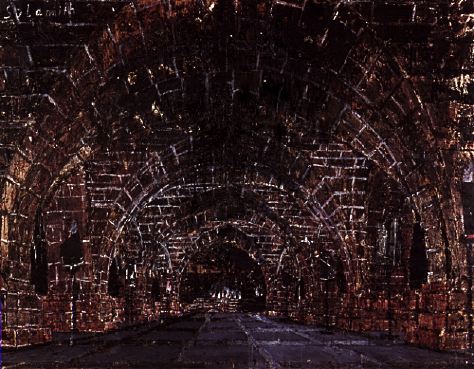
    Interestingly enough the Death Fugue has entered into the larger German culture in a manner not unlike Goethe's poem, Der Erlkönig. Perhaps most interesting... certainly the most powerful use is to be found in the paintings, sculpture, and prints of Anselm Kiefer, arguably the greatest painter working today... most definitely the greatest artist to come out of Germany since the war. Kiefer, who was born in the final days of the war, has long been obsessed with the war and the issue of German guilt and has repeatedly employed the poem in his art work. In the painting Kiefer references the symbol of the ashen-haired Jewish lover, Shulamite, from the Hebrew Song of Songs which Celan uses as a foil to the the blonde blue-eyed Marguerite borrowed from Goethe's Faust. Kiefer draws attention to the choice of the term "ashen hair" in the painting, Shulamith, by representing the Hebrew woman through an image of the ovens at Auschwitz where the Jews were reduced to ashes.


    Inseveral other paintings he represents the tortured landscapes of war-torn Eastern Europe... often traversed by the train tracks leading into the distance... to the camps... scrawled across with lines taken from Celan's poems and strewn with straw that suggests Marguerite's blonde hair:

    Beware of the man with just one book. -Ovid
    The man who doesn't read good books has no advantage over the man who can't read them.- Mark Twain
    My Blog: Of Delicious Recoil
    http://stlukesguild.tumblr.com/

  10. #40
    Registered User
    Join Date
    Apr 2009
    Location
    The Netherlands
    Posts
    146
    Quote Originally Posted by inbetween View Post
    every language got its good poets I guess (well perhaps not all but many) but about german poets I prefer christian morgenstern, or ringelnatz and so on ...
    Yes, Morgenstern! Meeeeemoriiiees...

    Das aesthetische Wiesel

    Ein Wiesel
    sass auf einem Kiesel
    inmitten Bachgeriesel.

    Wißt ihr
    weshalb?

    Das Mondkalb
    verriet es mir
    im Stillen:

    Das raffinier-
    te Tier
    tat's um des Reimes willen.

    The Aesthetic Weasel

    A weasel
    sat on a pebble
    in the midst of a bubbling brook.

    Do you know
    why?

    The mooncow
    quietly revealed to me:

    The clever animal
    just did it for the rhyme.


    Works better in German, obviously.

  11. #41
    Alea iacta est. mortalterror's Avatar
    Join Date
    Mar 2008
    Location
    LA
    Posts
    1,914
    Blog Entries
    39
    Does anybody think that Goethe is a better poet than Milton or Wordsworth? He rarely makes it into the best of lists the way that Shakespeare, Tolstoy, Homer, and Dante do, yet he appears to be arguably the greatest German poet. Even with his novels and Faust I get the feeling that Wordsworth, though probably only the fifth or sixth greatest English poet, would be a match for him. Has anybody given thought as to a relative hierarchy of German poets? Would Rilke be placed above Holderlin? What would it look like and where would you rank the authors in an international comparison?
    Last edited by mortalterror; 12-08-2009 at 01:27 AM.
    "So-Crates: The only true wisdom consists in knowing that you know nothing." "That's us, dude!"- Bill and Ted
    "This ain't over."- Charles Bronson
    Feed the Hungry!

  12. #42
    Registered User
    Join Date
    Dec 2009
    Posts
    45
    Hi,


    I particularly like this poem..

    Wandrers Nachtlied II
    Über allen Gipfeln Ist Ruh,
    In allen Wipfeln
    Spürest du
    Kaum einen Hauch;
    Die Vögelein schweigen in Walde.
    Warte nur, balde
    Ruhest du auch.

    Johann Wolfgang von Goethe


    Its translation is :

    WayFarer's Night Song II

    Over all the hilltops
    is calm.
    In all the treetops
    you feel
    hardly a breath of air.
    The little birds fall silent in the woods.
    Just wait... soon
    by Hyde Flippo

    MarkC
    I am the author of Parmethia

  13. #43
    Registered User quasimodo1's Avatar
    Join Date
    Feb 2007
    Location
    Bensalem, PA 19020
    Posts
    3,267

    Anja Utler

    marsyas, encircled

    Articulation also occasionally occurs
    [. . .] when inhaling (inverse sound).
    Thus, for example, an inverse [f] is used
    from time to time for the expression of a
    sudden, mild pain.

    R. Arnold / K. Hansen


    much later is:
    as if rattling as if: the breath got going and
    along the edge capsules crackling, even cracking
    the seeds they: spurt spray deeper, back
    from the shoreline, across the land


    before that:
    tongue lining the gums with whispers
    chirruping, trilling in the (. . .) in the heat
    lost in haze – fresh-cut grass – it’s
    whirring past – an echo – the wind

    © 2003, Anja Utler
    From: münden – entzüngeln
    Publisher: Edition Korrespondenzen, Wien, Austria 2004
    ISBN: 3-902113-33-2

    © Translation: 2004, Tony Frazer
    From: Mouth to Mouth. Contemporary German Poetry in Translation
    Last edited by quasimodo1; 12-24-2009 at 09:06 PM. Reason: http://germany.poetryinternationalweb.org/piw_cms/cms/cms_module/index.php?obj_id=2223&x=1

  14. #44
    Artist and Bibliophile stlukesguild's Avatar
    Join Date
    Jul 2006
    Location
    The USA... or thereabouts
    Posts
    6,083
    Blog Entries
    78
    Aspen Tree

    Aspen Tree, your leaves glance white into the dark.
    My mother's hair was never white.

    Dandelion, so green is the Ukraine.
    My yellow-haired mother did not come home.

    Rain cloud, above the well do you hover?
    My quiet mother weeps for everyone.

    Round star, you wind the golden loop.
    My mother's heart was ripped by lead.

    Paul Celan (excerpted from translation by Michael Hamburger)

    http://www.artofeurope.com/celan/cel1.htm
    Beware of the man with just one book. -Ovid
    The man who doesn't read good books has no advantage over the man who can't read them.- Mark Twain
    My Blog: Of Delicious Recoil
    http://stlukesguild.tumblr.com/

  15. #45
    Registered User Emil Miller's Avatar
    Join Date
    Jul 2008
    Location
    London, England
    Posts
    6,499
    Quote Originally Posted by MarkC View Post
    Hi,


    I particularly like this poem..

    Wandrers Nachtlied II
    Über allen Gipfeln Ist Ruh,
    In allen Wipfeln
    Spürest du
    Kaum einen Hauch;
    Die Vögelein schweigen in Walde.
    Warte nur, balde
    Ruhest du auch.

    Johann Wolfgang von Goethe


    Its translation is :

    WayFarer's Night Song II

    Over all the hilltops
    is calm.
    In all the treetops
    you feel
    hardly a breath of air.
    The little birds fall silent in the woods.
    Just wait... soon
    by Hyde Flippo

    MarkC
    You have missed the last line: You will be silent too.

    Goethe wrote this as a young man on the wall of a hunting lodge. Returning to the lodge when he was very much older, he wept as he read his own youthful words.
    Last edited by Emil Miller; 02-12-2010 at 08:36 PM.

Page 3 of 5 FirstFirst 12345 LastLast

Similar Threads

  1. A brief history of punjabi poetry.
    By durlabh in forum Poems, Poets, and Poetry
    Replies: 1
    Last Post: 02-11-2009, 04:47 AM
  2. Can Poetry Matter?
    By stlukesguild in forum Poems, Poets, and Poetry
    Replies: 33
    Last Post: 08-05-2008, 12:44 PM
  3. Henry James and Poetry: A Personal Touch
    By Ron Price in forum James, Henry
    Replies: 1
    Last Post: 08-23-2007, 11:56 PM
  4. I need to know!
    By kels21 in forum Who Said That?
    Replies: 14
    Last Post: 11-06-2006, 06:46 PM
  5. The "State" of American Poetry Today
    By jon1jt in forum Poems, Poets, and Poetry
    Replies: 0
    Last Post: 09-16-2006, 04:41 PM

Posting Permissions

  • You may not post new threads
  • You may not post replies
  • You may not post attachments
  • You may not edit your posts
  •