


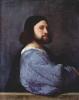
I'd put him up there. Virtually every American poet since him either copies him, or copies William Carlos Williams. Harmonium though, really needs to be read as a single poem, in the sense that Herbert's The Temple needs to be read whole. Generally, he introduced a sort of abstraction to English poetic conceits, where mundane objects are used as figurative symbols for philosophical insights - something which hasn't really faded from our poetic consciousness. Of course, many people dislike him, and I would say I dislike Bloom's interpretation of him (as I dislike the bulk of Bloom's interpretations, since he is such a tedious self-promoting blab who can only rant instead of criticize) but even so, when he established Stevens as a central American poet, he was right in the sense that he has been the most enduring influence on American poetry, far more so than even Eliot or Frost.
As for his poetry not being deep or anything, well, the Emperor of Ice Cream seems like a silly poem at first, but ultimately, once you realize it is about a dead woman who wasted her life, it unwinds and becomes far more profound. That really sits nicely in a series of poems, which really culminates in Sunday Morning. Ultimately though, his unconventional use of images and ideas are what has endured.
Lets be honest - I don't think audiences today are as captivated by Eliot style poetics (and he is a favorite of mine, so don't think I am Eliot bashing). Pound seems to have gone out of fashion, and Eliot's Unreal City seems less relevant and interesting, as the Wars and Post-War periods have come and gone, and the so called Unreal City has become a commonplace vision, rather than a vision built on a shifting cultural consciousness. Stevens though, seems to have fared better - his stylistics have been profoundly influential, to the point where you can hear him talking behind most of the "Academic" American poets of today, and most of the other ones as well.
Ashbery, Ammons, Hollander, Merril, Strand, etc. all are products of Stevens' concept of poetry. I don't think American verse has created a new concept of poetry outside of Stevens' thought since his death - all the new styles merely seem to echo his voice, which in itself echoes Whitman's voice. What he merely did was take Whitman, remove the "Self" from the equation, and the personal, and changed that to the abstract.
Like I said before, the only other voice I tend to really hear in American poetics is William Carlos Williams. Frost seems to have found a disciple in Wilbur, Eliot mostly in British verse, notably Geoffry Hill, but in terms of American voices, Stevens' seems to sound the loudest.


 Reply With Quote
 Originally Posted by JBI






 I do take you seriously. That was a term of endearment and affection.
