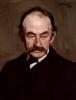
Bitterfly had earlier asked me some nicely framed questions about James and American innocence, and I think the issue is worth continued discussion under James as a specific author. Here is how we started the discussion, and as an avid Jamesian, there are many aspects to it:
Originally Posted by Bitterfly
Speaking about James, I was interested in what you said about the American voice being characterised by its innocence, Jozanny. If you read my post, would you care to explain? Do you mean there are many innocent narrators, or that there's a general wistfulness for a lost age of innocence? I would have said that innocence, its loss and its quest were themes rather than components of a voice, which is why I'm intrigued, actually. I imagined the American voice somewhat like Whitman's, but I'd be at a loss how to define it...
My reply:
Mmm. I am honored to be asked about this, Bitter, but I need to ponder the question. For a start though, I don't think Jamesian narration itself is innocent, as it is usually either third person limited/omniscient. But I think it can be argued that James catches our irritating American naivete near perfectly. Maggie is not only shocked that the Prince would sleep with Charlotte--she refuses to accept that an evil such as this would corrode the excellent freedoms she and her wealthy father enjoy, so she out-maneuvers both her worldly titled foreign husband, and her persumably ex-friend (Charlotte). What her triumph amounts to is open to question--yet it is clear she would not "look the other way" as some women might to keep their status intact. We could also take Bessie, in a shorter, less complex work, who rejects an English Lord because he cannot meet her *ideal* of what an English Lord should amount to. It is radical stuff, within James's sphere, when one really thinks about it.
I hope we might continue to move the discussion forward!

 Reply With Quote

 ), I'd have to think about it more. But shouldn't we first try to define what makes a voice innocent?
 Originally Posted by Bitterfly