
I have always asked myself if Mr. Towsend woulld have been a really bad choice for Catherine.
He was after her money, that's for sure. But by marrying both would have achieved what they wanted, don't you think?


I have always asked myself if Mr. Towsend woulld have been a really bad choice for Catherine.
He was after her money, that's for sure. But by marrying both would have achieved what they wanted, don't you think?
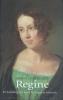
Marriage to the 'gold-digger' would have been a disaster for the socially naive Catherine. Dr Austin Sloper's judgement here was impeccable.Originally Posted by MARIANNE M

Morris Townsend was not the man Catherine loved: her love for him had been blind. She loved an illusion, in part deliberately created by Townsend, that marriage would have soon dispelled. Her optimistic love for Townsend disintegrated some weeks after he abandoned her, because her eyes were finally opened to the truth about the 'gold-digger'. Dad was right all along!
Decades later, Catherine despatches Townsend without hesitation, although memories - mainly those of her father's 'betrayal' - remain excruciatingly painful. So sad.
Last edited by Gladys; 12-16-2008 at 12:38 AM. Reason: grammar
At your instigation Gladys, I read Washington Square in one sitting, and although it is as well crafted as the best of what James can offer, this story is one of those where James gets on my nerves. The real conflict of the story is the dueling contempt between the doctor and Morris towards Catherine, neither of whom can accept her for the gentle woman that she is--and the one way Catherine gets back at her father is to defy him by not renouncing her attachment, despite the fact that she sees her father was right about Townsend, after all. In this case though, the prevention is as bad, if not worse, than the mistake itself. Isabel Archer, a heroine of more mettle, marries Osmond not solely out of blindness to his true nature, but because she sees the quality of his mind, and his ability to appreciate fine aesthetics, and the mistake is her own experience in which the reader infers she will continue to mature. Catherine is given no such chance, and is muted in the shadow of her ghosts--to a father who blames her for not being as fine as her mother, and to a man who simply could not see how she appreciated what she once saw in him.
I assume, from The Bostonians that James did not care for women's sufferage, but he perhaps unwittingly makes the case for it with Washington Square, the goose of an aunt included.
sorry, double posted
This book, Jozanny, is neither about "women's suffarage" nor unrequited love. Henry James is far from straightforward and you seem to have miscontrued the crucial incident.
Despite their difference of opinion over Townsend, father and daughter have much love and loyalty for each other. Although Dr. Sloper underestimates his daughter, he is playfully ironic rather than contemptuous, and Catherine receives this as humour until that dreadful exchange where, off balance, he lets slip - for the one and only time - this hurtful underestimate. The key exchange is:
This striking argument gave the Doctor a sudden sense of having underestimated his daughter; it seemed even more than worthy of a young woman who had revealed the quality of unaggressive obstinacy. But it displeased him--displeased him deeply, and he signified as much. "That idea is in very bad taste," he said. "Did you get it from Mr. Townsend?"
"Oh no; it's my own!" said Catherine eagerly.
Up to here I had found the novel uninspiring but, on reading this, I re-read the page ten times, screamed blue murder at my son doing the novel in Literature and asked, “What on earth is going on here?” While he didn’t know, I found out a couple of pages later.
Catherine is soon mortified and angry once the dreadful meaning of this exchange solidifies. She vows to hide her paternal wound from her father forever, and he never learns of her pain and suppressed anger, a strong emotion indeed for placid Catherine. Understandably, Dr. Sloper assumes his momentary slip has passed unnoticed, forgets about it, and decades later dies in ignorance without opportunity to apologise and set right his momentary blunder. In one fleeting minute, he learns that Catherine is not so bland after all...but to no avail!
Quick to judge others, both Sloper and his daughter back their judgement. Both are damned by an impenetrable breakdown in communication: a family in distress with no way out. Life is like that sometimes.
'Washington Square' is a sobering tale that has little to do with romance or with that worthless gold-digger, Morris Townsend.
I do not think we are so far off on our respective interpretations--but I am trying, once again, to screw my freelance journalist brain back together, despite this horrid Jazzy power chair loan, anxiety, panic, coffee, and the economy. James may get on my nerves now and then, but he is my blessed safe haven, no matter how repressed his orientation.I will reread it again after a space.
PS: "The Lessons of The Master" is a short piece, that to me, is closest to James wanting to confess, somehow, that he is homosexual. I will have to check the date, but I believe it is one of his last shorter works before his death in 1916.
I agree that Morris Townsend is not an out and out villain.
I totally disagree with an earlier post (Gladys) that Dr.Sloper's attitude to his daughter was 'playfully ironic' and that he had much 'love and loyalty'.
I think Dr.Sloper's attitude to Katherine is frightening.That is why I find the book almost as chilling as 'Turn of the Screw'.
Katherine's life is a sad and tragic one. It has been ruined:' Katherine picking up her morsel of fancywork....for life' (final sentence of the book).
Her father has caused that ruin. He is the villain of the story and a particularly horrible one at that, with his cold reason and logic.
Morris Townsend has redeeming features. Dr. Sloper has none.
The lives of Catherine and Sloper become increasingly sad after her engagement with Townsend. The ending, Lochfyne, is certainly tragic. But why do you absolve Catherine of blame?
While rather distant like many fathers past and present, Dr Sloper has his daughter's best interests at heart throughout. He is a loving father, who happens to find his daughter less intellectually stimulating than his brilliant and beloved wife, long-deceased. Once in a lifetime, he inadvertently reveals this to Catherine saying, "That idea is in very bad taste," he said. "Did you get it from Mr. Townsend?" Dr Sloper understandably believes she has missed his blatant slur.
But hours later, Catherine has come to appreciate the slur. Instead of confronting her father at once, anger and disappointment fester within her for the rest of her life. She is her father's daughter: resolute and implacable. She gives her father no chance to make amends for the slur, or to reveal that the man who is right 19 times out of 20 has gravely underestimated his only daughter. Henceforth, Catherine underestimates him. Irony indeed: like father, like daughter. Herein lies the tragedy of 'Washington Square'.
'Like father,like daughter' - good point.
However, I would rather say that Dr.Sloper becomes increasingly bad rather than increasingly sad ( as you put it).
His unfounded suspicion that Catherine and Townsend are in contact behind his back show he is well on the way to paranoia over the issue. When he reduces Catherine's share of the will, his deterioration is complete.
I do absolve Catherine of blame because her only fault, initially at any rate, is her innocence.
Her actions at the end of the story come from her broken heart.
( It's amazing how the more often you read this story, the more you see in it ).
There is more to see in this story, Lochfyne, than basic plot suggests.
Understandably, Dr Sloper does not wish to leave his fortune to Townsend, a ‘gold digger’. Sloper is not so much paranoid as deliberately kept in the dark by Catherine, for decades. Catherine is well aware of the anguish her father suffers through her vow of silence.
On the eve of her trip to Europe, she tells Townsend:
I feel differently; I feel separated from my father.
and
Then I made up my mind. I will never ask him for anything again, or expect anything from him.
After Townsend deserts her:
We know that she had been deeply and incurably wounded, but the Doctor had no means of knowing it. He was certainly curious about it, and would have given a good deal to discover the exact truth; but it was his punishment that he never knew...
While innocent at first, Catherine's quick-fire judgement following Sloper's inadvertent slur, and her obstinacy thereafter, causes ongoing pain for herself and her father. She even passes up marriage opportunities in service of her vow to conceal her irreconcilable breach with her ‘gold digger’.
Her intense grief, 'Catherine's outbreak of anger', on Townsend's return stems from her recollecting the sad circumstances leading to estrangement from the father she once worshipped, her only parent. Decades of pain: unnecessary pain had only she confronted Sloper.
As for Townsend, he means no more to her now than the dust on her shoes.
It's extraordinary how different readers can have completely opposite views of the same character (Sloper).
I suppose that is part of the genius of James.
It is not surprising that Catherine kept her father in the dark ( 'her poor little heart is greviously bruised', chapter 32) and the only anguish her father suffers is from his obsession with Townsend.
Catherine is 'the softest creature in the world' (chapter 2) and she has a father who has 'no sympathy' (chapter 32 ) as his own sister Mrs.Almond puts it.
I'm sorry but for me Dr.Sloper is a sinister character with his contempt for his daughter hiding behind his respectability.
I doubt 'the genius of James', Lochfyne, would allow both our views of Dr Sloper.
That's so unfair to Sloper. Except for the inadvertent slur (the sarcastic, "Did you get it from Mr. Townsend?"), Sloper acts throughout with his daughter's best interests at heart. After all, Townsend is a 'gold digger'.
Sloper has 'no sympathy' in that he expects Catherine to face up to the reality of her 'gold digger', and so she does in time. Mrs Almond mildly reprimands Sloper for the less gentle than way he deals with the jilting of Catherine.
Even, however, had she been able to narrate to him the private history of his daughter's unhappy love affair, it would have given her a certain comfort to leave him in ignorance; for Mrs. Almond was at this time not altogether in sympathy with her brother.
Sloper is by nature somewhat arrogant and detached. Catherine sees little of this except the inadvertent slur regarding her intellect, but thereafter reinterprets much that Sloper had said and done. While Sloper sees himself watching an experiment in human relations, he doesn't imagine for a moment the awful truth that his own relationship with his daughter has lately become the crucial part of this experiment. Of course I can sympathise with Catherine here, but what can justify her stubborn, life-long silence towards her sole parent?
Where is the evidence that Sloper has contempt for his daughter? He loves her, if rather sternly and from a distance, while underestimating her intelligence and moral strength. Except perhaps in the unsettling moment before his inadvertent slur:
This striking argument gave the Doctor a sudden sense of having underestimated his daughter; it seemed even more than worthy of a young woman who had revealed the quality of unaggressive obstinacy.
Aha! You are certainly wrong there. Literary 'experts', as is well known, give diametrically opposed interpretations of, for example, the main character (the Governess) in 'The Turn of the Screw',
Happy Australia Day.
Thanks for your holiday greeting, Lochfyne, and commiserations about Andy Murray.
That's as maybe: I referred only to Henry James.
I began to compile a list of evidence of Dr.Sloper's contempt for Catherine but there is so much of it that it would be tedious to give it all. I would read the word 'disappointment' as 'contempt' and then you have enough in the first two chapters to convict Dr.Sloper.
As for Andy Murray, please keep him in Australia.
 Posting Permissions

 Reply With Quote