I am interested to discover the deeper connection between poetry and philosophy.If anyone has knowledge or any ideas on the subject I would be gratefull if he or she enlightened me on this subject.


I am interested to discover the deeper connection between poetry and philosophy.If anyone has knowledge or any ideas on the subject I would be gratefull if he or she enlightened me on this subject.

I'd suggest some works by Khalil Gibran - some of the most beautiful poetry I've had the pleasure of reading,plus,it does have philosophical background(well,most good poetry does,really) as well. No better way to recognize the connection between the two than by reading and searching for it yourself.(and I don't mean this in a rude way,as if I didn't want to help you)
Noću, u intimnom, poluglasnom razgovoru sa samim sobom, nikako ne mogu zapravo logički opravdati zašto se u posljednje vrijeme toliko uzrujavam zbog ljudske gluposti.
Miroslav Krleža
This is a great question, and I doubt I have the answer but I’ve heard it said that philosophy is the language of meaning, whereas poetry is the language of suggestion. It might be that poetry is a way to get behind the philosophy, to get to what’s been called the “really” real. Poetry, in other words, might be philosophy in action.

All forms of poetry have something philosophical in them imbibed and embedded.
“Those who seek to satisfy the mind of man by hampering it with ceremonies and music and affecting charity and devotion have lost their original nature””
“If water derives lucidity from stillness, how much more the faculties of the mind! The mind of the sage, being in repose, becomes the mirror of the universe, the speculum of all creation.
I happened to read this the other day: Hegel believed philosophy to be superior to all the arts because they rely on sensory information, which is unreliable, whereas philosophy relies solely on reason. He said poetry was the highest of all arts because it was the least sensory and the closest to philosophy. He believed poetry aspired to the condition of philosophy.
On the same day, I read that Derrida believed there was always a sort of residue that could not be philosophised. Which might also suggest a role for poetry.
Could it not be that poetry and philosophy [and music] each are attempting to communicate understanding, but in different ways?
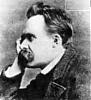
I avoid the application of the handy paradigm of Apollonian vs. Dionysian (but in so doing make a thought-gesture towards the Nietzschean conceptions) to suggest that both philosophy and poetry employ language but with different rules and procedures, and to different "parts" of the mind: rational and emotional, in common discourse.
Whereof one cannot speak, thereof one must be silent.

I have been playing with a notion in my mind... What if our language is too limited to the real points we want to put across, thus, poetry and art convey our perceptions of what it is or ought to be. I think we should start making some new words up. Philosophers have to be restricted by language at some point, I know there must have been some difficulties in early, early times. But, that's just me.
I think therefore, I am; I think I am because I think and if I can think therefore I can be. But it's not the possibility of being it's the assertion I am being, because I can think undoubtedly; and we are thinking beings by my conception: I thought, I think therefore, I know I am.
While we all realise that language changes and words take on new or additional meanings (see the discussion about "gay" here at LitNet, for example), we often overlook that philosophers will often take a common (or ancient) word and give it a very precise and novel meaning. Think of Husserl's use of "bracket" for example, or Heidegger's long hyphenated series of words, not to mention Plato's use of "ideas" to mean "forms" or Aristotle's naming the branches of philosophy.
But let us say that we can only think in words, as an experiment; if there is no word for X, we cannot rationally think X. Perhaps, then, what poets express are another kind of conception for which we cannot have precise words, or enough hyphens to describe:- - - even Plato was reduced to allegory and myth at times.
Or, in a way, could it be that poetry uses hyphenated words without the hyphens?
Last edited by jgweed; 08-01-2008 at 07:35 PM.
Whereof one cannot speak, thereof one must be silent.
I think Frost said it well: Poetry is what gets lost in translation.
Indeed there is very profound connection between the two. Every piece of philosophy embeds philosophy, a message, a something that underlines a meaning, something to put across or communicate in point of fact.
“Those who seek to satisfy the mind of man by hampering it with ceremonies and music and affecting charity and devotion have lost their original nature””
“If water derives lucidity from stillness, how much more the faculties of the mind! The mind of the sage, being in repose, becomes the mirror of the universe, the speculum of all creation.
Today I've been reading about Gilles Deleuze who believed that the purpose of philosophy was to create concepts and the purpose of art was to create affects. Although Deleuze is seen as a post-structuralist, it was important to him to identify the differences between art, philosophy and science (Deleuzian purpose for science: creation of functions) as clearly as possible to avoid them being caught up in some homogenizing Hegelian project in which everything ultimately points towards the same unitary absolute truth, which he didn't believe in.
Deleuze is difficult, but this notion that art is about affects is not that hard to get to grips with. In fact, it probably accords with many of our experiences of art. The tricky and, I think, key word in Deleuze's art, philosophy, science triad is 'creating'. The idea that art is about 'creating' affects rather than simply representing them seems easy enough to accept, but still has important implications.
For me, for instance, it goes some way to explaining why certain filmmakers such as John Cassavetes, Alan Clarke and Mike Leigh, who are commonly thought of as realist, actually seem at their greatest (most affecting) when depicting a reality that is not recognisable, but at a heightened state of intensity. Whereas, more prosaically and dutifully 'realist' directors like Ken Loach and Volker Schlondorff never really seems to me to attain the status of art at all. The inverted commas are nevertheless appropriate, because Loach's and Schlondorff's realism renders itself no less unreal, but considerably duller and less affecting, by assuming the duty of political didacticism - a function which Deleuze, in essentialist mode, would have said was contrary to the function of art, i.e. that it should be creating an affect rather than telling us what to think. A sort of unashamed philosophical prescription against art's prescriptiveness. What's fascinating about this to me is that it challenges an assumption so ingrained that I've pretty much seen it as reality up to now: that art's ability to affect us must be a result of its ability to remind us of something. Deleuze's 'creating affects' formulation effectively reverses this, making art's greatness lie in pointing to a future, not a past. It would seem that, in his view, when we are affected by a piece of art, it's because it is identifying and releasing potential, not simply tending old wounds or recovering losses. It is something new. This is also interesting as a dignification and defense of originality at a moment when it was under heavy fire from people who would, in many respects, have been seen as Deleuze's philosophical allies. As a post-structuralist, he can be seen as one of the main theorists of the postmodern era, and one of postmodernism's defining features is often said to be a skepticism regarding the notion of originality. Art critic Rosalynd Krauss, in 1986, published a collection of essays called The Originality of the Avant-Garde and other Modernist Myths.
If the notion of creating affects is a challenge to the idea of art's memento function, the notion of philosophy creating concepts is surely even more of an outrage, in that it suggests that philosophy's proper function is not even the identification of truth. In a sense, this is the same idea: if art is not supposed to remind us of anything real, philosophy is not supposed to remind us of any truth. This accords with Deleuze's Nietzschean view that there is no pure truthful state from which we are fallen.
Hardest of all to accept in all this is the idea of science's proper function being the creation of functions. I don't know if I have much to say about this, but it's the kind of thing that makes arch-rationalists like Francis Wheen and Richard Dawkins so hostile to Deleuze and post-structuralism in general.
Λακωνιζεινεστιφιλοσοφειν!
Golly. What does that mean, yanni?Originally Posted by yanni

"Golly. What does that mean, yanni?"
my welcome message to Diamantis-should be answered by him-if not then I will but not just now.
To philosophise is to-think a lot and then-say little, something like Edgar's "Amontillado".
Poetry can but rarely does follow this rule.
 Posting Permissions

 Reply With Quote