Page 4 of 6 FirstFirst 123456 LastLast
Results 46 to 60 of 81

Thread: Brazilian Literature

  1. #46
    Registered User Brasil's Avatar
    Join Date
    May 2008
    Location
    Vitória-ES, Brasil (Brazil)
    Posts
    166

    J'aime beucoup le français...

    ma preferisco l'italiano per che è una lingua più musicale.

    But yes, I want to talk with you in French.

    I don't know if it is allowed here, it is an English forum. Maybe someone protest against us!

    Do you remember the rules?

    Anyway, there is a French forum of Literature. I am a member too.

    I'll try to keep contact, although my vacations will end and I will not have the time to write as much as I wrote here.

    Let's see what future brings.
    Nice to talk with you.
    Last edited by Brasil; 05-15-2008 at 12:49 AM.

  2. #47
    Registered User
    Join Date
    Feb 2007
    Location
    Belo Horizonte- Brasil
    Posts
    3,309
    Quote Originally Posted by Antiquarian View Post
    Really? Spanish and Portuguese always seemed to flow so wonderfully to me. English and German can sound so harsh at times, at least to me. Now, the harshest language I've ever heard is Mandarin and Cantonese Chinese. It sounds like the people are yelling at you when they're really just talking normally for them.
    Spanish is a bit baroque.
    That makes me remember an anedote that Jorge Luis Borges told in a interview. He and Neruda are heads of the latin american literary world but they never liked much each other. After decades of little attacks they meet each other in the 70's, already very old.
    But the rivalirty remained. So Borges told that each other started to joke to not give an "opening" to the rival about not being able to write poetry anymore because spanish was wrong for such thing and they should only write in english from now on. They ended making a pact to never write poetry anymore but in english and praising the english poetry. Of course the pact was broken by both without any remorse.
    Flow is a bit out, all languages have a flow, but English does seems more close to the oral universe, the order of the words in a phrase more loose... While portuguese uses an strong structure in the sentences, it is a more precise language when writen.
    Both of course flow wonderfully, that is why I said I was silly

  3. #48
    Registered User Brasil's Avatar
    Join Date
    May 2008
    Location
    Vitória-ES, Brasil (Brazil)
    Posts
    166

    How can I "PM" you? I still don't know it.

    I'm also in a philosophy forum, but now unfortunately I will not have the time for write in forums.

    As I said, my vacations is ending (tomorrow I'll work) and tonight I'll have class.

    Maybe I can give you my e-mail and we can practice our French.

    Ça va?


    My compliments for you and your husband.

    au revoir

    Vitória-ES, Brasil

  4. #49
    Registered User
    Join Date
    Feb 2007
    Location
    Belo Horizonte- Brasil
    Posts
    3,309
    Quote Originally Posted by Antiquarian View Post
    I didn't know Borges and Neruda didn't like each other. Both were wonderful writers, of course, but I do prefer Neruda's poetry.
    Borges had a fame as supporter of the militar dictadorships in Argentina didn't painted him a good light for Neruda. In other hand, Borges already disliked the communist sittuation in Russia, which he saw as destructive, so...
    Also, there is funny dispute about Walt Whitman interpretation
    Some claim that the "rival" of the Borges in the Alleph is a mockery of Neruda (Who became famous faster than Borges) and I know Borges have called him a second-rate romantic poet.
    I also agree that Borges poetry is far from great as his prose. But I would think that the true heir of Whitman is Fernando Pessoa, superior to both of them in poetic terms.

  5. #50
    Registered User Brasil's Avatar
    Join Date
    May 2008
    Location
    Vitória-ES, Brasil (Brazil)
    Posts
    166

    Antiquarian

    For me:

    the most poetical language is French.

    the most musical languages are:
    - Italian (opera, for example), Laura Pausini is a great pop singer and another example.
    - Spanish (salsa and bolero from Cuba), (tango from Argentina)...
    - Arabic (Amr Diab, for example).

    Portuguese has a bit of all thouse languages.
    Try to listen to a Portuguese Fado, a Brazilan Bossa Nova or other things like: Ivan Lins, Milton Nascimento, Djavan...
    Go to youtube.

    English is beutiful too. I can not imagine a best language for the blues and the rock and roll.

    About the French forum, I do not know if I can post here, so seach on Google: etudes litteraires or litterature forum en français.
    You will find me there.

    Vitória-ES, Brasil

  6. #51
    Bibliophile JBI's Avatar
    Join Date
    Feb 2007
    Location
    Toronto
    Posts
    6,360
    The most poetic language is French? hmm strange choice, but it doesn't seem to make sense. Theoretically speaking, the best language for poetry is probably the one with the most inflection, since it enables the most clever wording, and play with sounds. That is why, in terms of mechanics, Anglo-Saxon poetry is so fun to read. That is also why Dante is so great to read, because of his metre. Tennyson is probably the true master of sound and metre in its every form in the English tradition, which I think is the reason why he still remains famous.

    But seriously, I would take Japanese even over French for poetic language.
    Last edited by JBI; 05-16-2008 at 01:31 PM.

  7. #52
    Registered User Brasil's Avatar
    Join Date
    May 2008
    Location
    Vitória-ES, Brasil (Brazil)
    Posts
    166

    Guess: what is the best language for a romantic poem?

    A romance language, of course!

    Just joking

    But there is a good reason for the name!

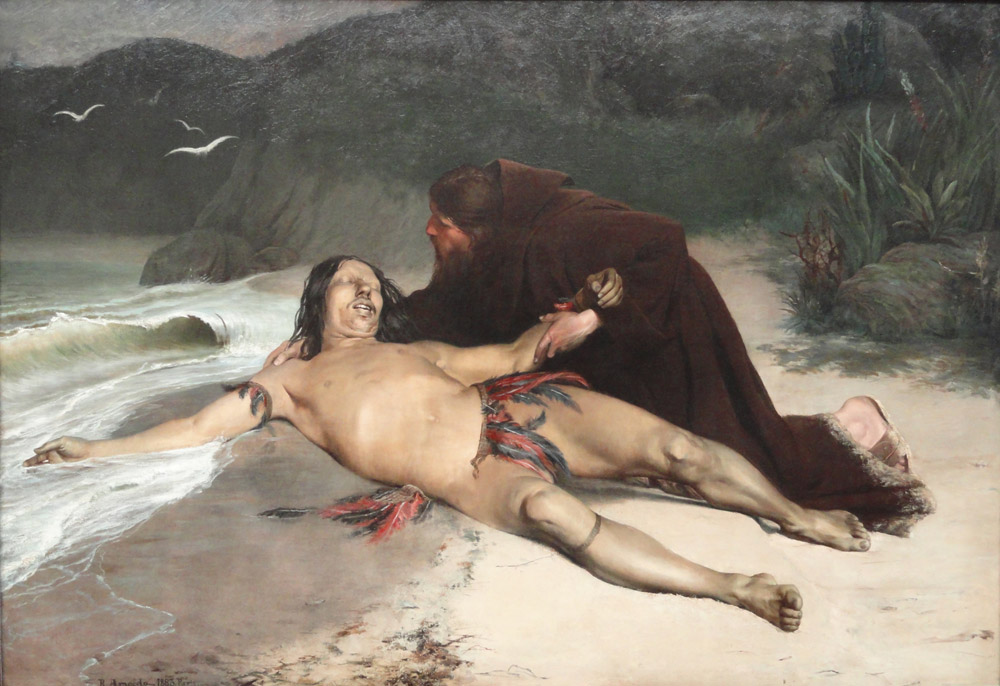
    Now, more about Brazilian literature:
    The pediod of the Romantismo (firt momment: 1825 - 1840):

    Example of Romantismo:
    The epic poem "I Juca Pirama" written by Gonçalves Dias, tells the history about a indian warrior (from the Tupi).
    It is a poem divided in ten chants.
    verse metre: alexandrinos (12) and decassílabos (10)

    Vitória-ES, Brasil

  8. #53
    Registered User Brasil's Avatar
    Join Date
    May 2008
    Location
    Vitória-ES, Brasil (Brazil)
    Posts
    166

    Brazilian culture in general

    Federative Republic of Brazil
    Capital: Brasília
    Language: Portuguese
    Anthem: Hino Nacional Brasileiro (see on youtube)

    See pictures on Google-images for:
    drinks: Caipirinha, guaraná, coffe, all kinds of Brazilian fruits for juice.
    foods: Feijoada, Moqueca, Churrasco
    other things to eat: pão de queijo (cheese bread), açaí.


    Music - See on youtube:
    rhytms: Chorinho, Samba, Bossa Nova, Forró (Baião/ Xote), Frevo...
    male singers: Tim Maia, Milton Nascimento, Djavan, Raul Seixas, Cazuza, Gilberto Gil, Caetano Veloso, Luis Gonzaga, Alceu Valença, Zé Ramalho.
    female singers: Maria Rita, Elis Regina, Marisa Monte, Cássia Eller.
    Pop groups: Legião Urbana, Titãs, Paralamas do Sucesso.
    Classical composers: Villa-Lobos, Carlos Gomes.
    Popular Brazilian Music composers: Tom Jobim, Cartola, Pixinguinha, Chico Buarque, Toquinho & Vincícius de Moraes, Tonico & Tinoco.


    Thinkers
    Theology: Leonardo Boff
    Pedagoy: Paulo Freire

    Visual Arts
    sculptor: Aleijadinho

    Painters:
    Victor Meireles, Pedro Américo, Anita Malfatti, Tarsila do Amaral, Candido Portinari

    Other things
    martial arts: Capoeira, Brazilian Jiu-Jitsu
    Idols: Ayrton Senna, Pelé
    Historic figure: Santos Dumont (creator/ inventor of the airplane and many other inventions)

    things to be proud:
    - the beauty of our nature (beaches, forests, animals) - indeed that's the main theme of our Anthem. Our National hymn is not only a militar chant, but it is a declaration of love. A very rich poetry;

    - our participation and victories at the Second World War against the Nazi (especially in Italy, where our tropes were in largiest number);

    - our harmonic and pacific way of life between any religion and any ethinic group;

    - our literature, theatre and cinema;

    - our athletes: espacially in voley, basket, football (soccer) and some individual arrangements as riding, sailing, marathon...

    - the architecture of Brasilia (by Oscar Niemeyer), the nature of Rio de Janeiro, the notheast folk culture, the cosmopolitan life of São Paulo, the picturesque weather of south, the Pantanal, the Rainforest.
    Last edited by Brasil; 06-11-2008 at 01:23 PM.

    Vitória-ES, Brasil

  9. #54
    Registered User Brasil's Avatar
    Join Date
    May 2008
    Location
    Vitória-ES, Brasil (Brazil)
    Posts
    166

    Machado's short story - Synopsis

    O Alienista (the alienist, I do not know how to translate it) -
    A doctor, owner of a hospice, discover a pattern to classify madness: everything that is beyond the normal is madness.
    The doctor put into his clinic some people who have such behaviour.
    Later, almost all the city people are hospitalized, and the city almost empty, because he discovered that almost all people have this pattern of behaviour.
    But he thinks "the majority must provides the standard of behaviour". Then he begins to consider mad the "balanced people". He gives freedom to the mad ones to submit the minority "healthy" of individuals to an intensive treatment.
    In the end, all are healed, but the doctor hospitalizes himself.

    That was just a resume about a book of Machado de Assis.
    Machado was very ironic and original in his works.
    His books have a fine sense of elegance and sarcasm, both working together.

    Machado de Assis is read by several personalities, among them Woody Allen.
    For those who want to read O Alienista and other stories, I recommend the book:
    50 stories of Machado de Assis, selected by John Gledson.


    John Gledson is Professor of Brazilian Studies at the University of Liverpool.
    Last edited by Brasil; 06-13-2008 at 11:57 AM.

    Vitória-ES, Brasil

  10. #55
    Registered User Brasil's Avatar
    Join Date
    May 2008
    Location
    Vitória-ES, Brasil (Brazil)
    Posts
    166
    Machado de Assis (Rio de Janeiro, 1839 — Rio de Janeiro, 1908), in his book The Posthumous Memoirs of Bras Cubas, created a currious narrator: Bras Cubas is a ghost (a deceased) that comes from the grave to tell his own history.

    - Bras Cubas (Narrator): I am a "deceased author", not an "author deceased" reporting his memoirs, and more, describing his own delirium.
    (sorry about the translation, maybe it will make no sense in English)

    Often, the narrator drives his words to the reader: "Come with me, dear reader, let's see this little house..." It's a common thing in Machado's books.

    So, the narrator says a curious detail about himself:
    Perhaps, the frankness (meaning: sincerity) that I expose and stress my mediocrity alarmes the reader ; I warn that openness (=frankness, sincerity) is the first virtue of a deceased. In life, the look of view, the contrast of interests, the greed of people... oblige (requires) us to silence the old rags, disguise the tears and passions, ... because in that case, you can save the shame, which is a painful feeling, and hypocrisy, which is a horrible addiction. But in death, what a difference! What freedom!

    I think that is a photography of our society till today. Even now, in this very forum, we're trying to hide the poorness of our speech, or in Bras Cubas narrator's word: "to silence the old rags".

    Quincas Borba, a philosopher character from another Machado's novel, appears also in this book, the Posthumous Memoirs, talking to the living Bras Cubas (not to the "deceased author" and narrator, but to the living one).
    So, in this intertextuality, we can see a character (Quincas Borba), as a living person with a past, a full history (from the homonym novel), talking to another character (Bras Cubas) as a living person, and all this scene is narrated by the "deceased Bras Cubas".

    So, I think (as Bras Cubas did after his death) we must apart ourselves from the things which we think we know, then in fact, we will have a little idea about what life means. You don't need to wait for your death to do that (as Bras Cubas did), you can do that while you are reading this text (or latter, but not to late).

    My advice for all:
    Learn another language, know more about other cultures, travel a lot, search for other readings, study philosophies, analyse your life before it is too late...
    Open your eyes for the unknown.
    Last edited by Brasil; 06-11-2008 at 09:55 PM.

  11. #56
    Registered User Brasil's Avatar
    Join Date
    May 2008
    Location
    Vitória-ES, Brasil (Brazil)
    Posts
    166

    HIstory of Portuguese language

    In Lusitania (today Portugal) there were two ethinic groups living: Celtics and Iberics. The language spoken was a mix of two languages: Celtic + Iberic = Celtiberic.

    Then, began the foreign invasions.
    - Came the first invasion: Ligore
    - The second invasion:Phoenicians (they came from where we call today Lebanon). The Phoenicians were sailors and they founded a port in Lusitania, called "Porto Cale", today Porto City, north of Portugal (indeed, the name of the country came from the name of the old port founded by the Phoenicians sailors).
    - The third invasions came from Greece. The greeks were sailors as well. So, Since the begining, the tradition of sailing became very familiar to the Lusitan people.

    Until that moment, the language was a mix of Celtiberic + Ligore + Phoenicians + Greek.

    - Then came to Lusitania the most important influence, the Latin (Roman Empire invasion). Latin is the basic structure of any Romance language.
    - After the fall of the Roman Empire, came the Visigoths. So, Germanic became another influence.
    - Another invasion came: Arabs (called Moors). They were Islam (Muslims) - for 300 years in Iberic Peninsula. A Great contribution in architecture, language, sciences and agriculture.
    - The book Os Lusíadas (Lusiads) by Camões is a epic poem, it tells about the war between the kingdom of Portugal (Catholic) and the Muslims. But the main theme of Os Lusíadas is the navigation around the African continent trying to find a new route to India. The Portuguese sailors became heros in that poem (Indeed, Portugal was the first european nation, the political power became centralised and the Portuguese people, with the tradition of sailing and the strategic geographical position, went to the sea before anyone). Till today, the Fado (Portuguese folk song) have the sea as main theme. In songs, girls cry for their husbands in sea, and the feeling is "saudade" (= to miss something).

    - So until this moment, the Portuguese language were a mix of Celtiberic + Ligore + Phoenicians + Greek + Germanic + Arabic; and the main structure is the Latin language.

    Colonization of Brazil by the Portuguese people:
    Some words entered into the Portuguese language:
    -From Tupi-Guarani (one of the groups of languages, spoken by native indians in Brazil);
    -From Bantu (came from the African people);

    Independece of Brazil:
    - The languages of the immigrants (Italian, German, Japanese) gave some words to Portuguese language. New words came especially from the Italian.
    - French was the language that had the greatest influence at the time.

    Today:
    Portuguese has influence from English, in some words (about information technology, marketing terms, etc)

    Vitória-ES, Brasil

  12. #57
    Registered User Brasil's Avatar
    Join Date
    May 2008
    Location
    Vitória-ES, Brasil (Brazil)
    Posts
    166

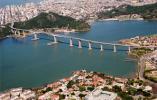
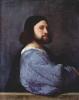
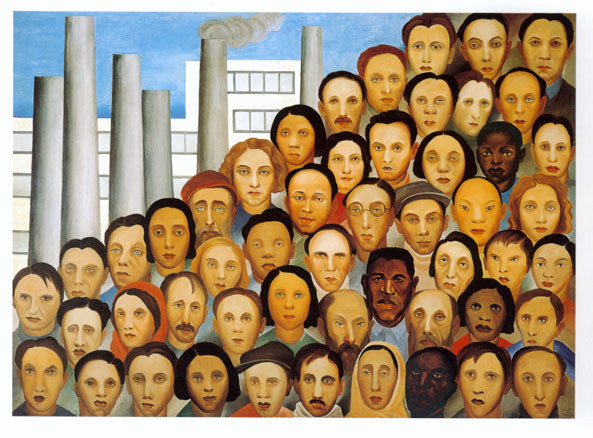
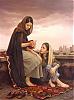
    Brazilian art

    Brazilian paintings

    Victor Meireles:


    Rodolfo Amoedo:


    Anita Malfatti (Brazilian Modernism):


    Candido Portinari:


    Tarcilia do Amaral:


    Tarcilia do Amaral:


    Tarcilia do Amaral:


    Brazilian Sculpture and Architecture

    Aleijadinho (Brazilian Barroque and other styles):


    Aleijadinho:

    Most famous work by Aleijadinho: The 12 Prophets
    Where: Minas Gerais


    Oscar Niemeyer:

    (Brasília architecture)

    Oscar Niemeyer:

    (Cathedral of Brasília)
    Last edited by Brasil; 06-11-2008 at 02:58 PM.

  13. #58
    Registered User sofia82's Avatar
    Join Date
    May 2008
    Location
    Neverland
    Posts
    630
    Blog Entries
    1
    Quote Originally Posted by Brasil View Post
    Brazilian paintings

    Oscar Niemeyer:

    (Cathedral of Brasília)
    This is amazing! A modern architecture?!
    Art is a lie that leads to the truth.
    --Picasso

  14. #59
    Registered User Brasil's Avatar
    Join Date
    May 2008
    Location
    Vitória-ES, Brasil (Brazil)
    Posts
    166

    Futuristic

    Yes, at the time it was polemic. The Catholic Church did not want to celebrate inside that church, but today it is one of the symbols of the Brasília city and Oscar Niemeyer work.

    know more about his work and life:
    http://en.wikipedia.org/wiki/Oscar_Niemeyer
    There are amazing pictures there.


    For other Brazilian personalities:
    Heitor Villa-Lobos, classical music composer:
    http://www.youtube.com/watch?v=pjDZU...eature=related
    Listen to Villa-Lobo's Trenzinho Caipira (Hillbilly Train) one of the most beautiful compositions of the maestro.
    Also, listen to the Bachianas Brasileiras:
    http://www.youtube.com/watch?v=_06B1...eature=related

    Alberto Santos Dumont, an early pioneer of aviation:
    http://en.wikipedia.org/wiki/Santos_Dumont

    Paulo Freire, an educator and an influential theorist of education:
    http://en.wikipedia.org/wiki/Paulo_Freire
    Last edited by Brasil; 06-13-2008 at 11:53 AM.

    Vitória-ES, Brasil

  15. #60
    Registered User Brasil's Avatar
    Join Date
    May 2008
    Location
    Vitória-ES, Brasil (Brazil)
    Posts
    166

    This is not about literature, but I have to post:

    In the twenty-first century stereotypes prejudiced as those shown in the film Hulk, destroy the image of Brazil.

    1 - Why always show the slums instead of showing the beauty of Brazil?

    2 - The factories in Brazil go through a rigorous process of review. The hygiene is the most important point. The products made in Brazil are of excellent quality. But the factory was dirty in the movie!

    3 - No one, not even the Brazilian army has authorization to enter into a shantytown. In Brazil, there are laws on the quality of life and personal freedom. Only the police of Rio has permission to invade a shantytown, even then, only in extreme cases. But the Hulk movie shows the American army invading the Brazilian territory and shooting with a firearm inside a shantytown. Absurd!
    The U.S. army has no authorization, no right, and even he had the right, he has no strategy for that kind of mission.


Page 4 of 6 FirstFirst 123456 LastLast

Similar Threads

  1. We Need A Revolution In Literature!
    By WolfLarsen in forum General Writing
    Replies: 251
    Last Post: 01-10-2012, 06:56 PM
  2. Your national vs. world literature
    By aabbcc in forum General Literature
    Replies: 8
    Last Post: 02-06-2008, 08:12 PM
  3. What has literature in store for you?
    By hbacharya in forum General Literature
    Replies: 1
    Last Post: 04-21-2007, 06:03 PM
  4. Brazilian Literature
    By Mayra in forum General Literature
    Replies: 12
    Last Post: 02-28-2006, 07:13 AM
  5. Machado De Assis: Brazilian Master of Literature
    By Kalow in forum Book & Author Requests
    Replies: 4
    Last Post: 02-04-2005, 10:43 PM

Posting Permissions

  • You may not post new threads
  • You may not post replies
  • You may not post attachments
  • You may not edit your posts
  •