


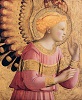
...to understand the span of American literature one must understand all the supports that built the bridge.
I'm sorry, but I don't agree. Or perhaps I should say that if my goal was to gain an encyclopedic grasp of American literature I should certainly read it all: the good, the bad, and the ugly. Then I would still ask why you stopped with suggestions that the reader only add to the usual canon with the works of African-Americans, Hispanic-Americans, Native-Americans, and women. What of the literary contributions of French-Acadian-Americans, Jewish-Americans, Islamic and Middle-Eastern-Americans, Buddhist-Americans, Amish and Mennonite-Americans, etc... etc... ad infinitum?
Now, of course, it appears that the question being raised here is that of the very purpose of literature. Why do we read literature? If your goal is to broaden your historical outlook, certainly you may imagine that you can achieve that through literature. But then again I have read Thucydides, and Gibbon's Fall of the Roman Empire, and Vasari's Lives of the Artists, and Boswell's Life of Johnson, and War and Peace and Les Miserables and Shakespeare's "histories", etc... all of which purport to tell a great deal about some aspect of history... yet while their narratives are surely marvelously told, one would do well to check elsewhere for the facts. Personally, I am not interested in reading literature as a means of gaining historical knowledge (I'll read history books for that) nor is my agenda sociological... I am not out to gain insights into issues of racism, sexism, social and class structures, economics, gender preferences, etc...
I am not suggesting that I or anyone else can or should read in a vacuum. Certainly I have have read more than my share of history. Neither am I without experience with regard to socio-political concerns. As someone who has taught for years in an urban public school setting I probably know more about certain social/political/economic issues than you can imagine. But we are discussing literature... the book or writing as ART. As a practicing artist (albeit in the visual arts) I have always bristled at any suggestion of using art for utilitarian purposes of any manner. I am not speaking here of limiting the artist. Certainly an artist may deal with any social, political, economic, religious, spiritual (etc...) issue that they so desire. What I am speaking of is the "use" (and who likes to be "used"?) of art by certain members of academia as a means of pushing non-literary concerns. If one wishes to teach sociology, Marxist theory, economics, etc... then one should surely do so. Often, however, it seems as if literature and literary criticism are being taught by those who are far more passionate about politics and social issues than they are about writing as an art.
Why then do I read? To me reading is one way of engaging in a dialog with extraordinary minds from many times and many places. As Anna Quindlen suggested:
Books are the means to immortality:
... Through them we experience other times, other places, other lives. We manage to become much more than our own selves. The only dead are those who grow sere and shriveled within, unable to step outside their own lives and into those of others. Ignorance is death. A closed mind is a catafalque.
More than once I have posted the following rather extended quote as an answer to the question of the purpose of literaure. Because I doubt that I could put it better myself, I'll post it again. The Quote is by Walter Pater from his "Conclusion" to The Renaissance. The highlights are my own:
The service of philosophy, of speculative culture, towards the human spirit, is to rouse, to startle it to a life of constant and eager observation. Every moment some form grows perfect in hand or face; some tone on the hills or the sea is choicer than the rest; some mood of passion or insight or intellectual excitement is irresistibly real and attractive to us,–for that moment only. Not the fruit of experience, but experience itself, is the end. A counted number of pulses only is given to us of a variegated, dramatic life. How may we see in them all that is to seen in them by the finest senses? How shall we pass most swiftly from point to point, and be present always at the focus where the greatest number of vital forces unite in their purest energy?
To burn always with this hard, gemlike flame, to maintain this ecstasy, is success in life. In a sense it might even be said that our failure is to form habits... While all melts under our feet, we may well grasp at any exquisite passion, or any contribution to knowledge that seems by a lifted horizon to set the spirit free for a moment, or any stirring of the senses, strange dyes, strange colours, and curious odours, or work of the artist’s hands, or the face of one’s friend. Not to discriminate every moment some passionate attitude in those about us, and in the very brilliancy of their gifts some tragic dividing of forces on their ways, is, on this short day of frost and sun, to sleep before evening. With this sense of the splendour of our experience and of its awful brevity, gathering all we are into one desperate effort to see and touch, we shall hardly have time to make theories about the things we see and touch. What we have to do is to be for ever curiously testing new opinions and courting new impressions, never acquiescing in a facile orthodoxy of Comte, or of Hegel, or of our own...
One of the most beautiful passages of Rousseau is that in the sixth book of the Confessions, where he describes the awakening in him of the literary sense. An undefinable taint of death had clung always about him, and now in early manhood he believed himself smitten by mortal disease. He asked himself how he might make as much as possible of the interval that remained; and he was not biased by anything in his previous life when he decided that it must be by intellectual excitement, which he found just then in the clear, fresh writings of Voltaire. Well! we are all condamnes, as Victor Hugo says: we are all under sentence of death but with a sort of indefinite reprieve–les hommes sont tous condamnes a mort avec des sursis indefinis: we have an interval, and then our place knows us no more. Some spend this interval in listlessness, some in high passions, the wisest, at least among "the children of this world,” in art and song. For our one chance lies in expanding that interval, in getting as many pulsations as possible into the given time. Great passions may give us this quickened sense of life, ecstasy and sorrow of love, the various forms of enthusiastic activity, disinterested or otherwise, which come naturally to many of us. Only be sure it is passion–that it does yield you this fruit of a quickened, multiplied consciousness. Of such wisdom, the poetic passion, the desire of beauty, the love of art for its own sake, has most. For art comes to you proposing frankly to give nothing but the highest quality to your moments as they pass, and simply for those moments’ sake.


 Reply With Quote
 Originally Posted by Jamesian




 ). What I should, basically, is to use this last year of school to broaden my perspective of literature entirely, and try to get better hold of world literature in general; however, as it boarders impossible to be well-versed in all of it, I wanted to focus on what would generally be "Western-civilisation" literature, thus I decided to make up for some major gaps in American literature to start with.
