
Is Dorian a gullible young man that Lord Henry twists and uses to his amusement?


Is Dorian a gullible young man that Lord Henry twists and uses to his amusement?
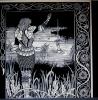
Not entirely. It goes deeper then that and both ways. Dorian Gray is fascinated by Lord Henry's Philosophy of Pleasure.
"He felt that the eyes of Dorian Gray were fixed on him, and the consciousness that amongst his audience there was one whose temperament he wished to fascinate seemed to give his wit keenness and to lend colour to his imagination. He was brilliant, fantastic, irresponsible. He charmed his listeners out of themselves, and they followed his pipe, laughing. Dorian Gray never took his gaze off him, but sat like one under a spell, smiles chasing
each other over his lips and wonder growing grave in his darkening eyes."
Lord Henry is fascinated by Dorian Gray's personality, that is to say, his youth, beauty and purity. Lord Henry does not use Dorian for his amusement but as a guinea pig to test his theories.
"Certainly few people had ever interested him so much as Dorian Gray, and yet the lad's mad adoration of some one else caused him not the slightest pang of annoyance or jealousy. He was pleased by it. It made him a more interesting study. He had been always enthralled by the methods of natural science, but the ordinary subject-matter of that science had seemed to him trivial and of no import. And so he had begun by vivisecting himself, as he had ended by vivisecting others. "
"It was delightful to watch him. With his beautiful face, and his beautiful soul, he was a thing to wonder at. It was no matter how it all ended, or was destined to end. He was like one of those gracious figures in a pageant or a play, whose joys seem to be remote from one, but whose sorrows stir one's sense of beauty, and whose wounds are like red roses."
This novel is in many ways autobiographical. Basil's adoration of Dorian clearly reflects Oscar Wilde's similar feelings for Lord Alfred Douglas. He is also Lord Henry with his strange theories about sensation, and Dorian Gray who ruins his life by putting them into practice.
The primary purpose of a liberal education is to make one's mind a pleasant place in which to spend one's leisure.
-Sydney J. Harris

Originally Posted by chevalierdelame

Wilde did not meet Lord Alfred Douglas until after Dorian Grey was published. It was a perfect illustration of Wilde's own quote - "Life imitates Art far more than Art imitates Life".
Exit, pursued by a bear.
Sorry, I made a mistake there. Thanks for pointing it out.
I agree. Anyway Wilde had this Greek idea of male beauty, so he was bound, sooner or later, to find someone to adore.
Edit: What I mean is, Dorian Gray is a type, that of Hylas, Hyacinthus, Alcibiades and Tommaso Dei Cavalieri. (the golden youth). Lord Alfred Douglas merely happened to fit into this ideal, which is why Oscar Wilde found him so wonderful.
Last edited by chevalierdelame; 05-07-2014 at 11:44 PM.
The primary purpose of a liberal education is to make one's mind a pleasant place in which to spend one's leisure.
-Sydney J. Harris
I don't think so. Wilde was an Ancient Greek scholar at Oxford and was trying to depict the tradition of erastes-eromenos (better check all of this!), but updated and sanitized. In Ancient Greece an older aristocratic male, one with learning and sophistication, would take a young male lover (usually a teen, say 14 or 15) and, in return for sexual favours, introduce him to philosophy, poetry etc. Wilde seems to have had that at the back of his mind in the portrayal of Lord Henry and Dorian. I guess you could see the novel as the erastes-eromenos relationship set in 19th century England. As in ancient Athens, these are sophisticated aristocrats who consider themselves above and apart from others in their society. Though their relationship is never explicitly sexual, it is hinted at. The description of their first meeting, for example, is highly charged, with the 'boy' overwhelmed by the older man's eloquence and sophistication.
It is hard to believe that Lord Henry is under the spell of Dorian's personality, but, by the end, Dorian is no longer under Lord Henry's spell either. At their first meeting Dorian is a rather bland, pretty, sulky, shy young boy. It is his physical beauty that attracts Lord Henry, not his personality. But Wilde had to be careful. Though homosexuality was very common among English aristocrats in the 19th century and was also rife at Oxford, he couldn't have portrayed an explicitly homosexual relationship in a novel. I suspect that many took the hints though. Lord Henry is a far more interesting, witty and intelligent character than Dorian. Why would he stick to him so devotedly if they weren't also lovers? Their relationship is similar to Wilde's relationship with many of his friends- close, intimate, occasionally sexual, friendships.
Last edited by WICKES; 05-10-2014 at 04:09 PM.

eh.. it takes one to know one.
it may never try
but when it does it sigh
it is just that
good
it fly
True. With the young man's beauty and Wilde's exalted aesthetic sense, Lord Alfred Douglas was an accident waiting to happen.
Exit, pursued by a bear.
I think the erastes-eromenos tradition explains the relationship
between Wilde and Lord Alfred Douglas
and also that between Lord Henry and Dorian Gray. It reminded me of something in the movie ‘Wilde’ (1997), a character in the movie says, ‘Oscar needs disciples.’
Has anyone watched this? How far do you think it really shows the nature of the relationship between Wilde and Lord Alfred Douglas?
Here’s a link to the transcript.
http://www.script-o-rama.com/movie_s...car-wilde.html
The primary purpose of a liberal education is to make one's mind a pleasant place in which to spend one's leisure.
-Sydney J. Harris
 Posting Permissions

 Reply With Quote