Ha, ha. Yes I'm currently on my week's break from the madness. Getting up when you want. Eating breakfast. Reading. Listening to music. Biking. Tennis. Lazing around. Drinking beer etc, etc, it's what it's all about.


Ha, ha. Yes I'm currently on my week's break from the madness. Getting up when you want. Eating breakfast. Reading. Listening to music. Biking. Tennis. Lazing around. Drinking beer etc, etc, it's what it's all about.
One can only cheat death for so long. Our little dog of 16 years passed away suddenly this morning.
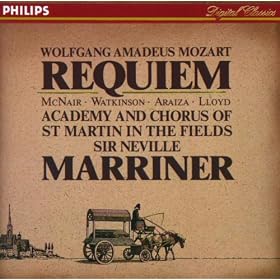
Appropriate listening includes:
Beware of the man with just one book. -Ovid
The man who doesn't read good books has no advantage over the man who can't read them.- Mark Twain
My Blog: Of Delicious Recoil
http://stlukesguild.tumblr.com/

My condolences. If you happen to own this book (http://www.worldcat.org/title/norton...s/oclc/3498426), Vicki Hearne's essay "Oyez a Beaumont" is one of the best essays about the death of dogs. It's from her excellent book "Animal Happiness". Here's an excerpt:
in T.H. White's "the Sword in the Stone, the great hound named Beaumont is on the ground, his back broken by the boar, and the expert, the master of the hounds, William Twyti, has been hurt also. Twyit limps over to Beaumont and utters the eternal litany: "Hark to Beaumont. softly, Beaumont, mon amy. Oyez a Beaumont the valiant, sleep now, old friend Beaumont, good old dog," while the huntsman kills the dog for him: "Then Robin's falchion let Beaumont out of this world, to run free with Orion and to roll among the stars.".... Master Twyti seems to have had courage, for he rsoe from besides Beaumont's wounds and "whipped the hounds off the corpse of the boar as he was accustomed to do. He put his horn to his lips and blew four notes of the Mort without a quaver.... But Master William Twyti startled The Wart, for he seemed to be crying," and this book, "The Sword in the Stone" is about the education of great hounds and of a great king, King Arthur in fact. Immortal Beamont, Douce, swef, swef. And immortal Arthur -- douce, douce, hearken to Arthur, they would say in time about rex quondom rexque futurus, the once and future king. Which is to say, this is all of it about the education of a hound and a boy.
Yes that is sad and sorry about that for your and your missus' sake. Must be a big loss. It is scarily true though that we all can only ever cheat death for so long, which is only a very short time.
Yep, some more of the same, right now the no. 20. Plucked at random, but I intend to go through them all this week.
http://www.youtube.com/watch?v=hiHKJeoXdNM
This one is a good one, I've listened to this one many times before. Very good.
Interesting, reading a little yesterday about them and it appears that Mozart's attitude to some of the early concertos was less than complimentary...as I remembered vaguely.
I have always like the concertos, especially Mozart's, though Bach's are on top too of course, for the simple reason and feel of the delicious little piano trills set against the background of the orchestra. I believe that the symphonies are rated higher, generally, but for me the simple, or not so simple - I don't know I'm not musical, pleasures of the piano and orchestra duel is just very satisfying. I love the concerto form and for me the piano is the best, and the violin just behind. This is just a personal flavour anyway.
When this one has finished I'm going to go right back and play it again. And in the meantime I intend to fill up my glass a few more times!
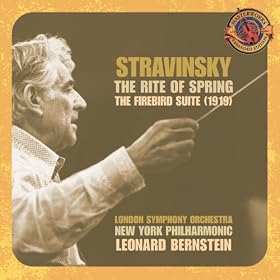
Well... after a day of Requiems and other such music in memoriam I am now recognizing the 100th anniversary of one of the most earth-shattering musical debuts:
Even at 100 yewars old, this ought to knock ol' Emil/Brian out of his easy chair.
“It’s terrifying!” whispered Claude Debussy, apparently with a “sad, anxious” expression on his face. “I don’t understand it!”
Debussy was not alone in his utter lack of comprehension that unseasonably balmy Paris night of 29 May, 1913. Over in another box, in the ravishing art-nouveau auditorium at the city’s glitzy new Théâtre-des-Champs-Élysées, the composer Camille Saint-Saëns heard merely a few bars of the strange opening woodwind solo before hissing to his neighbour: “If that’s a bassoon – I’m a baboon!”
Others would not be so polite: the frenzied riots that kicked off at the premiere of The Rite of Spring have become legend. The capacity audience that evening ran the gamut from bejewelled, high-society Parisian ladies and their white-tie-wearing gentlemen to a gaggle of more bohemian critics and poets, whom Sergei Diaghilev had allowed in for free. Jean Cocteau described the crowd as exhibiting “the thousand varieties of snobbism, super-snobbism, anti-snobbism.”
Perhaps they came spoiling for a fight. The succès de scandale was, after all, a well-established element of cultural life at the turn of the last century, especially in Paris. Pieces by Wagner, Schoenberg and others customarily provoked riots, as did Wilde’s play Salomé and its 1906 operatic treatment by Richard Strauss. The Impressionist painters so relished their rejection by the establishment they triumphantly created the Salons des Refusés.
And just think of the scandalised reaction to Picasso’s radical 1906-7 work Les Demoiselles d’Avignon, which smashed pretty much every received idea about the representation of three dimensions onto a flat canvas, paving the way not only for Cubism but to the possibility of total abstraction in art.
This was an era in which to be a truly avant garde artist was to push audiences to the very limits of what they could understand or accept – and far beyond. An era in which certain works of art, music and literature shattered everything that had gone before; after which it was genuinely possible to say ‘nothing would ever be the same again’.
Assault on the senses
Nevertheless, the riots at the premiere of The Rite of Spring were of a different order. For the past four years Paris had been captivated by Sergei Diaghilev’s Ballets Russes, and had perhaps come to expect dance of astonishing, radical sensuality. But not this assault! The new ballet, intended to depict the pre-historic spring rites of ancient Russia and the great sacrifice of a Slavonic tribe, had been created by a trio of visionaries. They were Igor Stravinsky, whose previous ballets The Firebird and Petrushka had already seen him acclaimed as the greatest young composer of the twentieth-century; Nicholas Roerich, an eminent student of pre-historical pagan Russia, whom Stravinsky praised in an interview as “the creator of the decorative atmosphere for this work of faith”; and – of course – Vaslav Nijinsky, the breathtaking 24-year-old dancer and choreographer.
According to the historian Lucy Moore, whose superb biography of Nijinsky has just been published, even Nijinsky was nervous before the curtain rose, knowing that his dancers were baffled and frustrated by the “shuffling steps, flat-footed jumps, clenched hands, hunched shoulders, unsynchronized and deliberately primitive choreography” he had dreamed up for them. Additionally, thanks to Roerich’s designs, they had to dance in unwieldy costumes, false beards and pointed, fur-trimmed caps for the men and headbands and long, fake plaits for the women.
Moore describes how Nijinsky, sweating in the wings before that alarmingly exposed bassoon solo began, knew that his long-robed dancers were probably wondering: “what is ballet for, if beauty and grace are removed?”
Meanwhile, “so interconnected were the choreography and the composition,” Moore reminds us, “that Stravinsky noted the rhythm of their steps on his piano score.” And what is music like this, crunchy with dissonance and twisted, sadistic harmonies for?
The chosen one
One early listener described it as: “As irritating to the nervous system as the continuous thudding of a savage’s tom-tom!” Stravinsky later claimed that, rather like the ‘chosen one’ who dances herself to death in the ballet’s climactic Sacrificial Dance, he’d had to enter into a sort of creative trance to write The Rite of Spring. "Very little immediate tradition lies behind [it] – and no theory,” he remarked. “I had only my ear to help me; I heard and I wrote what I heard. I am the vessel through which The Rite passed."
A vessel he may well have been; but others heard, and, in their own way, wrote what they heard: like Picasso’s painting, the Rite of Spring irrevocably altered the course of 20th century music. From Carter to Boulez, Adams to Adès, nothing was ever the same again; listening today, the score is as revolutionary and thrilling as ever.
One hundred years after the notorious premiere of The Rite of Spring, the suspicion remains that the hysterical reaction from the crowd may have been one big publicity stunt orchestrated by the ever-canny Diaghilev. Why, after all, did Gabriel Astruc, the theatrical impresario behind the Théâtre-des-Champs-Élysées, have to lean out of his box, fists clenched, and scream at the rowdy audience: “First listen! Then hiss!”?
We’ll never know the truth. But perhaps it is immaterial. Contemporary observers, Moore argues, felt the music and choreography of The Rite of Spring could be “interpreted as a sign that the end of civilisation was at hand.” A few weeks ago, I found myself in the auditorium at Théâtre-des-Champs-Élysées – which is still, as Astruc intended a century ago, a temple vibrating to the vitality of art and imagination, curiosity and creativity. And it struck me that even now, in Paris, May 2013, no other work over the past 100 years has yet come close to the impact or influence of The Rite of Spring. A whole new generation of composers, designers, dancers and choreographers are still seeking bold and beautiful creative answers to the aesthetic and musical questions it raised. If that’s the end of civilization, then I’m a baboon.
Beware of the man with just one book. -Ovid
The man who doesn't read good books has no advantage over the man who can't read them.- Mark Twain
My Blog: Of Delicious Recoil
http://stlukesguild.tumblr.com/
Never known what to think of the Rite of Spring. The first time I heard it I though 'what?'. Now when I hear it, I think, 'what?'.
I have spent the last three days doing nothing but sitting on the (new) sofa doing chess stuff and then at night listening to Mozart, drinking beer and doing some more chess stuff. Tomorrow I'm getting off my arse, going swimming and maybe walking, but I'll come back to my chess stuff etc, etc.
On tonight's playlist is the 21st.
I first came upon The Rite on a cassette recording that included Carmina Burana on the B-side. I was really too ignorant of classical music at that time to recognize just how audacious the work really was. And after all... I was already listening to the Rolling Stones and Miles Davis' Bi tches Brew as well as Thelonius Monk and Charles Mingus at the time. The Rite remains one of the few pieces by Stravinsky that I truly love. Most of his work I admire... but don't really love. Now for someone who left me thinking WTF?
Beware of the man with just one book. -Ovid
The man who doesn't read good books has no advantage over the man who can't read them.- Mark Twain
My Blog: Of Delicious Recoil
http://stlukesguild.tumblr.com/


I agree with Neely's dislike for The Rite of Spring, which I make passing reference to in A Tangled Web. My initial and remaining attitude to it is that it's all very clever but is it music? It is long ago since I first heard it but it still raises an indulgent smile.
Now, setting Stravinsky aside, when it comes to piano concertos, this is what I was listening to when StLukes was playing the Rolling Stones ( God help us ). Written by another iconoclastic composer it's given a stunning performance here by Martha Argerich and, although it's not played nowadays as often as his second and third concertos, it's still a favourite of mine.
http://youtu.be/JqCwQ9clHec
"L'art de la statistique est de tirer des conclusions erronèes a partir de chiffres exacts." Napoléon Bonaparte.
"Je crois que beaucoup de gens sont dans cet état d’esprit: au fond, ils ne sentent pas concernés par l’Histoire. Mais pourtant, de temps à autre, l’Histoire pose sa main sur eux." Michel Houellebecq.
Time to raise the stakes in this desperate hour.
http://www.youtube.com/watch?v=jnRIU4u7B9o
Back to work on Monday. The misery is already upon me, though I am being brave, a bit like Jesus at the last supper...stoically accepting his fate, as he clasps his wine filled goblet with white knuckles...ha, ha.
And here's some classic Woody Allen on the theme for Emil:
http://www.youtube.com/watch?v=LQCNZfdTezo
I love the bit a 2.28 where she goes off track - see this the funny Allen stuff Emil refuses to watch, ha, ha.
Last edited by LitNetIsGreat; 06-01-2013 at 08:32 PM.
I've been all over the classical spectrum over the last couple of days: Mozart's piano concertos 13, 14, 15, 16, Mozart's violin concertos 3-5 by Andrew Manze, Richard Strauss' Burleske, Tod und Verklarung, and Waltzes from Der Rosenkavalier by Reiner, Bach Cantatas by Rilling, Beethoven's Christ on the Mt. of Olives also by Rilling... and right now its Domingo, Dessay, Voigt and some "great bleeding chunks" by Richard Wagner... whose 200th birthday May 22 was certainly of far greater importance than the 100th of the Rite... although I still love the Rite.
As for Emil's hatred for the Rolling Stones... he must have been a Beatles man.
Beware of the man with just one book. -Ovid
The man who doesn't read good books has no advantage over the man who can't read them.- Mark Twain
My Blog: Of Delicious Recoil
http://stlukesguild.tumblr.com/
Originally Posted by Neely

Hang on for another month or so and you will be into the long break.
Was that Michael Caine I spotted in that clip? I don't know who was the most desperate, he for acting (?) in the film or Woody Allen for signing him up.
In any case, self-conscious smart arse American humour (?) is just embarrassing.
Now, now, StLuke. Surely you must know that the classical spectrum doesn't consist entirely of Germanic music.
As for pop groups of every stripe, with the accent on 'tripe, hatred is too strong a sentiment to apply to their pathetic maundering, although I will admit to an amused contempt.
"L'art de la statistique est de tirer des conclusions erronèes a partir de chiffres exacts." Napoléon Bonaparte.
"Je crois que beaucoup de gens sont dans cet état d’esprit: au fond, ils ne sentent pas concernés par l’Histoire. Mais pourtant, de temps à autre, l’Histoire pose sa main sur eux." Michel Houellebecq.
Now, now, StLuke. Surely you must know that the classical spectrum doesn't consist entirely of Germanic music.
It is open to some small debate as to whether the English language produced the greatest body of known literature in the West. There is really no debate considering classical music. The "Austro-Germanic Hegemony" absolutely dominates: Bach, Beethoven, Mozart, Wagner, Haydn, Handel, Schubert, Schumann, Brahms... this group alone is as if the English literary canon could boast not only of Shakespeare, Milton, and Chaucer, but also Dante, Homer, Tolstoy, Montaigne, Cervantes, Baudelaire, Aeschylus, Euripides, and Virgil. My collection of Austro-Germanic composers outnumbers that of every other nation combined... including your beloved pop musicians.
Having said that... I quite love the French and Italians... followed by the Russians, the English (who actually do have some lovely music) and then all the rest. I've actually got Puccini lined up for today.
As for pop groups of every stripe, with the accent on 'tripe, hatred is too strong a sentiment to apply to their pathetic maundering, although I will admit to an amused contempt.
Aha! A Monkees man!
Beware of the man with just one book. -Ovid
The man who doesn't read good books has no advantage over the man who can't read them.- Mark Twain
My Blog: Of Delicious Recoil
http://stlukesguild.tumblr.com/
No, no I think he's into Beach Boys (that's a group Emil not an homo insult, ha, ha.)
Yes that's what I'm thinking, get through it for one more half-term and then six weeks off followed by a short half-term and then a week in Tenerife in October.Hang on for another month or so and you will be into the long break.
Was that Michael Caine I spotted in that clip? I don't know who was the most desperate, he for acting (?) in the film or Woody Allen for signing him up.
In any case, self-conscious smart arse American humour (?) is just embarrassing.
Yes it was Michael Caine, he's very good at playing the wooden square in that most loved of films. I doubt I will be listening to anything tonight, I'm going to smash one last glass of Cumberland Ale though for the road.
Now if you had said Beach Girls, my interest might have beeen aroused as long as they were not a caterwauling group of harpies.
Tenerife eh? I hope you're not planning on getting tattooed and earinged like the guy who recently fixed my computer before he jetted off to the Canary Islands which apparently are host to many a modern day neanderthal.
Michael Caine is to acting what pop groups are to music and it's no coincidence that both he and they are a product of the 1960s.Never has so much rubbish been sold by so few to so many.
"L'art de la statistique est de tirer des conclusions erronèes a partir de chiffres exacts." Napoléon Bonaparte.
"Je crois que beaucoup de gens sont dans cet état d’esprit: au fond, ils ne sentent pas concernés par l’Histoire. Mais pourtant, de temps à autre, l’Histoire pose sa main sur eux." Michel Houellebecq.
 Posting Permissions

 Reply With Quote