Buying through this banner helps support the forum!
-

Originally Posted by
ftil

Ah, yes, the reactionary pre-Raphaelites.
-
Artist and Bibliophile
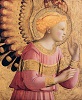
In some ways I think the ideas of the Pre-Raphaelites and their subsequent influence far outstripped the actual achievements of their work... although the Kelscott Chaucer was surely a brilliant example of "book arts". The idea of rejecting the art of the recent past (academic realism) and looking toward the art before Raphael... the art of the Middle Ages... is surely linked with directions taken by painters such as Gauguin, Van Gogh, Bonnard, Vuillard etc... who began to explore the notion of flat decorative images and the use of artificial patterns and forms as opposed to the illusion of realistic for. The Pre-Raphaelites also provided a link between William Blake and the Arts and Crafts movement (which was itself linked with Art Nouveau, Art Deco, and the Bauhaus). All sought to challenge the notion of the hierarchy of art: placing painting and sculpture above "decorative arts"... and all suggested that there was a certain moral value in art and beauty that was of the greatest worth to a mankind trapped within the increasingly ugly and massed produced/industrial culture.
I also think we need to acknowledge that the Pre-Raphaelites were one element in the growing admiration of the Medieval (other examples would include poetry of Browning and Tennyson, Wagner's operas, etc...). I see a definite impact upon subsequent illustration... especially that of science fiction and the fantastic.
Unfortunately, for the most part the Pre-Raphaelites weren't the most brilliant painters and they were indeed quite reactionary... or rather quite mannered. While Gauguin and the Nabis all drew heavily from rather archaic sources, they also brought something quite Modern in terms of both imagery and their sensual love of paint.
Beware of the man with just one book. -Ovid
The man who doesn't read good books has no advantage over the man who can't read them.- Mark Twain
My Blog: Of Delicious Recoil
http://stlukesguild.tumblr.com/

-
Alea iacta est.

Originally Posted by
Cioran
There is no reason to think this. Quite the opposite is likely to be the case. With the increasing use of computers in the visual arts, and the possibility of, say, combining video animation with paint on canvas, the visual arts will become more free, radial and creative than ever.
The problem in rejecting modernism I think lies in lack of visual education. Many people are stuck with the idea that pictures must be of something in reality, and must be done as realistically as possible. Visual art certainly can be that, but the point is it does not have to be that. The hold of realism and story-telling on the visual arts began to vanish with the introduction of photography, and it's not coming back.
No reason to think that? How about because it's happened numerous times before? The shift from Greco-Roman styles to the Gothic medieval styles lasted for centuries. Then for centuries the medieval art was considered primitive, amateurish, and ugly, until being once more re-evaluated. Neo-classicism held sway for more than a century, and many of the major artists of the period are now no more than footnotes. The history of art criticism is one of constant re-evaluation and revision with the experts teeter tottering one way then another.
Do I dare
Disturb the universe?
In a minute there is time
For decisions and revisions which a minute will reverse.
-The Love Song of J. Alfred Prufrock, T.S. Eliot
Last edited by mortalterror; 12-26-2012 at 05:04 PM.
"So-Crates: The only true wisdom consists in knowing that you know nothing." "That's us, dude!"- Bill and Ted
"This ain't over."- Charles Bronson
Feed the Hungry!
-
Originally posted by
stlukesguild
Unfortunately, for the most part the Pre-Raphaelites weren't the most brilliant painters and they were indeed quite reactionary... or rather quite mannered. While Gauguin and the Nabis all drew heavily from rather archaic sources, they also brought something quite Modern in terms of both imagery and their sensual love of paint.
I don’t have any idea why you said that Pre-Raphaelites were quite reactionary. If we look at themes, we may see themes from Greek/Roman mythology . Evelyn de Morgan was involved in occult and her art is quite intriguing.
I would rather say that they were precursors of modern art and return to pagan religion. You compared Zeus to Jehovah and Jesus to Apollo which is absolutely outrages for those who studied Greek/Roman mythology.
I am curious what modern art you have found that relates to Holiday seasons. I have found overwhelming modern art relating to mythology and demons.
A few paintings.
HUGUES GILLET
http://www.artofimagination.org/Page...etDetail1.html
HUGUES GILLET
http://fer1972.tumblr.com/post/19958.../hugues-gillet
Drazenka Kimpel
http://picky.cgsociety.org/gallery/857550/
Drazenka Kimpel
http://elfpix.com/graphics/artworks-...ka-kimpel.html
H. R. Giger
http://artmight.com/Artists/H.R.Gige...m-183283p.html
Demons art
http://art-of-fantasy.org/pics/imagelist/16/9
-
Originally Posted by
mortalterror
No reason to think that? How about because it's happened numerous times before? The shift from Greco-Roman styles to the Gothic medieval styles lasted for centuries. Then for centuries the medieval art was considered primitive, amateurish, and ugly, until being once more re-evaluated. Neo-classicism held sway for more than a century, and many of the major artists of the period are now no more than footnotes. The history of art criticism is one of constant re-evaluation and revision with the experts teeter tottering one way then another.
Do I dare
Disturb the universe?
In a minute there is time
For decisions and revisions which a minute will reverse.
-The Love Song of J. Alfred Prufrock, T.S. Eliot
It has happened before, but what is different now is that art is accpeted as pluralistic. This is one of the legacies of post-modernism. Over-arching meta-narratives in the visual arts, as well as literature and other fields, are rejected. There are so many influences, so much cross-fertilization in art, that it seems highly unlikely that entire canons of art will be rejected in favor of a new Art Church, the kind of thing that happened with abstract expressionism (banish all figuratism as heretical) and before that earlier schools of art that banished all hints of what would become modernism.
Last edited by Cioran; 12-26-2012 at 05:38 PM.
-
Alea iacta est.
Originally Posted by
Cioran
It has happened before, but what is different now is that art is accpeted as pluralistic. This is one of the legacies of post-modernism. Over-arching meta-narratives in the visual arts, as well as literature and other fields, are rejected. There are so many influences, so much cross-fertilization in art, that it seems highly unlikely that entire canons of art will be rejected in favor of a new Art Church, the kind of thing that happened with abstract expressionism (banish all figuratism as heretical) and before that earlier schools of art that banished all hints of what would become modernism.
And maybe we'll all join hands and sing Kumbaya. No, the pendulum is already in motion, and change is afoot. It's one thing to describe the art world in terms of a plurality, and to a certain extent that's even true, but it is still not a unified or equal plurality. There will always be greater and lesser trends, even if they continue to tolerate each other.
"So-Crates: The only true wisdom consists in knowing that you know nothing." "That's us, dude!"- Bill and Ted
"This ain't over."- Charles Bronson
Feed the Hungry!
-
Artist and Bibliophile
Its quite easy to find paintings appropriate to the Christmas season by the "old masters"... but what of "modern artists"?... what of art from the late 19th century to the present? This has proved a bit more of a challenge. Sure, there are plenty of schlock paintings that are little more than pastiches of dated styles... but what of paintings of real merit? I dug around a bit through my files and initially I was a bit shocked at just how little I was able to find. I almost felt as if after nearly 2000 years in which the Biblical narratives lay at the heart of Western art, artists had suddenly abandoned these great tales. But as a looked more carefully, I realized that this wasn't so. While paintings relating to Christmas were few and far between, the great Hebrew and Christian narratives continued to flourish in Modern Art. Considering that the history of the 20th century offered up two world wars, the Holocaust, the genocides of Stalin and Mao, and the threat of nuclear annihilation, it is perhaps not surprising that artists leaned more toward the tales of Job, Moses, Abraham, the Exodus, and of course the Passion and Crucifixion as more relevant narratives for our time.
Nevertheless... I was able to find more than a few "modern" paintings appropriate to the season:

Henry Ossawa Tanner (1859-1937) was the first African-American artist to gain an international reputation. Thwarted and disillusioned by racism in America, he spent much of his career living and working in France. Tanner became best known for his religious paintings, including the splendid Annunciation. Like many of his paintings, the Annunciation presents a contrast between realism and a theatrical and an atmospheric and poetic use of light. There's nothing idealized in the representation of the Virgin Mary, her clothes, and the setting. The Angel of the Annunciation, however, is seen as a brilliant and all-devouring light... not unlike that employed by J.M.W. Turner.
In contrast to Tanner, the French painter, Maurice Denis, offers an Annunciation that is far removed from any concerns for external visual reality...

Denis was a Post-Impressionist, Symbolist artist... and a member of Les Nabis. The Nabis, or "prophets" saw themselves as prophets of modern art. They were profoundly indebted to the innovations of the Impressionists, but wholly rejected the Impressionist notion that modern art needed to be rooted in the artist's perceptions of visual reality. Art could just as well be rooted in the artist's perceptions of music, literature, other art... as well as ideas, emotions, and feelings. The Nabis were greatly inspired by Paul Gauguin and the manner in which his paintings employed the artificial outlines and brilliant colors as well as flat shapes and decorative patterns of early Renaissance and Medieval art. They were especially fascinated with stained glass and tapestries. Maurice Denis formulated the idea that would become central to virtually the whole of Modernism: "Remember that a painting - before it is a battle horse, a nude model, or some anecdote - is essentially a flat surface covered with colours assembled in a certain order." This statement echoes Oscar Wilde's quote: "Art finds her own perfection within, and not outside of, herself. She is not to be judged by any external standard of resemblance," and points the way toward Clement Greenberg's obsession with the "flatness of the pciture plane" that dominated art theory in the mid-20th century.
Denis' Annunciation employs many of the elements familiar from the earlier Renaissance portrayals: the Lilies (signifying purity), the Angel of the Annunciation, and the open book of prayers. Mary is seen in a convent-like dwelling room with small single bed (no room for a lover). Unlike many Renaissance portrayals, she doesn't recoil... but rather seems contently drawn into herself with a reserved expression of joy. The single modern element to be seen is the landscape which suggest the sort of suburban landscapes of Paris common to so many paintings by Monet and others.
Émile Henri Bernard (1868-1941) was another Post-Impressionist/Symbolist painter. He was friends with Gauguin, Van Gogh, Toulouse-Latrec, Odilon Redon and Ferdinand Hodler. His work displayed the same use of pattern and flat shapes heavily outlined (a style known as cloisonnism because it evoked the technique of cloisonné used in enamels, in which metal wire separates areas of color much like the black leading in stained glass). His Annunciation...

... is even more "modern" is its use of brilliant colors employed for expressive purposes.
Paul Gauguin's Nativity offers perhaps the strongest example of a Post-Impressionist take upon the Christmas narratives:

Gauguin presents an everyday image of a humble birth in Tahiti portrayed in a manner so as to allude to the Christian Nativity. The result is to suggest a universal relevance of the Biblical narratives... the idea that every birth is akin to the Nativity... all lovers like Adam and Eve... every death like the Passion.
One of the most stunningly unconventional and visionary explorations of the narratives related to Christmas is to be found in the pastel painting, Clouds, by Odilon Redon:

Redon offers up an image of the Holy Family in a small sail boat. is this perhaps a twist upon the theme of the "Flight into Egypt"? Are the clouds "threatening?" Is this a storm looming in the distance? Regardless, the painting is absolutely stunning. The clouds burst forth in a dazzling display of incandescent colors... like a field of flowers in bloom... or the most scintillating display of the Northern Lights.
Some of the finest images relating to the Holidays and the Winter Season can be found in work intended as illustration. In spite of his reputation for decadent and erotic prints, Aubrey Beardsley also produced a rather lovely print of the Madonna and Child as a Christmas card:

His work displays many of the same elements found in the art of the Pre-Raphaelites, the Nabis, and other early Modernists... especially the flat shapes and patterns that evoke Medieval art and tapestries.
William Ladd Taylor (1854-1926) was an illustrator educated in New York, Boston, and Paris best known for his book illustrations on the American pioneers, Longfellow, the Psalms, American literature, and the Bible.


Taylor's A Star in the East and The Nativity: And She Wrapped Him in Swaddling Clothes... are both beautiful atmospheric paintings employing a monochromatic palette to convey the sense of mood
The last artist I will look at in this post is the well-known American illustrator/decorative painter, Maxfield Parrish (1870- 1966). Parrish's art features dazzlingly luminous colors; the color "Parrish Blue" was named in acknowledgement. He achieved the results by means of the technique known as glazing in which bright layers of transparent oil colorare applied alternately over a base monochromatic rendering. Parrish was also one of the first artists/illustrators to make extensive use of photography.


His paintings, Christmas Morning and Evening both evoke the still atmosphere in which the greenish light suggests the sun just rising (or having set) over the horizon. The only suggestion of human activity in either painting is conveyed by the light emanating from a single room in the farm house in the distance... all else is quiet... "silent night."
And maybe we'll all join hands and sing Kumbaya. No, the pendulum is already in motion, and change is afoot.
And you know this based upon...? Your profound grasp of the art of the last 50-75 years? Your experience with what is happening in the galleries and museums? Your knowledge of what is being taught in the art schools today?
Beware of the man with just one book. -Ovid
The man who doesn't read good books has no advantage over the man who can't read them.- Mark Twain
My Blog: Of Delicious Recoil
http://stlukesguild.tumblr.com/
-
Originally Posted by
mortalterror
And maybe we'll all join hands and sing Kumbaya. No, the pendulum is already in motion, and change is afoot. It's one thing to describe the art world in terms of a plurality, and to a certain extent that's even true, but it is still not a unified or equal plurality. There will always be greater and lesser trends, even if they continue to tolerate each other.
What penduleum, and what trend? What do you mean, speficially? Are you talking about non-representational art being rejected or devalued in favor of ...?
Trends do not mean that previous art is devalued. On the contrary, we can see the good, from the vantage point of today, in all the art of yesterday, no matter how varied in style and form and content they are. As to non-representational art, it used to be a dogma of modernism that the figurative was banished from serious fine arts. If you talking about a pendulum moving away from that, you're more than three decades too late. The figurative had meaningfully re-entered serious modern art by 1980.
-
Alea iacta est.
Originally Posted by
stlukesguild
And maybe we'll all join hands and sing Kumbaya. No, the pendulum is already in motion, and change is afoot.
And you know this based upon...? Your profound grasp of the art of the last 50-75 years? Your experience with what is happening in the galleries and museums? Your knowledge of what is being taught in the art schools today?
I have both eyes to see and ears to hear.
"So-Crates: The only true wisdom consists in knowing that you know nothing." "That's us, dude!"- Bill and Ted
"This ain't over."- Charles Bronson
Feed the Hungry!
-
12-26-2012, 07:03 PM
#100
Clinging to Douvres rocks
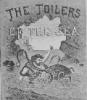
Taylor's A Star in the East and The Nativity: And She Wrapped Him in Swaddling Clothes... are both beautiful atmospheric paintings employing a monochromatic palette to convey the sense of mood
You definately need to click on the thumbnail for "The Nativity...", or you might overlook the face peeking out from the swaddling.
Parrish was also one of the first artists/illustrators to make extensive use of photography.
I'm assuming photographs were used in the examples you posted, is that correct?
They certainly have a clarity suggestive of a photograph.
-
12-26-2012, 07:11 PM
#101
Originally Posted by
mortalterror
I have both eyes to see and ears to hear.
Except that really doesn't answer the question. What, specifically, do you mean?
Anyone who thinks abstract, non-representational art is going away, no matter how much they may wish for that to happen merely because they, personally, don't "like" or "understand" such art, is in for big disappointment, I'm afraid.
-
12-26-2012, 08:49 PM
#102
St. Luke,
I don’t know what annunciation has to do with holiday season. But if you think that it does, we can’t miss Bradley Platz’s The Announciation. 
http://www.bradleyplatz.com/#!the-an...c1mf/image10bv
And a few more of his paintings.
The golden Calf
http://www.bradleyplatz.com/#!the-go.../cee5/imagei9c
Sophia (The Birth of the Demiurge)
http://www.bradleyplatz.com/#!sophia...c1mf/image1ggy
Bradley Platz’s website
http://www.bradleyplatz.com/#!2007/c1mf
Odilon Redon’s Flower Clouds and Holiday season? No clue....... His art is full of mythology and a few intriguing paintings.
We have a dark angel again.
Angel In Chains
http://www.odilon-redon.org/Angel-In-Chains-large.html
Aged Angel
http://www.odilon-redon.org/Aged-Angel-large.html
It reminds me about another symbolist painter - Franz von Stuck - lot's of mythology and of course dark angel.
The angel of the Court
http://www.repfineart.com/reproducti...ck/angel-court
The Guardian of Paradise
http://www.canvasreplicas.com/Stuck101.htm
Another intriguing painting of Odilon Redon’s. Oannès (Christ et Serpent)
http://www.odilon-redon.org/Oann%C3%...%29-large.html
Oannes in Armenian) was the name given by the Babylonian writer Berossus in the 3rd century BCE to a mythical being who taught mankind wisdom. Berossus describes Oannes as having the body of a fish but underneath the figure of a man. He is described as dwelling in the Persian Gulf, and rising out of the waters in the daytime and furnishing mankind instruction in writing, the arts and the various sciences.
http://en.wikipedia.org/wiki/Oannes#As_Oannes
I am not surprised that you have brought Aubrey Beardsley. Your favorite, eh?
A few more angels.
http://upload.wikimedia.org/wikipedi...ey_Lampito.jpg
http://upload.wikimedia.org/wikipedi...Puderquast.jpg
And more of Aubrey Beardsley - Lysistrata.
http://commons.wikimedia.org/wiki/Ca...y_-_Lysistrata
-
12-26-2012, 09:34 PM
#103
Redon’s Angel in Chains is a work clearly in the modernist impulse, the form of the angel seemingly hewn from the rock on which it sits. And notice the radical simplifications, like the circular breast , and arms almost like tubes, calling to mind the figurative simplifications of Cezanne and Picasso. Another aspect that makes this work so modern is the sumptuous appreciation, and application, of paint as an end in itself, as opposed to a medium to imitate what is before one’s eyes. Look at all the subtle color variations in the both the lighted and shadow regions of the rock, and the way impasto strokes of paint delineate the volume of the rock in the lighted area and bring it more forward to the eye. He could in fact have made a canvass just of that rock, and it would have been monumental.
Compare "Angel in Chains" with an early Picasso Cubist conception:

-
12-26-2012, 10:45 PM
#104
Originally Posted by
Cioran
Except that really doesn't answer the question. What, specifically, do you mean?
Anyone who thinks abstract, non-representational art is going away, no matter how much they may wish for that to happen merely because they, personally, don't "like" or "understand" such art, is in for big disappointment, I'm afraid.
I do not know if this is a tendency, does not matter. Tendencies or movements, are a way we look the past. But some of most popular visual artworks are less modernists or abstract and have a classical touch... comic books and video games. Develuation of art movements is a need even for the art movement strength. They will be reborn latter, with more strength and significance. Nothing stops.
-
12-26-2012, 10:53 PM
#105
Originally Posted by
JCamilo
I do not know if this is a tendency, does not matter. Tendencies or movements, are a way we look the past. But some of most popular visual artworks are less modernists or abstract and have a classical touch... comic books and video games. Develuation of art movements is a need even for the art movement strength. They will be reborn latter, with more strength and significance. Nothing stops.
What today is called post-modernist art is clearly quite different from modernism, contains a good deal of figuratism as well as an air of irony, detachment, self-referential parody and other characteristics not found in modernism. My point, however, is to contest the notion that these kind of changes somehow devalue modernism.
A Mondrian that seems to fit the season:

Similar Threads
-
By AuntShecky in forum Serious Discussions
Replies: 10
Last Post: 12-13-2010, 06:11 PM
-
By marcodt in forum General Literature
Replies: 0
Last Post: 01-11-2010, 06:59 PM
-
By pantherhare in forum Who Said That?
Replies: 0
Last Post: 04-08-2009, 05:43 PM
-
By vincanity1 in forum General Literature
Replies: 6
Last Post: 08-31-2007, 10:58 AM
-
By lrd2004 in forum Book & Author Requests
Replies: 0
Last Post: 02-13-2004, 03:12 AM
 Posting Permissions
- You may not post new threads
- You may not post replies
- You may not post attachments
- You may not edit your posts
-
Forum Rules



