
Who is a good artist to start with for a newbie for classical music?


Who is a good artist to start with for a newbie for classical music?
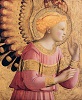
This set showed up on Spotify so I had to give it a listen. Absolutely f***in' fantastic!! An essential collection for anyone with a love of "early" (ie. medieval) music... such as myself.
The editorial review in Amazon.com states:
Catharism was the name given to a Christian religious sect that appeared in the Languedoc region of what is now southern France and flourished in the 12th and 13th centuries. The Cathars saw matter as intrinsically evil. They denied that Jesus could become incarnate and still be the son of God and thus, the Catholic Church regarded the sect as dangerously heretical. Faced with what they saw as a rapidly spreading cancer, the Church called for a crusade, which was carried out by knights from Northern France and Germany and was known as the Albigensian Crusade. This campaign, and the inquisition that followed it, eradicated the Cathars completely. It also had the effect of weakening the semi- independent southern principalities in the area, ultimately bringing them under direct control of the King of France. Occitania, once a crossroads of many cultures, was one of the victims of the Albigensian Crusade. Occitania s refined culture culminated in the troubadour tradition, which subsequently spread to Italy, Spain and Greece. Related movements sprang up throughout Europe: the Minnesingers in Germany, trovadorismo in Galicia and Portugal and the trouvères in northern France. On this album, Jordi Savall not only explores the classical period of the troubadour school from around the turn of the 13th century, but also provides us with a comprehensive historical and artistic background of this Golden Age. It is time we remembered this forgotten kingdom where much of what we call Western culture was incubated.
The music of this lost culture is not only brilliantly explored through Savall's performances... but also in the form of the lavish illustrated book that accompanies this set of discs. I will be certainly looking forward to purchasing this in the not-so-distant future.
http://www.youtube.com/watch?v=veJlR...eature=related
http://www.youtube.com/watch?v=D9Vew...eature=related
This culture should be of interest to those enamored of European history and literature. Occatania or Aquitania was key in the spread of the tradition of lyrical poetry from Islamic Spain into France and Italy. This was the culture of Eleanor of Aquitaine, the patroness of such literary figures as Wace, Benoît de Sainte-More, and Chrétien de Troyes. The literary conventions of lyrical poetry and courtly love begun at her Palace of Poitiers were further refined by Bertrand de Born and Bernard de Ventadour, both of whom were admired by Dante and the poets of the Florentine Renaissance. Aquitaine would later become the birthplace to one of France' greatest writers, Michel de Montaigne.
Last edited by stlukesguild; 11-07-2011 at 11:56 PM.
Beware of the man with just one book. -Ovid
The man who doesn't read good books has no advantage over the man who can't read them.- Mark Twain
My Blog: Of Delicious Recoil
http://stlukesguild.tumblr.com/
Who is a good artist to start with for a newbie for classical music?
It depends upon what sort of musical background you are coming from and what sort of music you currently prefer.
Beware of the man with just one book. -Ovid
The man who doesn't read good books has no advantage over the man who can't read them.- Mark Twain
My Blog: Of Delicious Recoil
http://stlukesguild.tumblr.com/
That's a bit complicated. I listen to different genres of popular music. I'm for something that's easy to get into to prepare me for what is considered the more difficult stuff.Originally Posted by stlukesguild

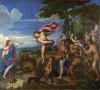
I suggest you find a list of eminent composers and sample each on Youtube. This way you may realize your own tastes and find music that will inspire you to inquire further. There is no ideal place for everyone to start.
What you must recognize is that the larger (or extended) forms of "classical music" (symphonies, sonatas, concertos) are quite removed from the structure of the usual popular song which is built upon a simple repeated melody and perhaps a second counter melody. The extended forms of classical music may employ a melody or tune... but then this may be explored through a series of increasingly complex variations or developments of this motif or theme. You might think of a popular song as being like a simple and easy to grasp literary form like a sonnet or ballad (and most pop songs are rooted in simple poetic forms like the ballad going back to the troubadours- see the post on Occitania/Aquitaine above). The larger extended forms of classical music are closer in form and development to an epic poem... or novel.
Perhaps the "easiest" works of classical music to first get into are the Baroque concerti grossi. These are commonly built upon a 4/4 beat (like most pop music) or at least a steady dance rhythm. The movements tend to be short and built upon an easy to grasp melody or motif. Among the most popular are Vivaldi's Four Seasons, J.S. Bach's Brandenburg Concertos, G.F. Handel's Water Music, Vivaldi's Mandolin Concertos, etc... You might also explore the shorter works of later eras. I would recommend Chopin's Nocturnes...
and Schumann's works for piano:
You might also do well to select a key work from every era and major genre just to get a feel for what you like.
From the Baroque... beyond Bach's Brandenburg Concertos
Vivaldi's Four Seasons...
and Handel's Water Music/Royal Fireworks
I would also suggest J.S. Bach's Goldberg Variations...
and Handel's Messiah...
From the "Classical Period" you should look into Haydn's string quartets as an introduction to chamber music...
and from Mozart, the last two symphonies:
the late piano concertos:
and the Requiem:
From Beethoven, the 5th symphony:
and the most popular piano sonatas:
continued...
Beware of the man with just one book. -Ovid
The man who doesn't read good books has no advantage over the man who can't read them.- Mark Twain
My Blog: Of Delicious Recoil
http://stlukesguild.tumblr.com/
From Schubert, the last two symphonies:
and the Impromptus:
With Wagner, look into the Orchestral "highlights":
Brahms is best come at first for his chamber music. His clarinet works are among his finest:
Dvorak's last symphonies give you a good idea of the late 19th century symphony... and also establish a tradition for subsequent American classical music:
Tchaikovsky and Rachmaninoff composed some of the most popular piano concertos... played stunningly here:
Another key Romantic masterpiece that is easy to love is Mussorgsky's Pictures at an Exhibition (and the Night on Bald Mountain):
Debussy's Impressionism points the way toward the 20th century:
Into the 20th century, the icon of Modernism was surely Stravinsky's Rite of Spring:
Strauss' Also Sprach Zarathustra, however, is perhaps the most recognized work of music of the century:
The other two giants of 20th century Russian music are Prokofiev and Shostakovitch. It's actually hard to select a single icon work that best represents Prokofiev (unless it's Peter and the Wolf) but with Shostakovitch there are several to pick. Ultimately, I'd go with his 10th symphony:
Bartok pushes you into Modernism and even atonality:
The last selection I would include is this disc which includes Barber's famous Adagio for Strings... a great American Masterpiece... as well as Mahler's great adagio from his 5th symphony, and a couple examples of the great English tradition of pastoral music:
These recommendations are almost all available at a budget price... and every last one of them is among the finest recorded version available... a great many the best possible version IMO (Beethoven's 5th, the Chopin, Tchaikovsky, Royal Fireworks, Impromptus, Rite of Spring, Mozart 40-41, etc...)
I would also highly recommend a good book to introduce you to classical music, the forms, history, etc... I personally like this one:
I suggest you find a list of eminent composers and sample each on Youtube. This way you may realize your own tastes and find music that will inspire you to inquire further. There is no ideal place for everyone to start.
I agree that YouTube offers a great source at which to sample music... but I don't think sampling classical music in 5-minute snippets is necessarily the best way to explore it. It reduces it, in a sense, to a collection of highlights of favorite tunes, rather than leading the individual to explore the whole of these works.
Beware of the man with just one book. -Ovid
The man who doesn't read good books has no advantage over the man who can't read them.- Mark Twain
My Blog: Of Delicious Recoil
http://stlukesguild.tumblr.com/
There is no answer.
Grab every chance you have of listening to classical music and then go to explore deeply the artist(s) who caught your attention, BBC Radio 3 has this synoptic programme running from Monday to Friday every week which I think it's a very useful learning/exploring tool for newbies.
"He had but one eye, and the popular prejudice runs in favour of two."


Looking at your list of performers, I note that many of them figure in my own collection but I doubt that many of them were able to perform as creditably as Aimi Kobayashi at the age of four. I agree that child prodigies have littered the pianistic scene since Mozart and will continue to do so but it is worth remembering that it is also littered with many great names of the past who have now been forgotten. Obviously, with the advent of recording, the possibility to hear various performances from the past is there but, in the final analysis, music is subjective and ones choice remains personal. It is true that the standard repertoire has been repeatedly recorded throughout the last century and beyond but that was generally for the benefit of the western world. Now the the focus is moving East there will be many, if not more, people who will prefer to listen to the brilliant performances of the likes of Yundi Li, Sahra Chang, Juja Wang, Aimi Kobayasahi etc etc. All of whom have gone through the mill at competition level and been acclaimed by critics in the West as well as their own countries. I see no reason to doubt that some of the musicians from the East will go on to match their western counterparts in achieving the highest levels of performance as, in some cases, they are already doing.
Last edited by Emil Miller; 11-08-2011 at 07:20 AM.
"L'art de la statistique est de tirer des conclusions erronèes a partir de chiffres exacts." Napoléon Bonaparte.
"Je crois que beaucoup de gens sont dans cet état d’esprit: au fond, ils ne sentent pas concernés par l’Histoire. Mais pourtant, de temps à autre, l’Histoire pose sa main sur eux." Michel Houellebecq.

http://www.youtube.com/watch?v=Zm5pbLMn8j8
Stillness of the Mind - Abel Korzeniowski from A Single Man (directed by Tom Ford)
Now the the focus is moving East there will be many, if not more, people who will prefer to listen to the brilliant performances of the likes of Yundi Li, Sahra Chang, Juja Wang, Aimi Kobayasahi etc etc. All of whom have gone through the mill at competition level and been acclaimed by critics in the West as well as their own countries. I see no reason to doubt that some of the musicians from the East will go on to match their western counterparts in achieving the highest levels of performance as, in some cases, they are already doing.
I think you overestimate the shift of power and culture to the East. We've been hearing the same thing for 40+ years since Japan came into its own again after the war. Obviously more countries... including those in the East (India, Japan, China, Korea) are becoming major players on the economic and cultural stage. Unlike you, I don't see this as inherently resulting in a great decline of other nations. It would seem to me that the quality of living in Britain, France, Germany... most of Europe... has not nosedived since the United States and the USSR took the lead as the great world powers.
Having said this much, I agree that more and more Asian performers are going to make their way into the world of Western "classical music". Mitsuko Uchida has already proven herself, along with Yo Yo Ma, Seiji Ozawa, Sumi Jo, Myung-whun Chung, Sarah Chang, and perhaps finest of all Masaaki Suzuki and his brilliant Bach Collegium Japan. Can any of these performers stand up to comparison with the very best. Uchida and Suzuki can. Yo Yo Ma is surely one of the best living cellists, but I don't know if he can rival Rostropovitch, Casals, Pierre Fournier, or Janos Starker. Ozawa was an OK conductor... but no Szell, Karajan, Furtwangler, Barbirolli, etc... Still I certainly agree that with time we will undoubtedly get more great performers from Asia... and Australia, and South America, etc... and your little Aimi Kobayasahi may indeed be one of them.
Beware of the man with just one book. -Ovid
The man who doesn't read good books has no advantage over the man who can't read them.- Mark Twain
My Blog: Of Delicious Recoil
http://stlukesguild.tumblr.com/
I personally subscribe to the sociological theory that great master are generated in Generations 0-2 of a new institutional structure. The known masters nowadays are all beneficiaries of the new institutions of recorded music - thus personally I believe that unless something fundamental changes, it would be very difficult for later generations to attain the master status on the same footing as Rubinstein, Heifetz, etc. So emerging Asian artists' only hope to achieve true greatness lies in the opportunity that new technologies fundamentally change classical music consumption patterns.
[QUOTE=stlukesguild;1087627Having said this much, I agree that more and more Asian performers are going to make their way into the world of Western "classical music". Mitsuko Uchida has already proven herself, along with Yo Yo Ma, Seiji Ozawa, Sumi Jo, Myung-whun Chung, Sarah Chang, and perhaps finest of all Masaaki Suzuki and his brilliant Bach Collegium Japan. Can any of these performers stand up to comparison with the very best. Uchida and Suzuki can. Yo Yo Ma is surely one of the best living cellists, but I don't know if he can rival Rostropovitch, Casals, Pierre Fournier, or Janos Starker. Ozawa was an OK conductor... but no Szell, Karajan, Furtwangler, Barbirolli, etc... Still I certainly agree that with time we will undoubtedly get more great performers from Asia... and Australia, and South America, etc... and your little Aimi Kobayasahi may indeed be one of them.[/QUOTE]
But, once again, all of the artists you name are familiar to me and have been for many years. Over decades of listening to great music I must rely on my ear and experience. In my view, it's not only Asian soloists but orchestral musicians in general who are demonstrating standards of performance that are the equal of those currently given by western musicians.
It is true that solo cellists and individual conductors have yet to emerge onto the international stage but I don't doubt that it will happen.
As for great piano playing, this Russian audience appears to be in agreement:
http://youtu.be/PX57r1l5W3U
"L'art de la statistique est de tirer des conclusions erronèes a partir de chiffres exacts." Napoléon Bonaparte.
"Je crois que beaucoup de gens sont dans cet état d’esprit: au fond, ils ne sentent pas concernés par l’Histoire. Mais pourtant, de temps à autre, l’Histoire pose sa main sur eux." Michel Houellebecq.
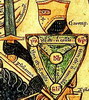
Medieval music,Church music are my favorites
Theatre of Voices,The early music consort of London,Millenarium,
Acantus

To help restore a little sanity and peace, I have once again found myself returning to those heavenly monks.
http://www.youtube.com/watch?v=d5p_U8J0iRQ
http://www.youtube.com/watch?v=kK5Ao...eature=related
http://www.youtube.com/watch?NR=1&fe...&v=VTdJTRlaXqw
Few things have such a restful effect on me than Gregorian Chant. It's enough to make me drop it all and run off to join a monastery, beautiful. (I could get a job hoeing the earth and changing the candles perhaps?)
It gives me a great appreciation for Latin as well.
Last edited by LitNetIsGreat; 11-20-2011 at 07:32 AM.
 Posting Permissions

 Reply With Quote


