Buying through this banner helps support the forum!
Page 7 of 12 FirstFirst ... 23456789101112 LastLast
Results 91 to 105 of 172

Thread: mythology and religion in art

  1. #91
    Banned
    Join Date
    Jun 2011
    Location
    Where the rain doesn't stop.....
    Posts
    763
    Blog Entries
    1
    Quote Originally Posted by jersea View Post
    Freud had an agenda and interpreted the world as he saw fit. This also means that he was wrong at times. Not everything is about sex, and often our dreams can only be interpreted by the person who had the dream. Particularly if the person is insightful about herself.
    I am in total agreement with you. Freud developed his theory to heal his problems. Lol I was reading the analysis of his genogram and I am not surprised. But the problem is when people use his theory and justify their behaviors. It would be sad if human life was only about sex.

    Secondly, there are differences between women and men. Assuming that women have the same hidden desires as men would be misleading. I can’t speak on behalf all women but I speak for myself. I don’t have a dream when I see a handsome man. How would I have a dream about a man that I don’t know? Nice muscles….not good enough for me.LOL!
    I agree that dreams can only be understood and interpreted by a person who has a dream. It requires having insights.

  2. #92
    Banned
    Join Date
    Jun 2011
    Location
    Where the rain doesn't stop.....
    Posts
    763
    Blog Entries
    1
    Let's look at thunderbolt again.

    Zeus aims his lightning bolt at a giant. An eagle sits perched on his other hand.


    The Vajra
    The Sanskrit term "vajra" denoted the thunderbolt, a legendary weapon and divine attribute that was made from an adamantine, or indestructible, substance and which could therefore pierce and penetrate any obstacle or obfuscation. It is the weapon of choice of Indra, the King of the Devas in Hinduism. As a secondary meaning, "vajra" refers to this indestructible substance, and so is sometimes translated as "adamantine" or "diamond". So the Vajrayana is sometimes rendered in English as "The Adamantine Vehicle" or "The Diamond Vehicle".
    A vajra is also a scepter-like ritual object (Tibetan: རྡོ་རྗེ་ dorje), which has a sphere (and sometimes a gankyil) at its centre, and a variable number of spokes, 3, 5 or 9 at each end (depending on the sadhana), enfolding either end of the rod. The vajra is often traditionally employed in tantric rituals in combination with the bell or ghanta; symbolically, the vajra may represent method as well as great bliss and the bell stands for wisdom, specifically the wisdom realizing emptiness or lack of inherent existence.
    http://en.wikipedia.org/wiki/Vajrayana
    Another explanation of vajra.


    Since a "vajra" is a diamond, this term means "The Diamond Way.
    http://uwacadweb.uwyo.edu/religionet...m/bglossry.htm
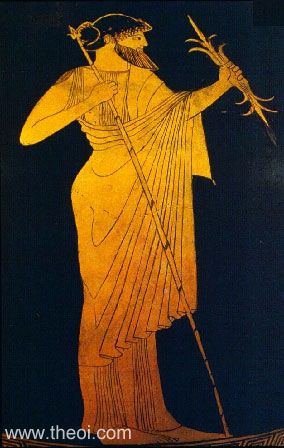
    Zeus


    Zeus/Jupiter

    Museum Collection: Antikensammlungen, Munich, Germany
    Date: ca 480 BC
    Period: Late Archaic / Early Classical

    SUMMARY

    Zeus stands holding a lightning bolt in one hand and a royal sceptre in the other


    Jupiter of Smyrna


    Another highly significant symbol for the masculine force and the phallus is a symmetrical ritual object called the vajra. As the divine virility is pure and unshakable, the vajra is described as a “diamond” or “jewel”. As a “thunderbolt” it is one of the lightning symbols. Everything masculine is termed vajra. It is thus no surprise that the male seed is also known as vajra. The Tibetan translation of the Sanskrit word is dorje, which also has additional meanings, all of which are naturally associated with the masculine half of the universe. The Tibetans term the translucent colors of the sky and firmament dorje. Even in pre-Buddhist times the peoples of the Himalayas worshipped the vault of the heavens as their divine Father.
    http://www.bibliotecapleyades.net/so.../Part-1-02.htm


    Vajra and Gantha (bell)


    I will return to the thunderbolt later and its connection with the theory of electric universe and plasma weapon.

    Let's look at androgyny again.


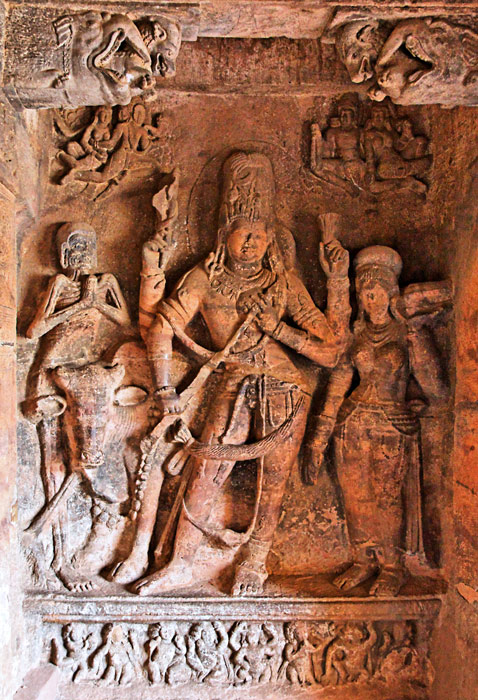
    Shiva Ardhanari "half-female" holds the vina which partly masks the breast. His female half is underlined by a heavy bun and bracelets. His hand holds the female utpala, water lily with long narrow petals. To his left, his wife and to his right the skeletal ascetic. This representation shows a Tamil legend. A devotee refused to include Uma in turn ritual. Uma, dissatisfied then went on skeletal devotee. Shiva then explained to her that her devout sakti was inseparable from himself. It then recognized the power of the goddess. (MA Loth, 2003, 2006).
    http://www.temples-dravidiens.net/ch...androgyne.html

  3. #93
    Banned
    Join Date
    Jun 2011
    Location
    Where the rain doesn't stop.....
    Posts
    763
    Blog Entries
    1

    Zeus

    Let's look at Zeus again. He transformed himself into a bull to rape Europa as well as into a swan to seduce Leda. But there is more. I have noticed in mythology many abductions of women. Mythology or religion shape our view of reality and how we view women and men. Furthermore, mythology and religion provides guidance what behaviors are acceptable or not, giving us a moral code.
    If gods can do it...........

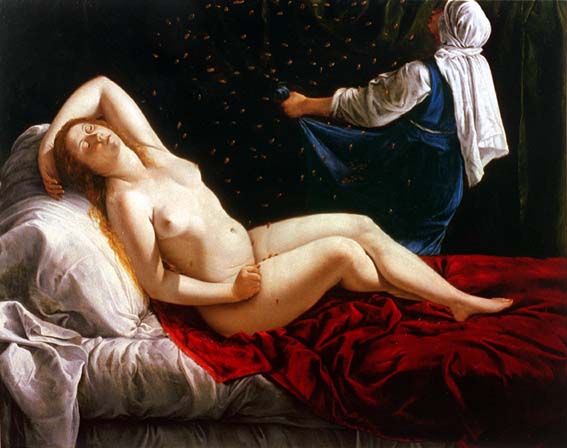
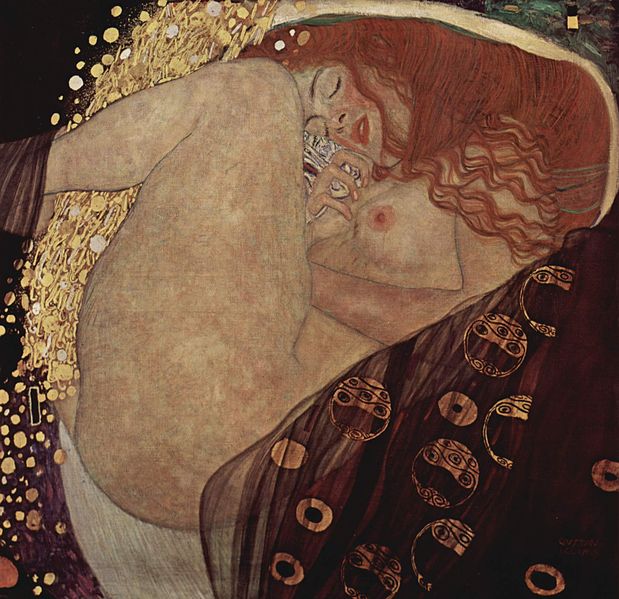
    Let's look at Danae. Zeus transformed into a golden shower to seduce Danae.


    Rembrandt, Danaë


    Artemisa Gentileschi, Danae


    Orazio Gentileschi, Danae


    Danaë, Gustav Klimt


    AJ Chantron, Danae


    Let's look at Ganymede.


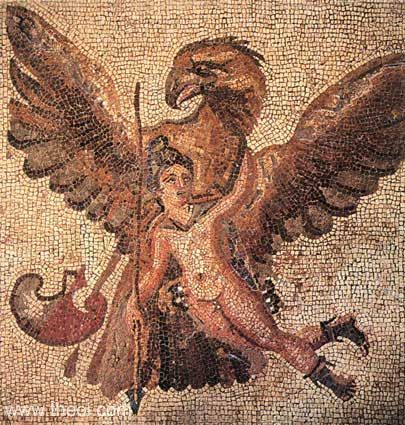
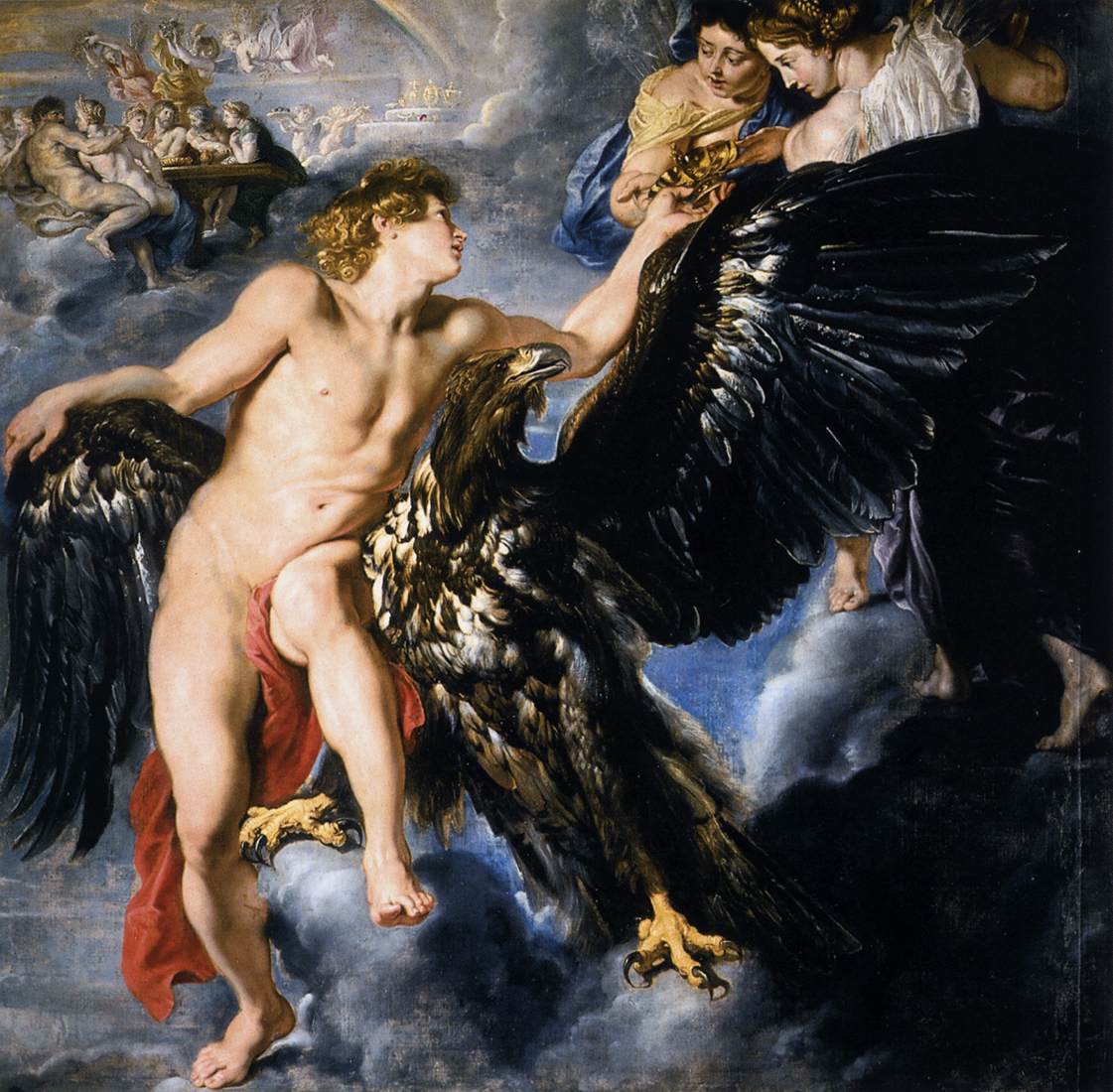
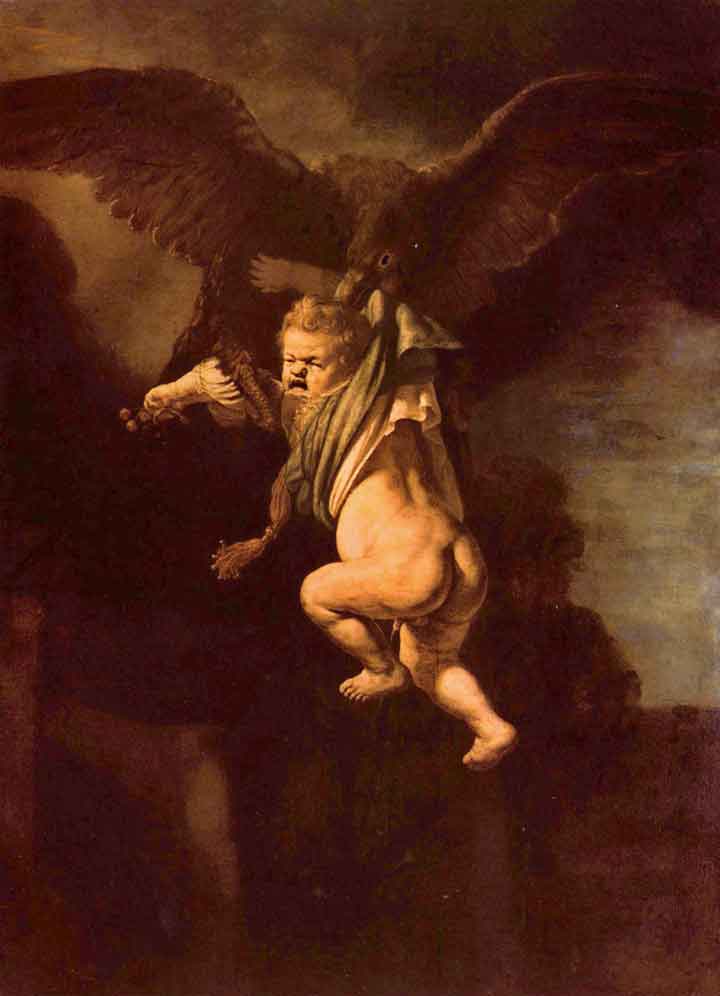
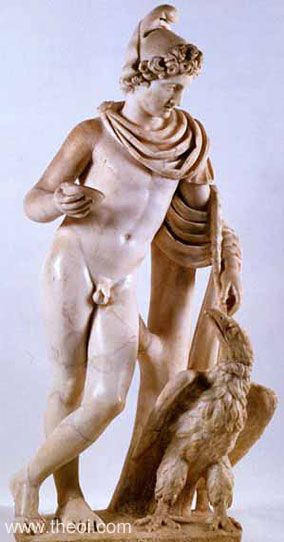
    Ganymede is the young, beautiful boy that became one of Zeus' lovers. One source of the myth says that Zeus fell in love with Ganymede when he spotted him herding his flock on Mount Ida. Zeus then came down in the form of an eagle or sent an eagle to carry Ganymede to Mount Olympus where Ganymede became cupbearer to the gods. According to other accounts, Eos kidnapped Ganymede, to be her lover, at the same time she kidnapped Tithonus. Zeus then robbed Eos of Ganymede, in return granting Eos the wish that Tithonus be immortal. Unthinkingly, Eos forgot to ask that Tithonus remain youthful. Everyday, the faithful Eos watched over Tithonus, until one day she locked him in a room and left him to get old by himself.
    When Ganymede's father, King Tros of Troy or Laomedon, found out about Ganymede's disappearance, he grieved so hard that Zeus sent Hermes on his behalf to give Tros or Laomedon two storm footed horses. In other accounts, Zeus gave Tros a golden vine and two swift horses that could run over water. Hermes was also ordered to assure the bereaved father that Ganymede was and would be immortal. Later, Heracles asked for the two beautiful horses in exchange for destroying the sea monster sent by Poseidon to besiege the city of Troy. Tros agreed and Heracles became the owner of the bribe sent by Zeus to Tros.
    Upon hearing that Ganymede was to be cup bearer as well as Zeus' lover, the infinitely jealous Hera was outraged. Therefor Zeus set Ganymede's image among the stars as the constellation Aquarius, the water carrier. Aquarius was originally the Egyptian god over the Nile. The Egyptian god poured water not wine from a flagon.
    All of Zeus' scandalous liaisons have allegorical meanings. Some sources say that Zeus' affair with Ganymede was a (religious) justification for homosexuality within the Greek culture, yet others state that this is merely a reflection of Greek life at that time. Before the popularity of the Zeus and Ganymede myth spread, however, the only toleration for sodomy was an external form of goddess worship. Cybele's male devotees tried to achieve unity with her by castrating themselves and dressing like women.
    Apollodorus argued that this myth emphasized the victory of patriarchy over matriarchy. This showed that men did not need women to exist, therefor they did not need the attentions of women. The philosopher Plato used this myth to justify his sexual feelings towards male pupils.
    http://www.pantheon.org/articles/g/ganymede.html

    GANYMEDES was a handsome, young Trojan prince who was carried off to heaven by Zeus, or his eagle, to be the god's lover and cup-bearer of the gods. Ganymedes also received a place amongst the stars as theconstellation Aquarius, his ambrosial mixing cup became the Krater, and the eagle Aquila. Ganymedes was frequently represented as the god of homosexual love, and as such appears as a playmate of the love-gods Eros(Love) and Hymenaios (Marital Love).
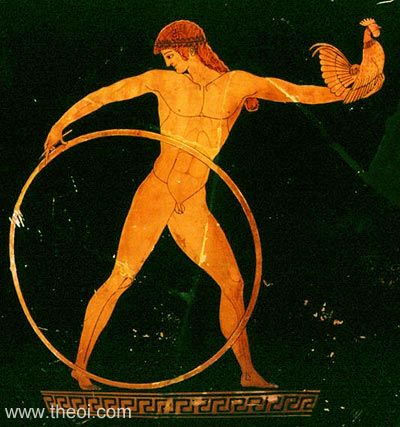
    Ganymedes was depicted in Greek vase painting as a handsome boy. In the abduction scene his attributes were usually a rooster (a lover's gift), a hoop (a boy's toy), or a lyre. When portrayed as the cup-bearer of the gods he is shown pouring nectar from a jug. In sculpture and mosaic art, on the other hand, Ganymedes usually appears with shepherd's crock and a Phrygian cap.
    The boy's name was derived from the Greek words ganumai "gladdening" and mędon ormedeôn, "prince" or "genitals." The name may have been formed to contain a deliberate double-meaning.
    http://www.theoi.com/Ouranios/Ganymedes.html

    Plato, Laws 636c (Greek philosopher C4th B.C.) :
    "One certainly should not fail to observe that when male unites with female for procreation the pleasure experienced is held to be due to nature, but contrary to nature when male mates with male or female with female, and that those first guilty of such enormities were impelled by their slavery to pleasure. And we all accuse the Kretans of concocting the story about Ganymedes. Because it was the belief that they derived their laws from Zeus, they added on this story about Zeus in order that they might be following his example in enjoying this pleasure as well."
    Plato, Phaedrus 255:
    "The fountain of that stream [homosexual desire], which Zeus when he was in love with Ganymede named Himeros (Desire)."
    http://www.theoi.com/Ouranios/Ganymedes.html


    GANYMEDE & THE EAGLE
    Kato Paphos Archaeological Park, Kato Paphos, Cyprus
    C3rd AD
    SUMMARY
    Zeus abducts Ganymedes to heaven, sweeping him up in the form of a giant eagle. The young Trojan prince holds a staff, and wears a Phrygian cap.


    GANYMEDE
    Musée du Louvre, Paris, France
    ca 525-475 BC
    Period: Archaic
    SUMMARY
    Zeus (not shown) pursues the boy Ganymedes, who is playings with a toy hoop and pet rooster (perhaps a gift from his male suitor).


    Peter Paul Rubens, The Obduction of Ganymede


    Peter Paul Rubens, The Abduction of Ganymede-II


    Anton Domenico Gabbian, Rape of Ganymede


    Ganymede, Rembrandt


    Antonio Correggio, Ganymede


    GANYMEDE & THE EAGLE
    Museo Pio-Clementino, Musei Vaticani, Vatican City
    Imperial Roman

  4. #94
    Banned
    Join Date
    Jun 2011
    Location
    Where the rain doesn't stop.....
    Posts
    763
    Blog Entries
    1

    The Three Graces

    Let’s continue how women are portrayed in mythology and art. We have seen The Judgment of Paris.

    The character and nature of the Charites (Three Graces) are sufficiently expressed by the names they bear: they were conceived as the goddesses who gave festive joy and enhanced the enjoyments of life by refinement and gentleness. Gracefulness and beauty in social intercourse are therefore attributed to them. (Horat. Carm. iii. 21, 22; Pind. Ol. xiv. 7, &c.) They are mostly described as being in the service or attendance of other divinities, as real joy exists only in circles where the individual gives up his own self and makes it his main object to afford pleasure to others.

    They were often represented as the companions of other gods, such as Hera, Hermes, Eros, Dionysus, Aphrodite, the Horae, and the Muses.

    DAUGHTERS OF ZEUS & EURYNOME

    Hesiod, Theogony 907 (Greek epic C8th or 7th B.C.) :
    "And Eurynome (Broad Pasture), the daughter of Okeanos (Oceanus), beautiful in form, bare him [Zeus] three fair-cheeked Kharites (Charites, Graces), Aglaia (Aglaea, Glory, Beauty), and Euphrosyne (Merriment), and lovely Thaleia (Thalia, Festivity), from whose eyes as they glanced flowed love that unnerves the limbs: and beautiful is their glance beneath their brows."
    DAUGHTERS OF DIONYSUS

    The Anacreontea, Fragment 38, Vol. Greek Lyric II) (C5th B.C.) :
    "Let us be merry and drink wine and sing of Bacchus . . . thanks to him Methe (Drunkenness) was brought forth, the Charisties, Grace) was born, Lupa (Pain) takes rest and Ania (Trouble) goes to sleep."

    Nonnus, Dionysiaca 16. 130 (Greek epic C5th A.D.) :
    "[Dionysos:] ‘I will present you with the Kharites (Charites, Graces) of divine Orkhomenos (Orchomenus) . . . my daughters, whom I will take from Aphrodite.’"

    Homer, Iliad 14. 231 (Greek epic C8th B.C.) :
    "Hera answered him [Hypnos god of sleep]: ‘. . . I will give you one of the younger (hoploterai) (Charites, Graces) for you to marry, and she shall be called you lady; Pasithea, since all your days you have loved her forever.’
    So she spoke, and Hypnos was pleased and spoke to her in answer: ‘Come then! Swear it to me on Styx' ineluctable water. With one hand take hold of the prospering earth, with the other take hold of the shining salt sea, so that all the undergods who gather about Cronus may be witnesses to us. Swear that you will give me one of the younger Kharites, Pasithea, the one whom all my days I have longed for.’"
    http://www.theoi.com/Ouranios/Kharites.html


    The Three Graces, Raphael


    Hans von Aachen, The Three Graces


    Franceschini (attr) Apollo and the Graces


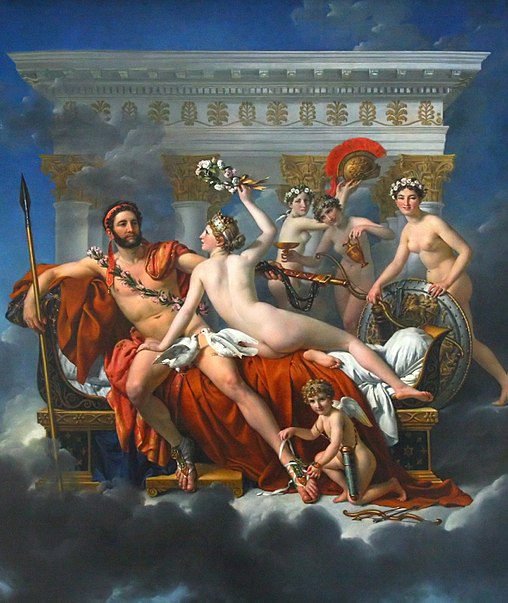
    Jacques-Louis David, Mars Disarmed By Venus And The Three Graces


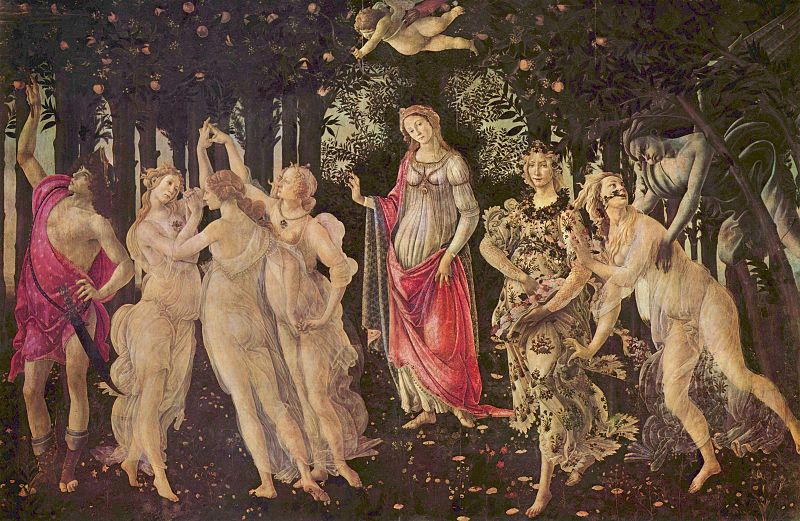
    Sandro Botticelli, Primavera


    The Three Graces, Edward Coley Burne-Jones


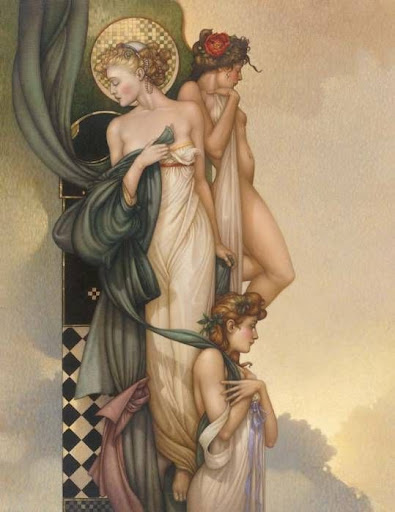
    The Three Graces, Michael Parkes

  5. #95
    Banned
    Join Date
    Jun 2011
    Location
    Where the rain doesn't stop.....
    Posts
    763
    Blog Entries
    1

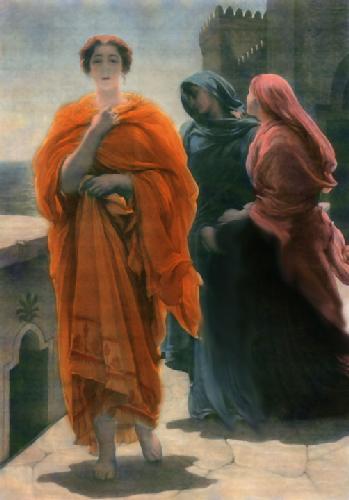
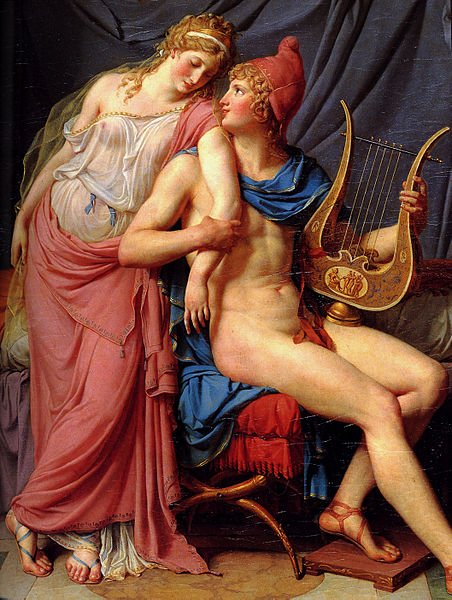
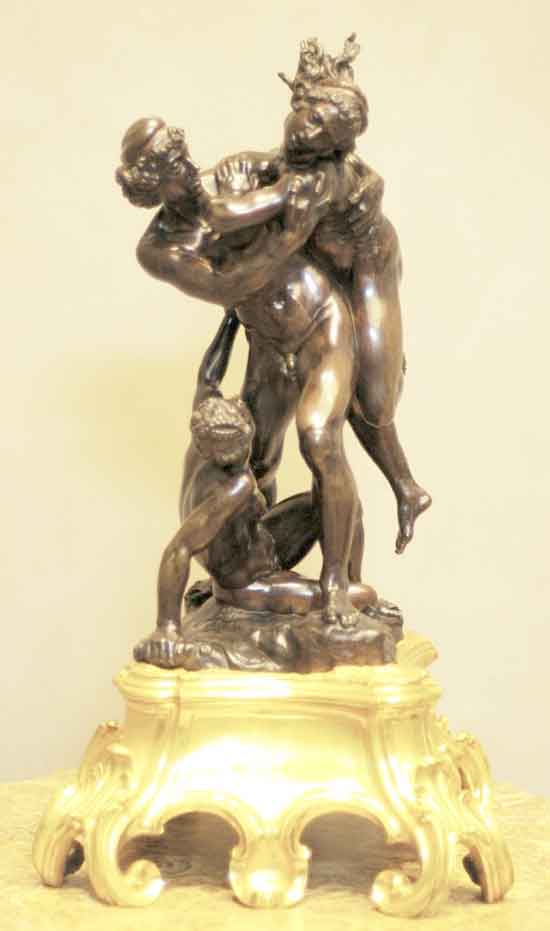
    Helen of Troy

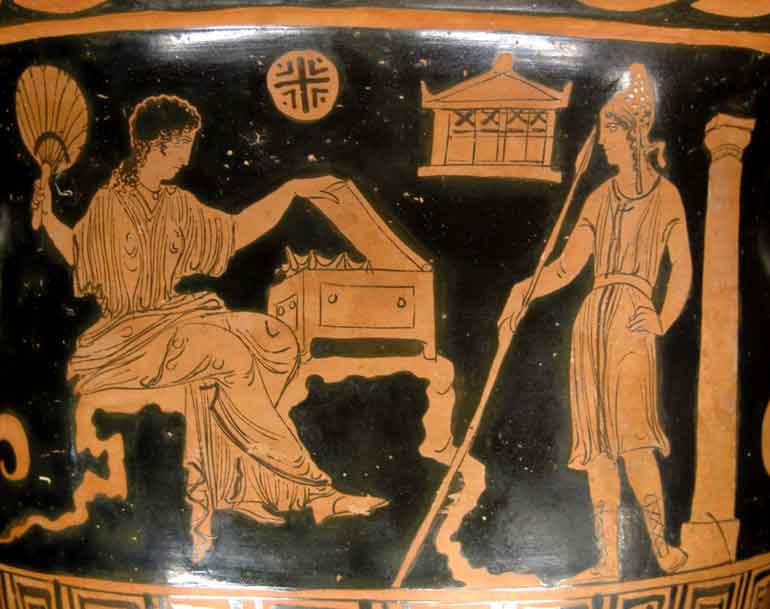
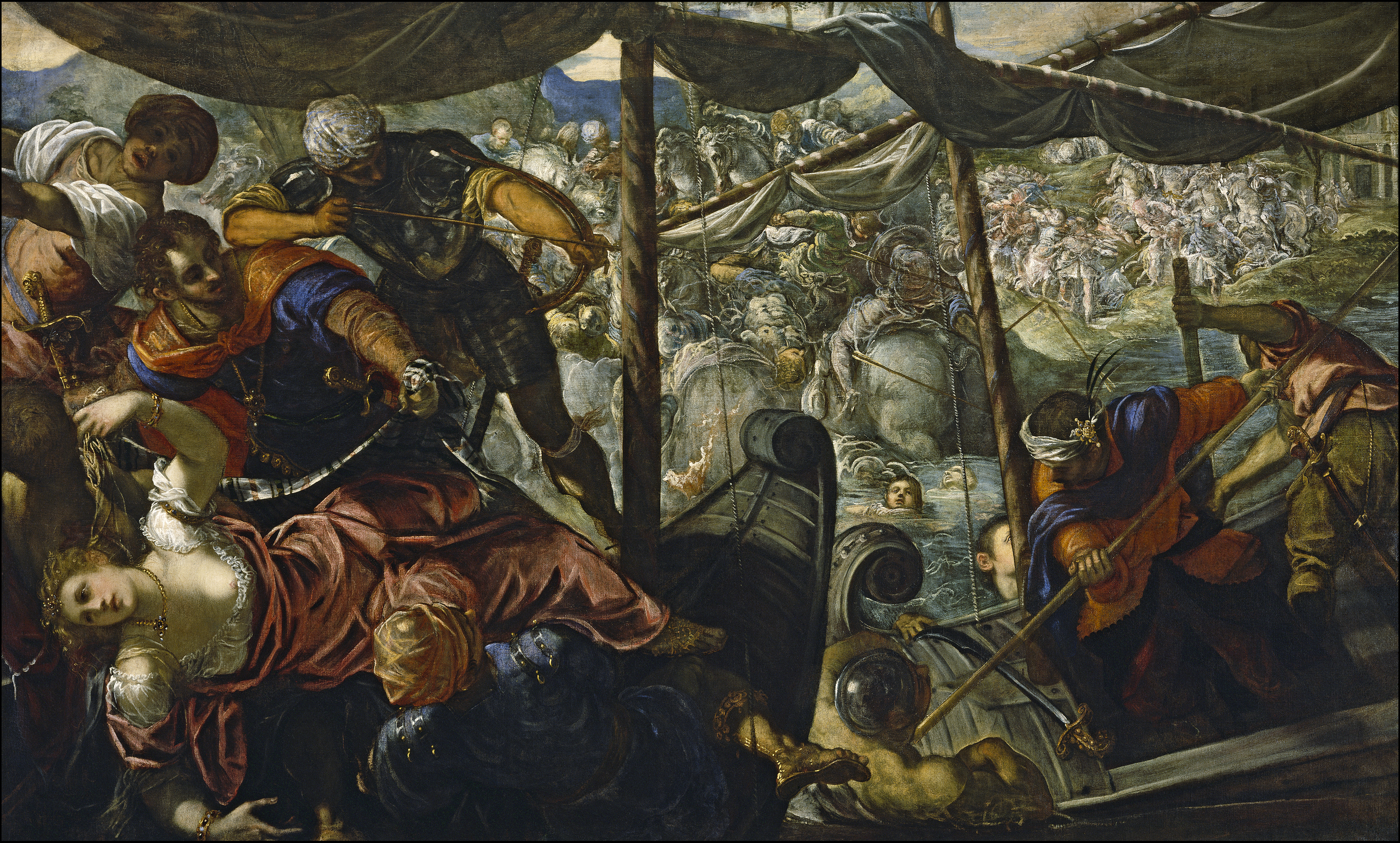
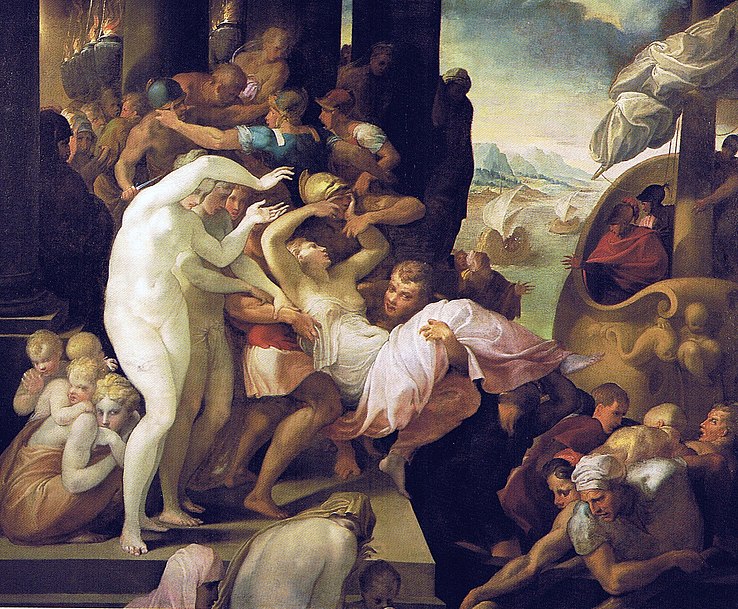
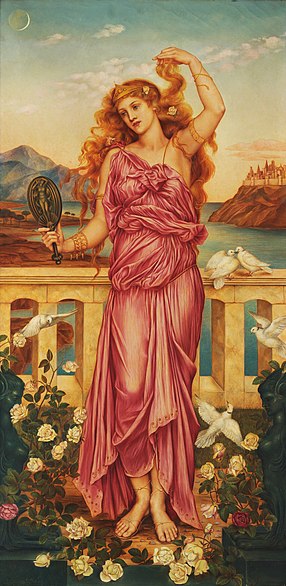
    In Greek mythology, Helen of Troy, also known as Helen of Sparta, was the daughter of Zeus and Leda (or Nemesis), daughter of King Tyndareus, wife of Menelaus and sister of Castor, Polydeuces and Clytemnestra. Her abduction by Paris brought about the Trojan War.
    In most sources, including the Iliad and the Odyssey, Helen is the daughter of Zeus and Leda, the wife of the Spartan king Tyndareus. Euripides' play Helen, written in the late 5th century BC, is the earliest source to report the most familiar account of Helen's birth: that, although her putative father was Tyndareus, she was actually Zeus' daughter. In the form of a swan, the king of gods was chased by an eagle, and sought refuge with Leda. The swan gained her affection, and the two mated. Leda then produced an egg, from which Helen emerged. The First Vatican Mythographer introduces the notion that two eggs came from the union: one containing Castor and Pollux; one with Helen and Clytemnestra. Nevertheless, the same author earlier states that Helen, Castor and Pollux were produced from a single egg. Pseudo-Apollodorus states that Leda had intercourse with both Zeus and Tyndareus the night she conceived Helen.
    http://en.wikipedia.org/wiki/Helen_of_Troy


    Helen and Paris, Louvre


    Leda and the Swan, copy by Cesare Sesto after a lost original by Leonardo.


    Tintoretto, Rape of Helen


    Francesco Primaticcio, Rape of Helena


    Helen of Troy, Evelyn de Morgan


    Helen of Troy, Dante Gabriel Rossetti


    Helen of Troy, Frederic Leighton


    Gustave Moreau, Helen on the Ramparts of Troy


    Helen, Franz von Stuck


    The Love of Helen and Paris, Jacques-Louis David


    The Abduction of Helen by Paris, Giovanni Francesco Susini

  6. #96
    Banned
    Join Date
    Jun 2011
    Location
    Where the rain doesn't stop.....
    Posts
    763
    Blog Entries
    1

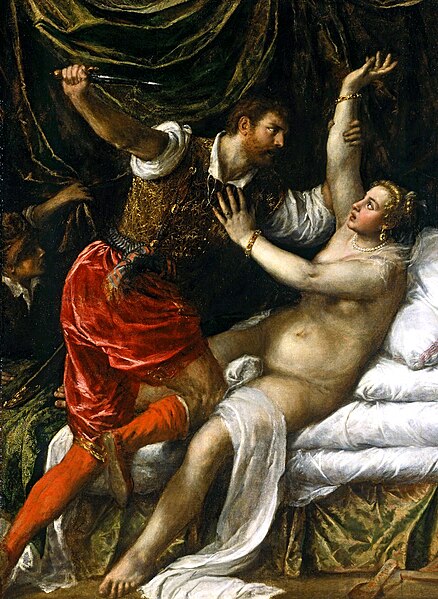
    Lucretia

    Rape of Lucretia

    Roman woman whose rape by Sextus Tarquinius, the son of the last Roman king Lucius Tarquinius Superbus (R: 535-510 B.C.), and her subsequent suicide, caused an uprising led by her husband and by her kinsman Lucius Junius Brutus, which ultimately resulted in the fall of the kingdom of Rome and the establishment of the Republic. Lucretia's rape and suicide were a prominent theme in the arts, particularly from the 16th century onwards.
    http://commons.wikimedia.org/wiki/Category:Lucretia


    Titian, Tarquinius and Lucretia


    Simon Vouet, Lucretia And Tarquinius


    Luca Giordano, The Rape of Lucretia


    Titian, Suicide of Lucretia


    Rembrandt, Lucretia


    Lucretia, Paolo Veronese


    Artemisia Gentileschi, Lucretia


    Sodoma, Death of Lucretia

  7. #97
    Banned
    Join Date
    Jun 2011
    Location
    Where the rain doesn't stop.....
    Posts
    763
    Blog Entries
    1

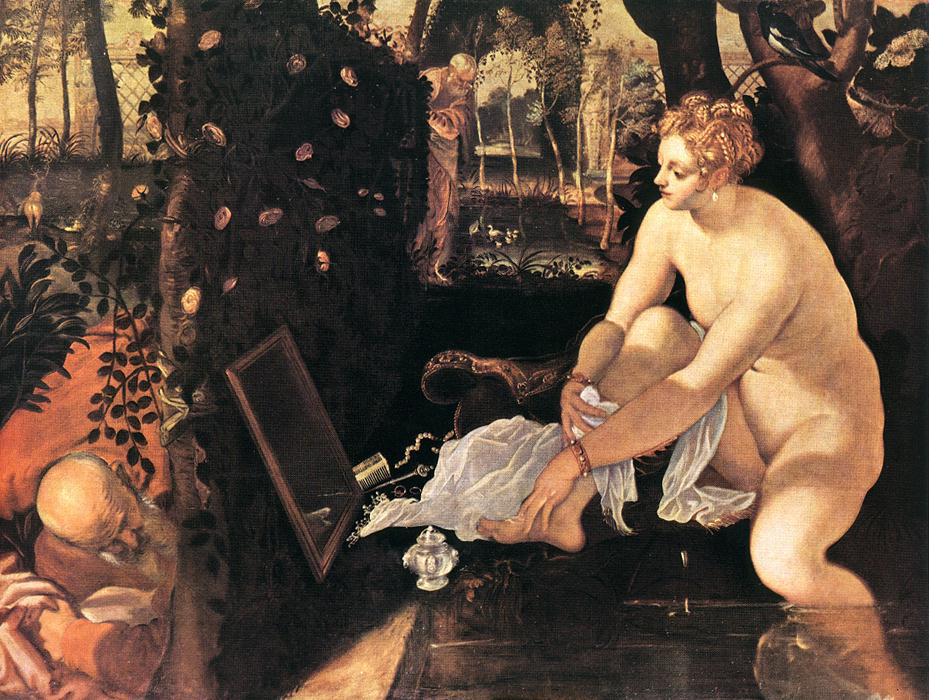
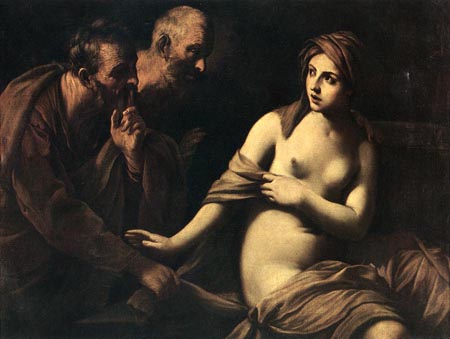
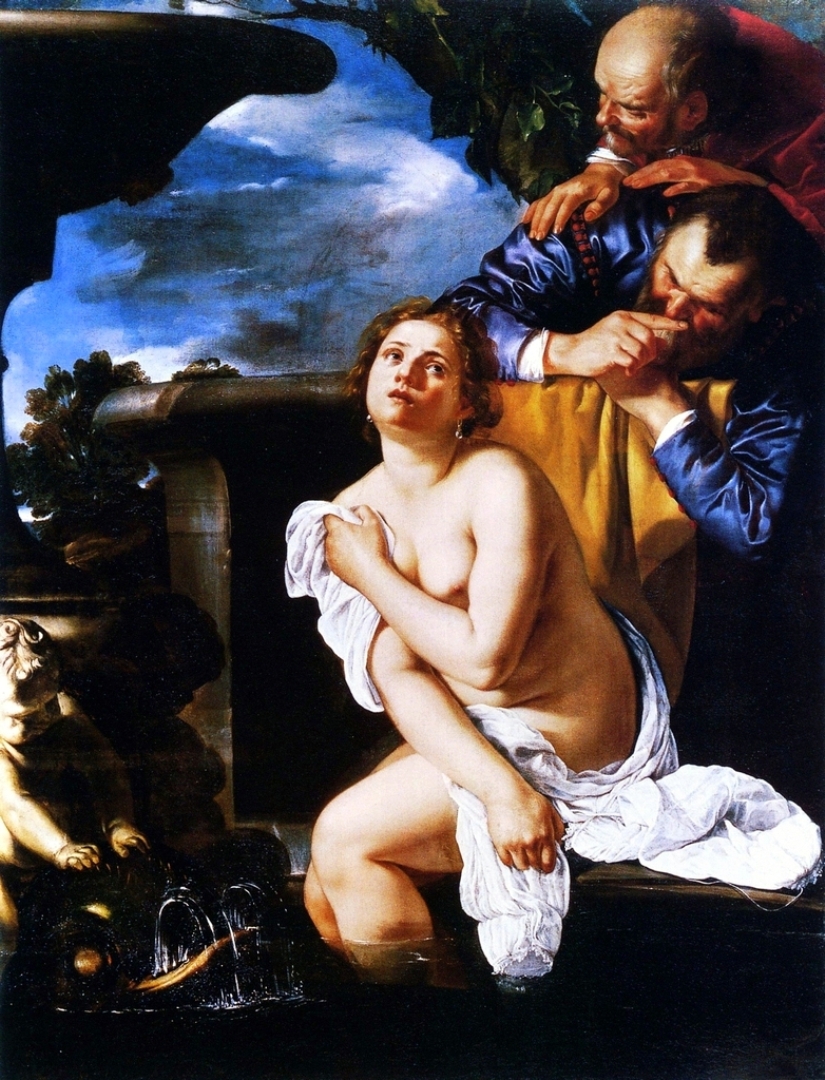
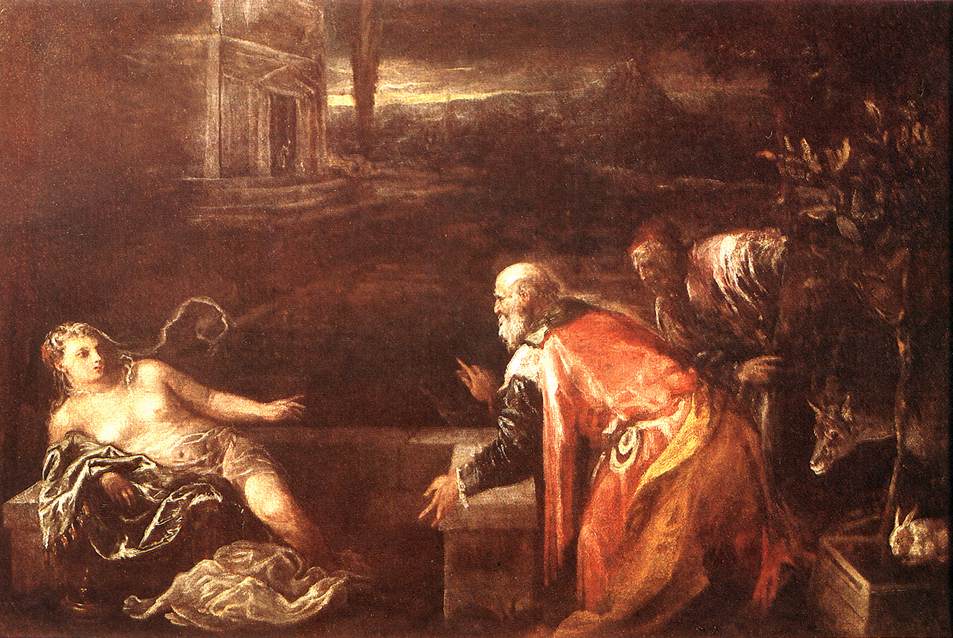
    Susanna and the Elderly

    Let's look at Susanna and the Elderly.

    Susanna or Shoshana included in the Book of Daniel (as chapter 13) by the Roman Catholic and Eastern Orthodox churches.

    As the story goes, a fair Hebrew wife named Susanna is falsely accused by lecherous voyeurs. As she bathes in her garden, having sent her attendants away, two lustful elders secretly observe the lovely Susanna. When she makes her way back to her house, they accost her, threatening to claim that she was meeting a young man in the garden unless she agrees to have sex with them.

    She refuses to be blackmailed and is arrested and about to be put to death for promiscuity when a young man named Daniel interrupts the proceedings, shouting that the elders should be questioned to prevent the death of an innocent. After being separated, the two men are questioned about details of what they saw but disagree about the tree under which Susanna supposedly met her lover.
    http://en.wikipedia.org/wiki/Susanna_(Book_of_Daniel)


    Giovanni Battista Tiepolo


    Peter Paul Rubens, Susanna and the Elders


    Susanna and the Old Men, Guercino.


    Paolo Veronese


    Tintoretto, Susanna and the Elders.


    Ricci Sebastiano, Susanna and the Two Elderly


    Guido Reni, Susanna and the Elders.


    Guido Cagnacci


    Domenico Guarino


    Artemisia Gentileschi


    Anthony van Dyck


    Van Honthorst, Gerard


    Pieter Lastman


    Andrea Malinconico


    Jacopo Bassano


    Théodore Chassériau


    Franz von Stuck


    Franciszek Żmurko

    There are more painters who were fascinated with ..... Susanna or elderly

  8. #98
    Banned
    Join Date
    Jun 2011
    Location
    Where the rain doesn't stop.....
    Posts
    763
    Blog Entries
    1

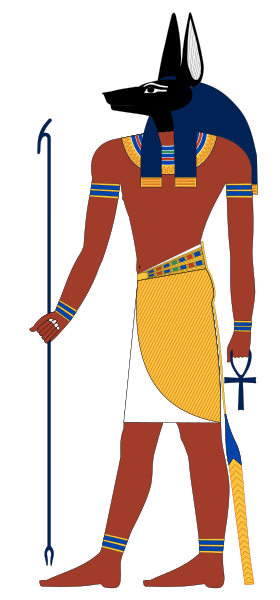
    Anubis

    ANUBIS

    Other Names: Anpu, Inpu, Ienpw, Imeut (Lord-of-the-Place-of-Embalming).

    Patron of: mummification, and the dead on their path through the underworld.

    Appearance: A man with the head of a jackal-like animal. Unlike a real jackal, Anubis' head is black, representing his position as a god of the dead. He is rarely shown fully-human, but he is depicted so in the Temple of Abydos of Rameses II. There is a beautiful statue of him as a full jackal in the tomb of Tutankhamun.

    Description: Anubis is an incredibly ancient god, and was the original god of the dead before Osiris "took over" the position. After that point, Anubis was changed to be one of the many sons of Osiris and the psychopomp (conductor of souls) of the underworld. His totem of the jackal is probably due to the fact that jackals would hunt at the edges of the desert, near the necropolis and cemeteries throughout Egypt.

    Prayers to Anubis are found carved on the most ancient tombs in Egypt, and his duties apparently are many. He watches over the mummification process to ensure that all is done properly. He conducts the souls through the underworld, testing their knowledge of the gods and their faith. He places their heart on the Scales of Justice during the Judging of the Heart, and he feeds the souls of wicked people to Ammit.

    In some stories, Anubis is the son of Ra and Nephthys, or Set and Nephthys (probably due to Set and Anubis having the same totem animal). Some have Heset as his mother, and still others say Bast. This apparent confusion is still another sign of Anubis' origins in the most ancient of times. He also has a daughter, Kabechet, who helps him in the mummification.

    Worship: Worshipped widely throughout all of Egypt, his cult center was Cynopolis.


    http://www.touregypt.net/godsofegypt/anubis.htm


    The Egyptian god Anubis


    The big statue, 26 tons of jackal-headed deity, will spend the winter in Landmark Plaza, next to Landmark Center and Rice Park. The statue also was displayed before the exhibit's opening in Atlanta, New York City, London, Toronto and Vienna.
    http://www.minnpost.com/politicalage...ian_god_anubis


    Anubis Statue Installed at Denver International Airport
    2010 06 03


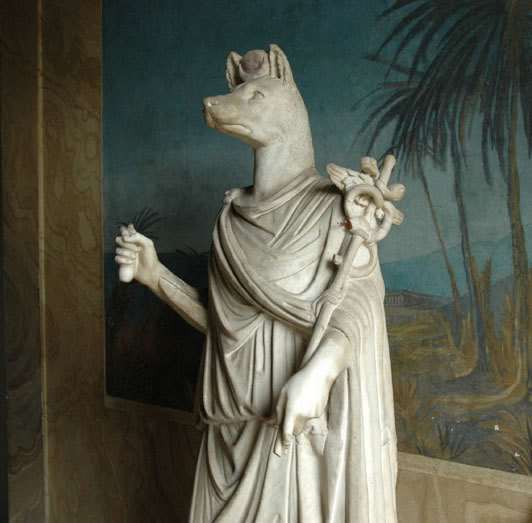
    Hermanubis

    A combination of the Greek god Hermes and Anubis. As their functions as psychopomps were similar, they were combined by the Greeks into a single form. Hermanubis also appears in alchemical and hermetical literature of the Middle Ages and the Renaissance.

    http://www.touregypt.net/godsofegypt/anubis.htm


    Statue of Hermanubis, Vatican Museums


    Hermes/Mercury


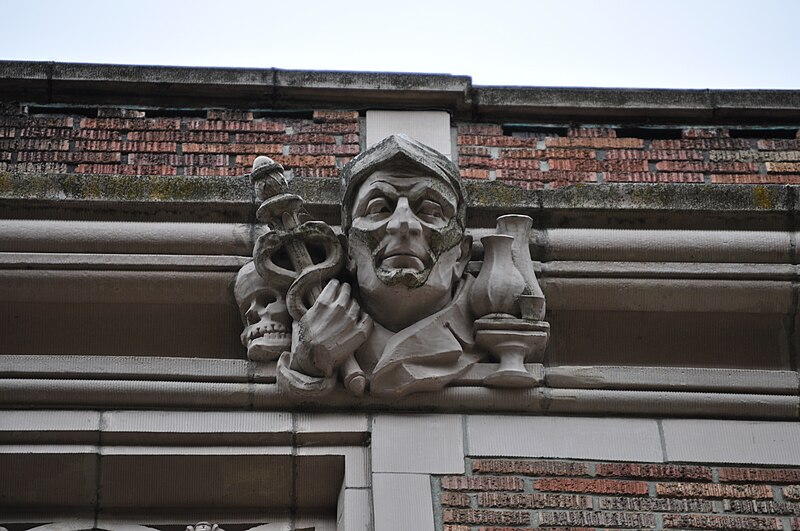
    "Medicine", sculpture by Alonzo Victor Lewis, 1922. North face of Miller Hall, University of Washington, Seattle, Washington, USA.


    Baphomet


    Caduceus in Heraldy

    http://commons.wikimedia.org/wiki/Ca...us_in_heraldry


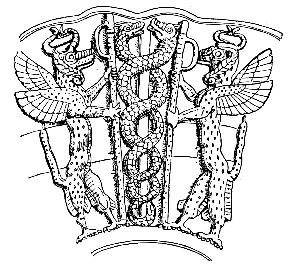
    The Sumerian deity, Ningizzida, is accompanied by two gryphons; it is the oldest known image of two snakes coiling around an axial rod, dating from before 2000 BCE.


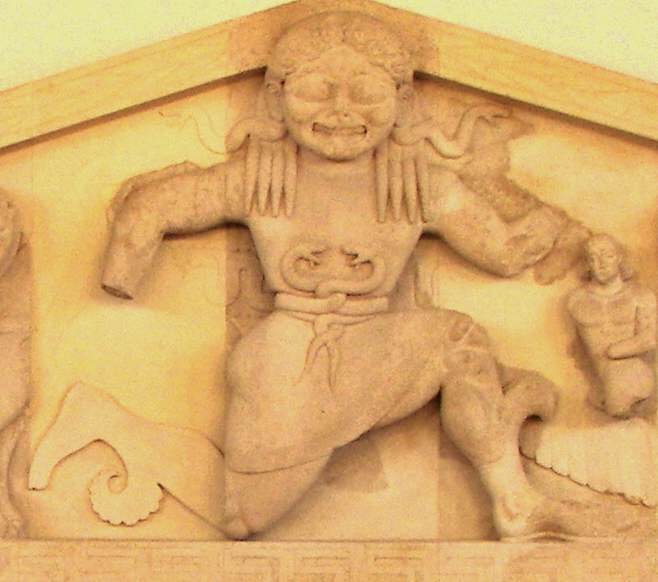
    Gorgon


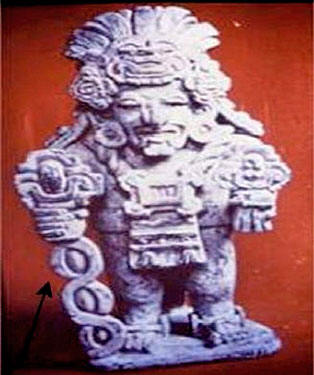
    Caduceus Statue of Quetzalcoatl with entwined snakes around a rod


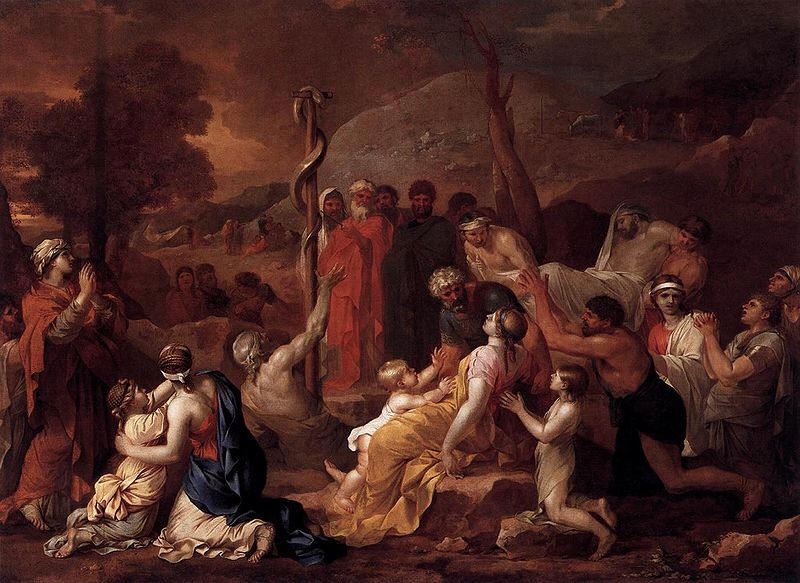
    Bourdon, Sébastien - Moses and the Brazen Serpent


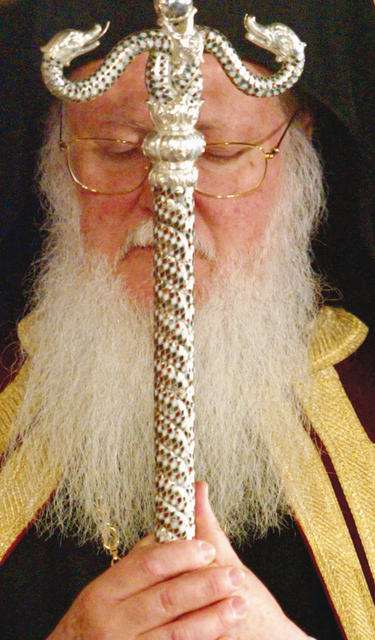
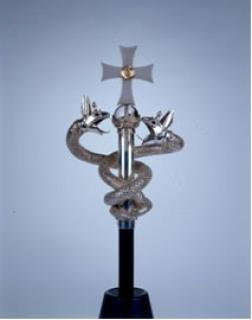
    The Bishop of London’s crosier

  9. #99
    Banned
    Join Date
    Jun 2011
    Location
    Where the rain doesn't stop.....
    Posts
    763
    Blog Entries
    1

    Dionysus

    Dionysus(Bacchus) was the god of the grape harvest, winemaking and wine, of ritual madness and ecstasy in Greek mythology.http://en.wikipedia.org/wiki/Dionysus

    DIONYSUS, the youthful, beautiful, but effeminate god of wine. His attributes included the thyrsos (a pine-cone tipped staff), drinking cup, leopard and fruiting vine. He was usually accompanied by a troop of Satyrs and maenads (female devotees or nymphs).

    According to the common tradition, Dionysus was the son of Zeus and Semele, the daughter of Cadmus of Thebes (Hom. Hymn. vi. 56; Eurip. Bacch. init.; Apollod. iii. 4. § 3); whereas others describe him as a son of Zeus by Demeter, Io, Dione, or Arge. (Diod. iii. 62, 74; Schol.ad Pind. Pyth. iii. 177; Plut. de Flum. 16.)

    Several ancient poets and writers attempted to arrange the mythology of Dionysus into a tidy chronological narrative. However, these were artificial constructs--the stories were, for the most part, a loose collection of highly localized, unrelated cult myths.
    The mythographer Apollodorus provides us with the neatest of these narratives.

    I. THE BIRTH OF DIONYSUS

    Pseudo-Apollodorus, Bibliotheca 3. 26 - 28 (trans. Aldrich) (Greek mythographer C2nd A.D.) :
    ""Cadmus [and Harmonia] had as daughters Autonoe, Ino, Semele and Agaue . . . Zeus fell in love with Semele and slept with her, promising her anything she wanted, and keeping it all from Hera. But Semele was deceived by Hera into asking Zeus to come to her as he came to Hera during their courtship. So Zeus, unable to refuse, arrived in her bridal chamber in a chariot with lightning flashes and thunder, and sent a thunderbolt at her. Semele died of fright, and Zeus grabbed from the fire her six-month aborted baby, which he sewed into his thigh. After Semele's death the remaining daughters of Cadmus circulated the story that she had slept with a mortal, thereafter accusing Zeus, and because of this had been killed by a thunderbolt. At the proper time Zeus loosened the stitches and gave birth to Dionysus, whom he entrusted to Hermes."

    Hesiod, Theogony 940 ff (trans. Evelyn-White) (Greek epic C8th or 7th B.C.) :
    "And Semele, daughter of Cadmus was joined with him [Zeus] in love and bare him a splendid son, joyous (polygethes) Dionysus,--a mortal woman an immortal son. And now they both are gods."
    http://www.theoi.com/Olympios/DionysosMyths.html


    Gustave Moreau, Jupiter and Semele


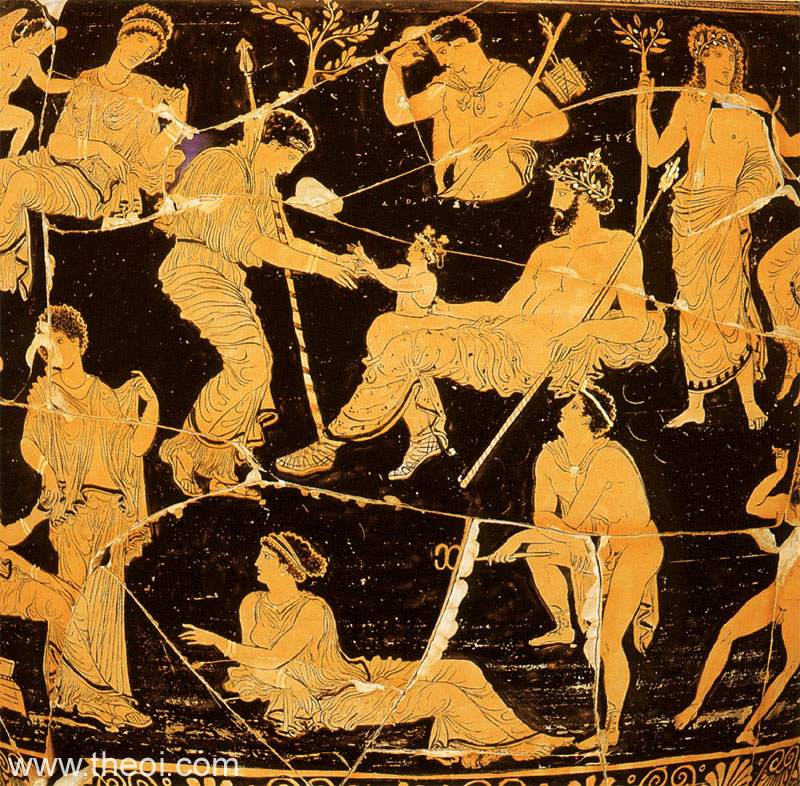
    THE BIRTH OF DIONYSUS

    Museo Nazionale Archeologico di Taranto, Taranto, Italy
    Date: ca 405 - 385 BC
    Period: Late Classical

    SUMMARY

    Detail of the central figures from a painting depicting the birth of Dionysos. The new born god emerges from the thigh of Zeus. He is depicted wearing a wreath of vine-leaves, and stretches out his arms, either to ward of or embrace the goddess about to grab him. Zeus reclines on a hill, holding his royal sceptre in hand.


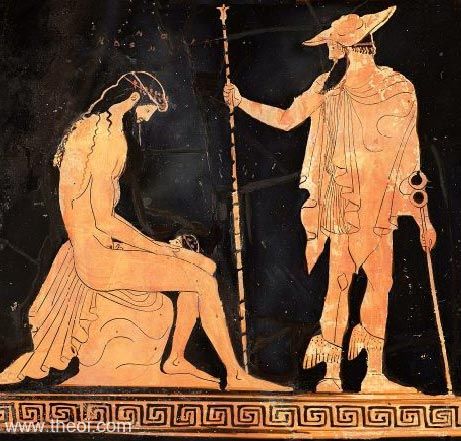
    THE BIRTH OF DIONYSUS

    Museum of Fine Arts, Boston, Massachusetts, USA
    Date: ca 470 - 460 BC
    Period: Early Classical

    SUMMARY

    Zeus, seated on a rock, gives birth to the god Dionysus from his thigh. Hermes stands by holding the royal sceptre of his father in one hand, and in his other, his own herald's wand. He is also shown with winged boots and petasos (traveller's cap).


    II. NURSED BY INO & THE Nymphs of Mount
    Pseudo-Apollodorus, Bibliotheca 3. 29 - 30 :
    "Zeus loosened the stitches and gave birth to Dionysus, whom he entrusted to Hermes. Hermes took him to Ino and Athamas, and persuaded them to bring him up as a girl. Incensed, Hera inflicted madness on them. As for Zeus, he escaped Hera's anger by changing Dionysus into a baby goat. Hermes took him to the Nymph of Asian Nysa, whom Zeus in later times places among the stars and named the Hyades."
    http://www.theoi.com/Olympios/DionysosMyths.html


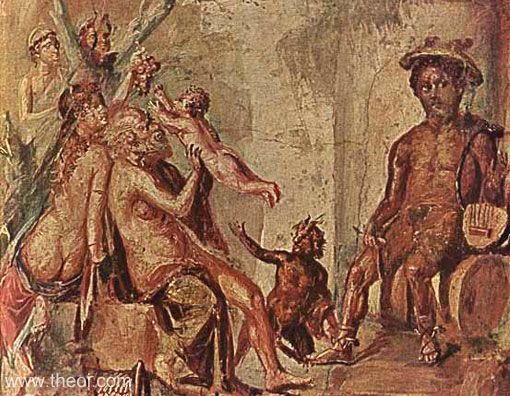
    SILENUS NURSING DIONYSUS

    Museo Archeologico Nazionale di Napoli, Naples, Italy
    Period: Imperial Roman

    SUMMARY

    The old god Silenus plays with the infant Dionysus. Beside him sits a Nysias Nymph holding a bunch of grapes out for the child. The goat-legged Pan, and Hermes with winged cap, sandals and lyre, sit to one side.


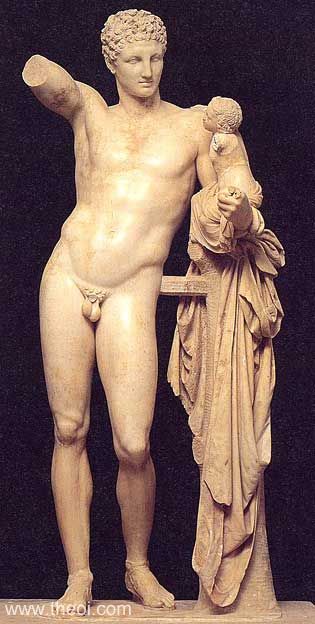
    HERMES "OF OLYMPIA "

    Museum Collection: Archaeological Museum, Olympia, Greece
    Date: C4th BC
    Period: Classical

    SUMMARY

    Hermes holds the infant god Dionysus in his draped arm.


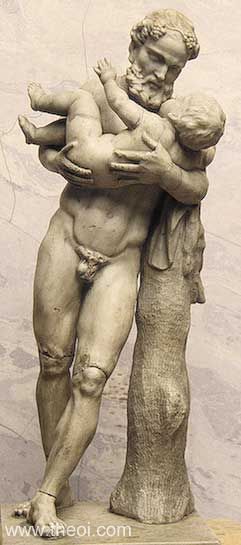
    SILENUS & INFANT DIONYSOS

    Museum Collection: State Hermitage Museum, St Petersburg, Russia
    Date: C1st - C2nd AD
    Period: Imperial Roman

    SUMMARY

    Silenus nurses the infant god Dionysos in his arms. He is crowned with a wreath of berries.


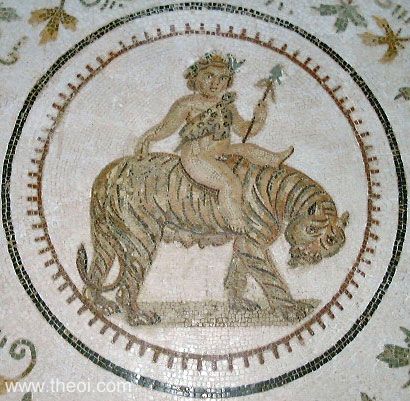
    INFANT DIONYSUS RIDING TIGER

    Museum Collection: El Djem (in situ), Tunisia
    Period: Imperial Roman

    SUMMARY

    The infant Dionysus, wearing a leopard-skin cloak and holding a thyrsos staff, rides on the back of a tiger.


    Bacchus, Caravaggio


    Drinking Bacchus, Guido Reni

  10. #100
    Banned
    Join Date
    Jun 2011
    Location
    Where the rain doesn't stop.....
    Posts
    763
    Blog Entries
    1

    Dionysus

    Let's continue with Dionysus.


    The earliest images of the god were mere Hermae with the phallus (Paus. ix. 12. § 3), or his head only was represented. (Eustath. ad Hom. p. 1964.) In later works of art he appears in four different forms:

    1. As an infant handed over by Hermes to his nurses, or fondled and played with by satyrs and Bacchante.

    2. As a manly god with a beard, commonly called the Indian Bacchus. He there appears in the character of a wise and dignified oriental monarch; his features are expressive of sublime tranquility and mildness; his beard is long and soft, and his Lydian robes (bassara) are long and richly folded. His hair sometimes floats down in locks, and is sometimes neatly wound around the head, and a diadem often adorns his forehead.
    http://www.theoi.com/Olympios/Dionysos.html


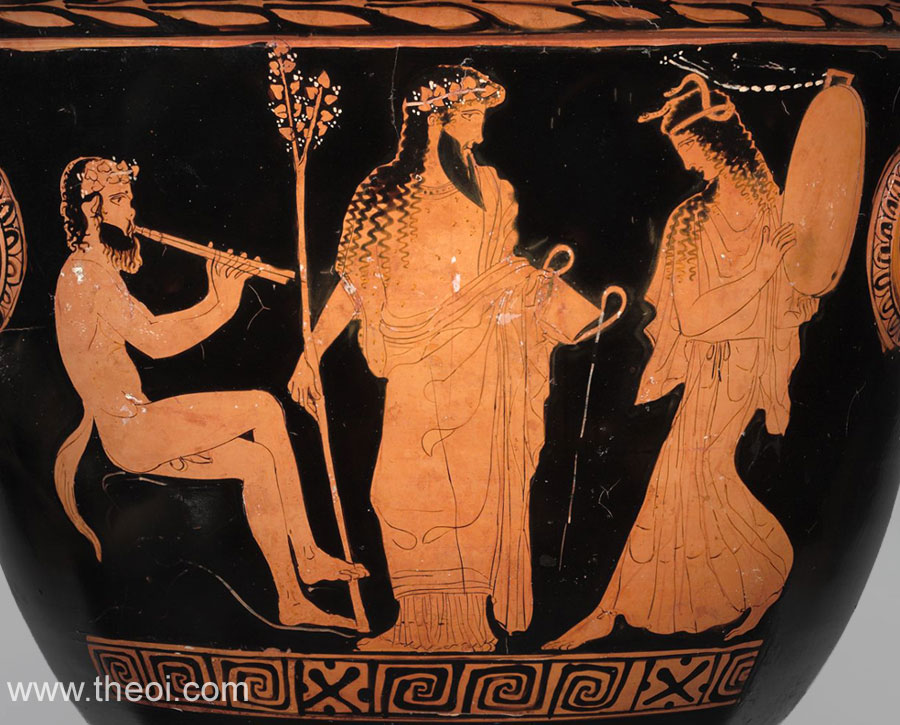
    DIONYSUS & HIS RETINUE

    Museum Collection: Harvard University Art Museums, Cambridge,
    Date: ca 440 - 430 BC
    Period: Classical

    SUMMARY

    Dionysos stands attended by a Satyros and Mainas. The god is bearded, and crowned with a wreath of ivy. He holds a drinking cup in one hand and a double-thyrsos (pine-cone tipped staff) in the other. The Mainas beats a tambourine and the Satyros plays a flute.


    DIONYSUS & SATYR

    Museum Collection: Antikenmuseen, Berlin, Germany
    Date: ca 490 - 480 BC
    Period: Late Archaic

    SUMMARY

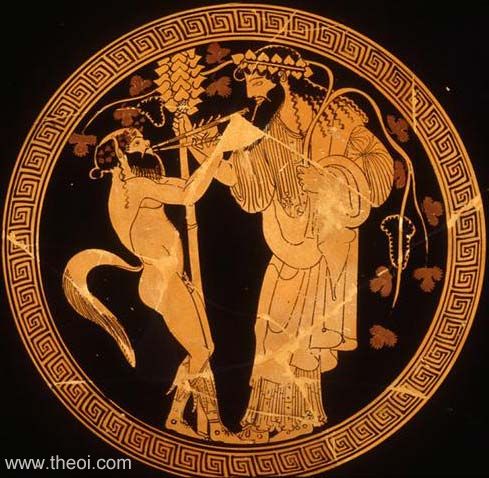
    Tondo: Dionysos crowned with a wreath of ivy, and holding a fruiting grape vine in one hand, and thyrsos (pine-cone tipped staff) in the other. He is accompanied by a flute-playing Satyros.


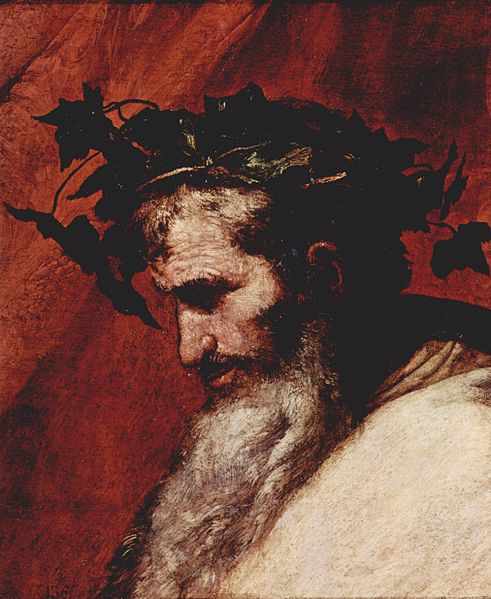
    José de Ribera, Dionysus


    3. The youthful or so-called Theban Bacchus, was carried to ideal beauty by Praxiteles. The form of his body is manly and with strong outlines, but still approaches to the female form by its softness and roundness. The expression of the countenance is languid, and shows a kind of dreamy longing; the head, with a diadem, or a wreath of vine or ivy, leans somewhat on one side; his attitude is never sublime, but easy, like that of a man who is absorbed in sweet thoughts, or slightly intoxicated. He is often seen leaning on his companions, or riding on a panther, ***, tiger, or lion. The finest statue of this kind is in the villa Ludovisi.


    Euripides, Bacchae 90 ff (trans. Buckley) (Greek tragedy C5th B.C.) :
    "[Dionysus] the bull-horned god, and he [Zeus] crowned him with crowns of snakes."

    Ovid, Metamorphoses 3. 664 ff :
    "[The Tyrrhenian pirates] discovered on this lonely spot, a boy [Dionysus], as pretty as a girl. He seemed to reel, half-dazed with wine and sleep, and almost failed to follow along. I gazed at his attire, his face, his bearing; everything I saw seemed more than mortal. I felt sure of it . . .

    Ovid, Metamorphoses 4. 18 ff :
    "You [Dionysus] have youth unfading; you're a boy for ever; you shine the fairest in the firmament. When you lay by your horns, your countenance is like a lovely girl's."

    Seneca, Phaedra 753 ff :
    "Bacchus [Dionysus], from thyrsus-bearing India, with unshorn locks, perpetually young, thou who frightens tigers with thy vine-clad spear, and with a turban thy horned head."
    http://www.theoi.com/Olympios/Dionysos.html


    DIONYSUS

    Museum Collection: Harvard University Art Museums, Cambridge, Massachusetts, USA
    Date: ca 410 - 400 BC
    Period: Classical

    SUMMARY

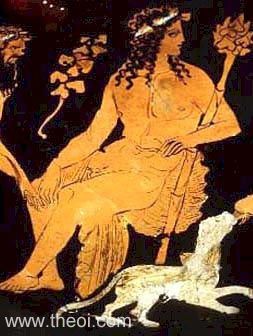
    Detail of Dionysos from a painting depicting the god and his retinue. He is shown here as a pretty youth with long wavy hair. He holds his thyrsos (pine-cone tipped staff) in one hand, and beside him llies a baby panther.


    DIONYSUS RIDING PANTHER

    Museum Collection: Pella Archaeological Museum, Pella, Macedonia, Greece
    Date: ca 400 - 360 BC
    Period: Hellenistic Greek

    SUMMARY

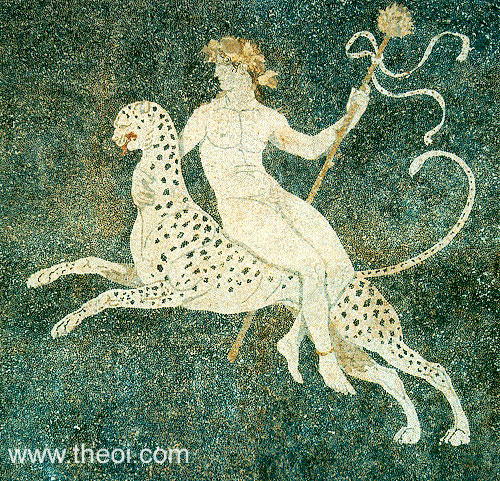
    The youthful god Dionysos rides side-saddle on the back of a panther with a ribboned thyrsos (pine-cone tipped staff) in his hand. He is crowned with a wreath of ivy or vine-leaves.


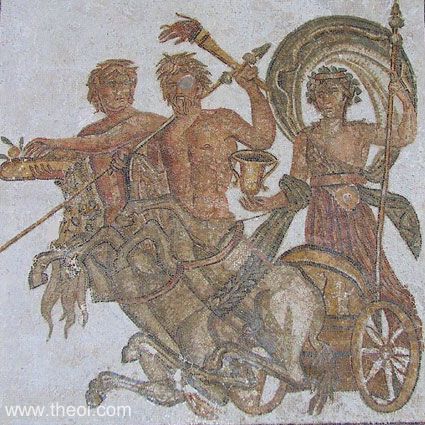
    DIONYSUS & CHARIOT OF CENTAURS

    Museum Collection: Bardo Museum, Tunis, Tunisia
    Period: Late Roman

    SUMMARY

    The god Dionysos, with wine cup and thyrsos rod, rides in a chariot drawn by two Centaurs


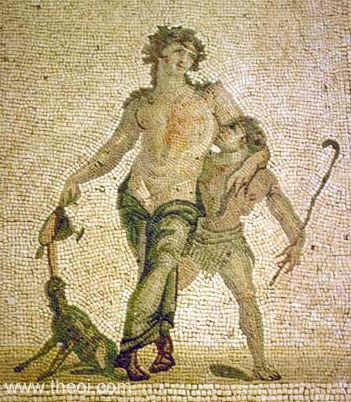
    DIONYSUS & SATYR

    Museum Collection: Antakya Museum, Antakya, Turkey
    Date: C4th AD
    Period: Imperial Roman

    SUMMARY

    The drunken god Dionysos walks supported by a Satyros. He spills his cup of wine, which is lapped up by a panther cub. The god has long hair and is crowned with a wreath of ivy. The Satyr is named Skyrtos in a similar mosaic.


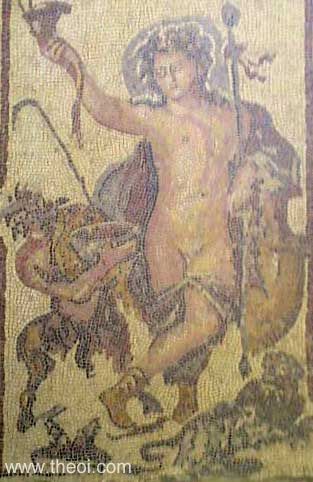
    DIONYSUS & PAN

    Museum Collection: Shahba Museum, Shahba, Syria
    Date: C4th AD
    Period: Imperial Roman

    SUMMARY

    Dionysos stands haloed and holding a drining cup and thyrsos rod beside the goat-legged god Pan.


    Bacchus, Michelangelo


    2nd century Roman statue of Dionysus.


    Midas and Bacchus, Nicolas Poussin


    4. Bacchus with horns, either those of a ram or of a bull. This representation occurs chiefly on coins, but never in statues.
    http://www.theoi.com/Olympios/Dionysos.html

    But I haven't found yet coins that depict him with horns.


    Gold phaler (ornament worn by horses), one of a pair, representing Dionysus. Syria, 3rd century BC.


    Head of bearded Dionysus crowned with ivy.
    Date: ca. between 461 and 450 BC


    Thrace, Maroneia. Circa 189/8-49/5 BC.
    AR Tetradrachm (16.57 g, 1h).
    Wreathed head of young Dionysos right.

  11. #101
    Banned
    Join Date
    Jun 2011
    Location
    Where the rain doesn't stop.....
    Posts
    763
    Blog Entries
    1

    Dionysus

    Let's continue with Dionysus.


    DRIVEN MAD BY HERA, WANDERS EGYPT & SYRIA

    Pseudo-Apollodorus, Bibliotheca 3. 32 :
    "After Hera inflicted madness upon him, he wandered over Aigyptos (Egypt) and Syria. The Aigyptian king Proteus first welcomed him."

    This story was probably invented to explain his connection between Dionysus, the Egyptian Osiris and the Phoenician god of wine.

    TAUGHT THE ORGIES BY RHEA-KYBELE IN PHRYGIA

    Pseudo-Apollodorus, Bibliotheca 3. 33 :
    "He [the young god Dionysus] went to Cybela in Phrygia. There he was purified by Rhea (Cybela) and taught the mystic rites of initiation, after which he received from her his gear and set out eagerly through Thrake [where he introduced the orgiastic cult]."

    TRAVELS ASIA & INDIA TEACHING VITICULTURE & WINEMAKING

    Pseudo-Apollodorus, Bibliotheca 3. 34 :
    "Having traversed Thrake (Thrace) and the whole of India and set up pillars there."

    Ovid, Metamorphoses 4. 605 ff :
    "[Dionysus] conqueror of India."

    The most famous part of his wanderings in Asia is his expedition to India, which is said to have lasted three, or, according to some, even 52 years. (Diod. iii. 63, iv. 3.)
    http://www.theoi.com/Olympios/Dionysos.html
    Dionysus and the host of Pans, Satyrs, and Bacchic women, by whom he was accompanied, conquered his enemies, taught the Indians the cultivation of the vine and of various fruits, and the worship of the gods; he also founded towns among them, gave them laws, and left behind him pillars and monuments in the happy land which he had thus conquered and civilized, and the inhabitants worshipped him as a god. (Comp. Strab. xi. p. 505; Arrian, Ind. 5; Diod. ii. 38; Philostr. Vit. Apollon. ii. 9; Virg. Aen. vi. 805.)
    http://www.mythindex.com/greek-mytho.../Dionysus.html


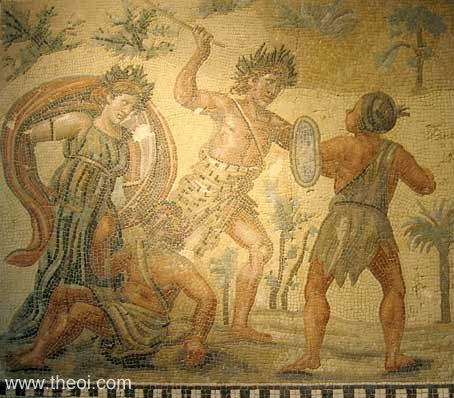
    DIONYSUS & THE INDIANS

    Museo Nazionale Romano, Rome, Italy

    Period: Imperial Roman

    SUMMARY

    Dionysos accomanied by a Mainas Nymphe and the old god Seilenos, battles an Indian warrior.


    GOD OF DRUNKENNESS

    Hesiod, Catalogues of Women Fragment 87 (from Athenaeus 10. 428) (trans. Evelyn-White) (Greek epic C8th or 7th B.C.) :
    "Such gifts as Dionysus gave to men, a joy and a sorrow both. Who ever drinks to fullness, in him wine becomes violent and binds together his hands and feet, his tongue also and his wits with fetters unspeakable: and soft sleep embraces him."

    Athenaeus, Deipnosophistae 2. 38e :
    "From the condition produced by wine they liken Dionysos to a bull of panther, because they who have indulged too freely are prone to violence . . . There are some drinkers who become full of rage like a bull . . . Some, also, become like wild beasts in their desire to fight, whence the likeness to a panther."

    Plato, Laws 665b :
    "[In the ideal city proposed by Plato:] We shall rule that the young man under thirty may take wine in moderation, but that he must entirely abstain from intoxication and heavy drinking. But when a man has reached the age of forty, he may join in the convivial gatherings and invoke Dionysus, above all other gods, inviting his presence at the rite (which is also the recreation) of the elders, which he bestowed on mankind as a medicine potent against the crabbedness of old age, that thereby we men may renew our youth, and that, through forgetfulness of care, the temper of our souls may lose its hardness and become softer and more ductile, even as iron when it has been forged in the fire."
    http://www.theoi.com/Olympios/Dionysos.html


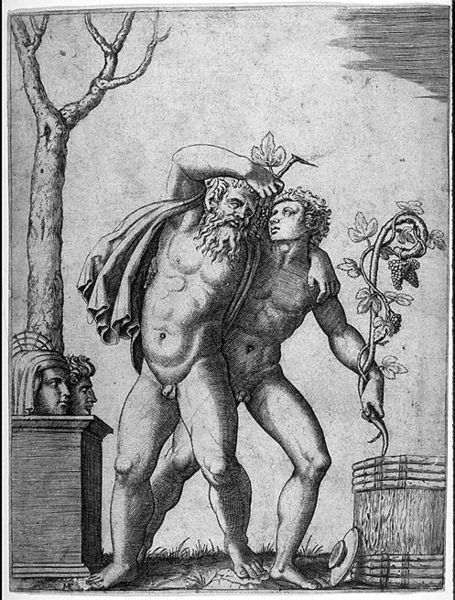
    Marcantonio Raimondi, Bacchic scene (a drunk Dionysos leans over a satyr)

    GOD OF MADNESS, PHANTOMS & HALLUCINATION

    Ovid, Metamorphoses 3. 572 ff (trans. Melville) (Roman epic C1st B.C. to C1st A.D.) :
    "Bacchus [Dionysus] himself, grape-bunches garlanding his brow, brandished a spear that vine-leaves twined, and at his feet fierce spotted panthers lay, tigers and lynxes too, in phantom forms."

    GOD OF CROSS-DRESSING & EFFEMINACY

    Euripides, Bacchae 350 ff (trans. Buckley) (Greek tragedy C5th B.C.) :
    "[Pentheus:] ‘This effeminate stranger [Dionysus].’"

    Nonnus, Dionysiaca 14. 143 ff (trans. Rouse) (Greek epic C5th A.D.) :
    "[The infant] Dionysus was hidden from every eye . . . a clever babe. He would mimic a newborn kid; hiding in the fold . . . Or he would show himself like a young girl in saffron robes and take on the feigned shape of a woman; to mislead the mind of spiteful Hera, he moulded his lips to speak in a girlish voice, tied a scented veil on his hair. He put on all a woman's manycoloured garments: fastened a maiden’s vest about his chest and the firm circle of his bosom, and fitted a purple girdle over his hips like a band of maidenhood." http://www.theoi.com/Olympios/Dionysos.html


    Giovanni Francesco Romanelli, Dionysus


    Dionysus, Archaeological Museum, Athens - Photo by Giovanni Dall'Orto


    Dionysus (detail) Archaeological Museum, Athens - Photo by Giovanni Dall'Orto


    Sebastiano Ricci, Bacchus und Ariadne


    Louis Le Nain, Dionysus and Ariadne

    GOD OF REINCARNATION & THE AFTERLIFE

    Herodotus, Histories 2. 123 (trans. Godley) (Greek historian C5th B.C.) :
    "The Egyptians say that Demeter [Isis] and Dionysus [Osiris] are the rulers of the lower world. The Egyptians were the first who maintained the following doctrine, too, that the human soul is immortal, and at the death of the body enters into some other living thing then coming to birth; and after passing through all creatures of land, sea, and air, it enters once more into a human body at birth, a cycle which it completes in three thousand years. There are Greeks who have used this doctrine [the Orphics], some earlier and some later, as if it were their own; I know their names, but do not record them."
    http://www.theoi.com/Olympios/Dionysos.html
    In the earliest times the Graces, or Charites, were the companions of Dionysus (Pind.Ol. xiii. 20; Plut. Quaest. Gr. 36; Apollon. Rhod. iv. 424), and at Olympia he and the Charites had an altar in common. (Schol. ad Pind. Ol. v. 10 ; Paus. v. 14 in fin.) This circumstance is of great interest, and points out the great change which took place in the course of time in the mode of his worship, for afterwards we find him accompanied in his expeditions and travels by Bacchantic women. called Lenae, Maenad, Thyiades, Mimallones, Clodones, Bassarae or Bassarides, all of whom are represented in works of art as raging with madness or enthusiasm, in vehement motions, their heads thrown backwards, with disheveled hair, and carrying in their hands thyrsus-staffs (entwined with ivy, and headed with pine-cones), cymbals, swords, or serpents. Sileni, Pans, satyrs, centaurs, and other beings of a like kind, are also the constant companions of the god. (Strab. x. p. 468; Diod. iv. 4. &c.; Catull. 64. 258 ; Athen i. p. 33; Paus. i. 2. § 7.)
    http://www.theoi.com/Olympios/Dionysos.html


    Roman relief showing a dancing maenad holding a thyrsus.
    Date between 120 and 140 AD


    Jean-Simon Berthélemy, Bacchante Playing The Cymbals


    Etty William, Bacchante Playing the Tambourine


    Victor Meirelles, Bacchante


    Giorgio Sommer & Edmond Behles, A Maenad


    Bernhard Rode, Bacchante


    Annibale Carracci, Bacchante
    Last edited by ftil; 10-09-2011 at 07:48 PM.

  12. #102
    Banned
    Join Date
    Jun 2011
    Location
    Where the rain doesn't stop.....
    Posts
    763
    Blog Entries
    1

    Dinysus

    DIONYSUS IDENTIFIED WITH FOREIGN GODS

    Dionysus was identified with the Thraco-Phrygian god Sabazios, Egyptian Osiris, Phoenician Tammuz and the Roman god Liber, amongst others.

    Sabazios is the nomadic horseman and sky father god of the Phrygians and Thracians. In Indo-European languages, such as Phrygian, the -zios element in his name derives from dyeus, the common precursor of Latin deus ('god') and Greek Zeus. Though the Greeks interpreted Phrygian Sabazios with both Zeus and Dionysus, representations of him, even into Roman times, show him always on horseback, as a nomadic horseman god, wielding his characteristic staff of power.
    http://en.wikipedia.org/wiki/Sabazios
    SABAZIOS (THRACO-PHRYGIAN GOD)

    Herodotus, Histories 5. 7 (trans. Godley) (Greek historian C5th B.C.) :
    "They [the Thrakians] worship no gods but Ares, Dionysus [Sabazios], and Artemis [Bendis]. Their princes, however, unlike the rest of their countrymen, worship Hermes [Zalmoxis] above all gods and swear only by him, claiming him for their ancestor."

    Cicero, De Natura Deorum 3. 21- 23 (trans. Rackham) (Roman rhetorician C1st B.C.) :
    "The [god identified with Dionysus] father of the third [Phrygian Sabazios] is Cabirus; it is stated that he was king over Asia, and the Sabazia were instituted in his honor. The fourth [the Thraco-Orphic god Sabazios] is the son of Jupiter [Thrakian sky-god] and Luna [Bendis]; the Orphic rites are believed to be celebrated in his honor."
    http://www.theoi.com/Olympios/Dionysos.html


    Thracian/Phrygian Sabazios

    It seems likely that the migrating Phrygians brought Sabazios with them when they settled in Anatolia (ca. 1200 BC?) and that the god's origins are to be looked for in Macedonia and western Thrace. The Macedonians were noted horseman, horse-breeders and horse-worshippers into the time of Philip II.

    Transformation to Sabazios

    The naturally syncretic approach of Greek religion blurred distinctions. Later Greek writers, like Strabo, 1st century AD, linked Sabazios with Zagreos, among Phrygian ministers and attendants of the sacred rites of Rhea and Dionysus. (Strabo, 10.3.15). Strabo's Sicilian contemporary, Diodorus Siculus, conflates Sabazios with the secret 'second' Dionysus, born of Zeus and Persephone (Diodorus Siculus, 4.4.1). The Clement of Alexandria had been informed that the secret mysteries of Sabazios, as practiced among the Romans, involved a serpent, a chthonic creature unconnected with the mounted skygod of Phrygia: "‘God in the bosom’ is a countersign of the mysteries of Sabazios to the adepts, " Clement reports (Protrepticus, 1, 2, 16). "This is a snake, passed through the bosom of the initiates”.

    Much later, the Greek encyclopedia, Sudas (10th century?), flatly states "Sabazios... is the same as Dionysus. He acquired this form of address from the rite pertaining to him; for the barbarians call the bacchic cry 'sabazein'. Hence some of the Greeks too follow suit and call the cry 'sabasmos'; thereby Dionysus [becomes] Sabazios. They also used to call 'saboi' those places that had been dedicated to him and his Bacchantes
    http://www.mlahanas.de/Greeks/Mythology/Sabazios.html


    Sabazios

    The god was represented on a horseback battling the chthonic serpent or he was often sitting on a throne holding his staff of power.
    His appearance was a majestic one, another time a soft and an effeminate one because a part of his myth and cult was his self-castration, including the god´s annual death and revival. Sabazios was often surrounded by the goddess Cybele or (especially in Greek iconography) by Demeter and Persephone. His cult (similarly, like the one of Cybele or Dionysus) was also accompanied by some musicians and ecstatic dancers who were keeping the small snakes with heads raised up. Sometimes we can even observe a snake twisting near the god´s throne. The chthonic animals (including a horned snake, a frog, a tortoise, a lizard), as well as the triple Hecate, the bust of Mercury and the caduceus, the symbols of the sun and the moon, the zodiac symbols, and even a head of a ram on an altar, as a pine cone and some Greek inscriptions, appeared around the god on some representations. These attributes often decorated the reliefs and small votive hands which are associated with the cult of Sabazios in the Roman sites.
    http://www.anistor.gr/english/enback...nistoriton.pdf


    Bronze hand used in the worship of Sabazios (British Museum). Roman 1st-2nd century CE. Hands decorated with religious symbols were designed to stand in sanctuaries or, like this one, were attached to poles for processional use.


    Early conflict between Sabazios and his followers and the indigenous Mother Goddess of Phrygia (Cybele) is reflected in Homer's brief reference to the youthful feats of Priam, who aided the Phrygians in their battles with Amazons.
    http://www.mlahanas.de/Greeks/Mythology/Sabazios.html


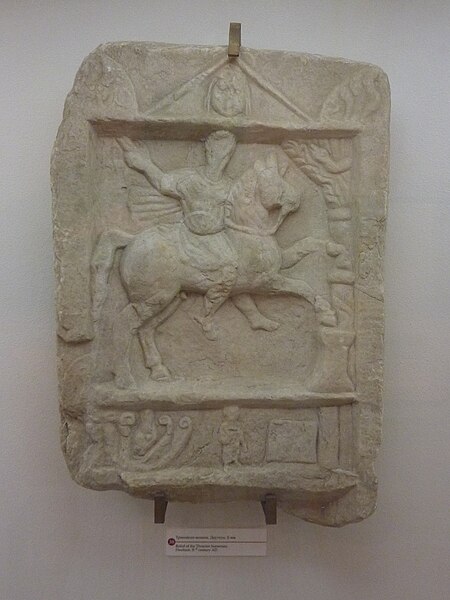
    Thracian horseman is the conventional term for a recurring motif from the iconography of Paleo-Balkanic mythology during the Roman era.
    The tradition is attested from Thrace to Moesia and Scythia Minor, also known as the "Thracian Heros", at Odessos (Varna) attested by a Thracian name as Heros Karabazmos, a god of the underworld usually depicted on funeral statues as a horseman slaying a beast with a spear.

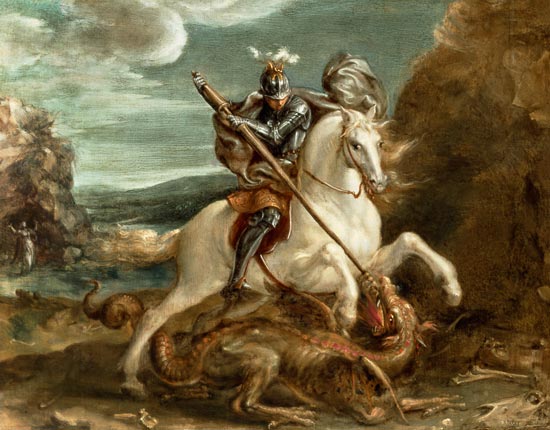
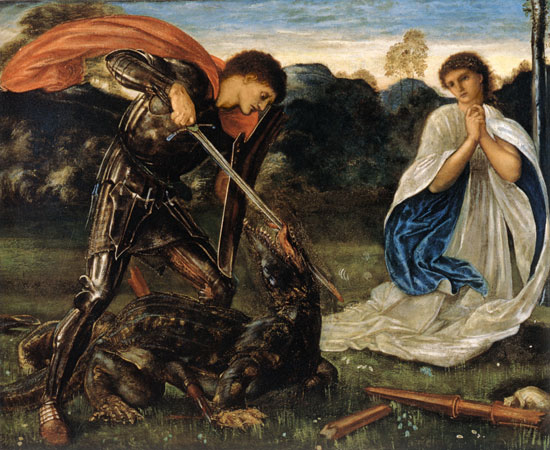
    Sabazios, the Thracian reflex of Indo-European Dyeus, identified with Heros Karabazmos, the "Thracian horseman". He gained a widespread importance especially after the Roman conquest. After Christianity was adopted, the symbolism of Heros continued as representations of Saint George slaying the dragon (compare Uastyrdzhi/Tetri Giorgi in the Caucasus).

    http://www.answers.com/topic/thracian-horseman
    Heros /hero/ – a Thracian god of hunting, fertility, life and death, all-knowing and all-hearing god – all-god.
    The cult of the Thracian horseman was widely spread during the Roman Age, which indicates a renaissance of the Thracian religion at that time – something unknown for the other peoples under Roman domination. Its figure is well known thanks to the numerous historical records from the Roman Age, 1st-4th century AD – young horseman with a spear and shield or with killed game in his hands, followed by a servant, dog and a lion. As an all-knowing and all-hearing god he was portrayed with two or three faces. Due to the mixture of various religions the Thracian horseman was often depicted as a Greek god – Apollo, Asclepius, Zeus, Dionysus, etc., and as the Old Iranian god Mithra, as well as with some of their attributes – lyre (Apollo), single snake staff (Asclepius), impressive beard (Zeus), Phrygian cap (conical cap with its top pulled forward – Mithra), etc. The image of the Thracian horseman served as a base for Christian Saint George.
    http://ancient-treasure.info/ancient...-horseman.html


    "Thracian horseman" relief with Latin inscription at Philippi.


    A "Thracian rider" relied from the collection of the Burgas Archaeological Museum. 2nd century AD


    Romanian National History Museum Thracian horseman


    Thracian horseman in National Historical Museum Bulgaria


    Raffaello Sanzio, Saint George and the Dragon


    Saint George, Gustave Moreau.


    Vitale da Bologna, St. George 's Battle with the Dragon


    Paolo Uccello


    Paolo Uccello


    Hans von Aachen "St. George slaying the dragon"


    St. George and the Dragon, Edward Burne-Jones


    Saint George and the Dragon at Casa Amatller


    St. George in the New Church St. Margaret, Munich-Sendling, early 16th century.


    Liberty Monument (St George slaying the dragon) in Tbilisi

  13. #103
    Maybe YesNo's Avatar
    Join Date
    Oct 2010
    Location
    For Mill, South Carolina
    Posts
    9,532
    Blog Entries
    2
    Quote Originally Posted by ftil View Post
    [B]


    Raffaello Sanzio, Saint George and the Dragon
    I enjoyed all the knight-maiden-dragon images especially the one by Raffaello Sanzio. The trees seem so peaceful and orderly.

    For some reason my idea of how dragons should look have them a bit larger than they are pictured in these images. I guess I am used to people riding them in the movies.

  14. #104
    Banned
    Join Date
    Jun 2011
    Location
    Where the rain doesn't stop.....
    Posts
    763
    Blog Entries
    1

    Zahhāk

    Quote Originally Posted by YesNo View Post
    For some reason my idea of how dragons should look have them a bit larger than they are pictured in these images. I guess I am used to people riding them in the movies.
    Perhaps, the inspiration comes from mythology.


    Zahhāk or Zohhāk an evil figure in Iranian mythology, evident in ancient Iranian folklore as Aži Dahāka, the name by which he also appears in the texts of the Avesta. In Middle Persian he is called Dahāg or Bēvar-Asp, the latter meaning "[he who has] 10,000 horses".
    Aži is the Avestan word for "serpent" or "dragon." It is cognate to the Vedic Sanskrit word ahi, "snake," and without a sinister implication. Azi and Ahi are distantly related to Greek ophis, Latin anguis, Russian and Old Bulgarian уж (grass-snake), all meaning "snake".
    Aži Dahāka is the most significant and long-lasting of the ažis of the Avesta, the earliest religious texts of Zoroastrianism. He is described as a monster with three mouths, six eyes, and three heads (presumably meaning three heads with one mouth and two eyes each), cunning, strong and demonic. But in other respects Aži Dahāka has human qualities, and is never a mere animal.
    http://en.wikipedia.org/wiki/Zahhak


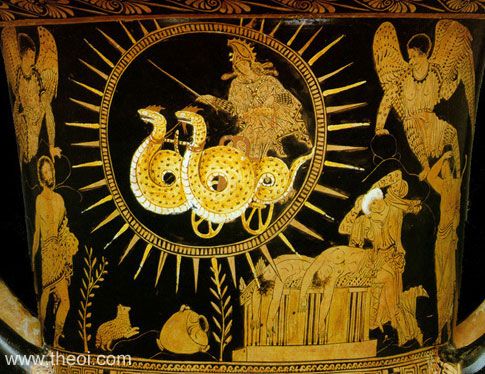
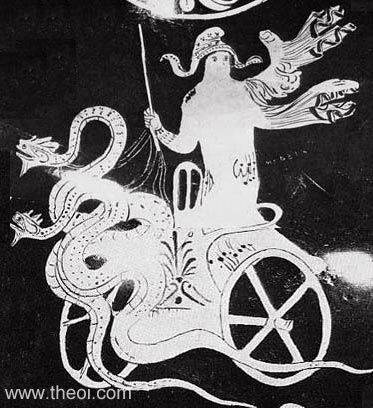
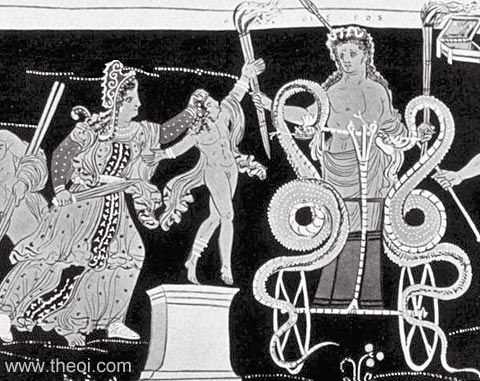
    THE FLIGHT OF MEDEA

    Museum Collection: Cleveland Museum of Art, Cleveland, Ohio, USA
    Date: ca 400 BC
    Period: Late Classical

    SUMMARY

    Medea flees Korinthos in a flying chariot drawn by a pair of serpent Drakones and encircled by the aureole of the sun. Her children lie dead, slain on the altar, to be discovered by their father Jason (left). A pair of winged Poinai (Retributions personified) oversee the entire scene.


    THE FLIGHT OF MEDEA

    Museum Collection: Heraclea Museum, Naples, Italy
    Period: Late Classical

    SUMMARY

    Detail of Medea fleeing from Korinthos in a flying, serpent-drawn chariot. Jason (not shown) grieves for his murdered children.


    THE FLIGHT OF MEDEA

    Museum Collection: Antikensammlungen, Munich, Germany
    Date: ca 330 - 310 BC
    Period: Late Classical / Early Hellenistic

    SUMMARY

    Medea avenges herself on Jason by slaying her own children upon the altar, and destroying Kreon and Glauke by fire in the palace (not shown). Triptolemos arrives on the scene with a flying, serpent-drawn chariot to assist Medea in her escape.

  15. #105
    Maybe YesNo's Avatar
    Join Date
    Oct 2010
    Location
    For Mill, South Carolina
    Posts
    9,532
    Blog Entries
    2
    So they did ride dragons in the good old days. I thought this was something the movies came up with. I wonder if dragons originated in Zoroastrianism.

Similar Threads

  1. Banned books
    By Lara in forum General Literature
    Replies: 250
    Last Post: 12-12-2015, 04:16 PM
  2. Why I believe in God?
    By laidbackperson in forum Religious Texts
    Replies: 938
    Last Post: 11-27-2011, 05:49 PM
  3. The Man with the Blue Guitar
    By Virgil in forum Poems, Poets, and Poetry
    Replies: 50
    Last Post: 07-09-2009, 11:36 PM
  4. The novel
    By Newcomer in forum Jane Eyre
    Replies: 23
    Last Post: 03-06-2009, 09:29 AM
  5. Why do you conceive the Bible is difficult?
    By Deng Xiang in forum Religious Texts
    Replies: 65
    Last Post: 09-12-2008, 09:01 PM

Posting Permissions

  • You may not post new threads
  • You may not post replies
  • You may not post attachments
  • You may not edit your posts
  •