


title
Caturday
by , 04-28-2007 at 04:12 PM (2100 Views)
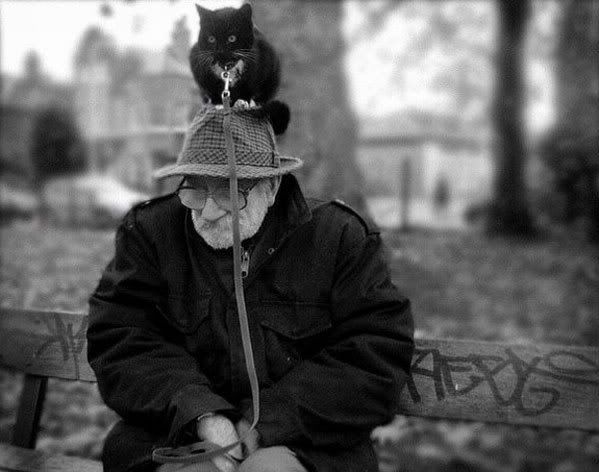
Caturday...time for cat stuff.
Many people characterize cats as 'solitary' animals. However, cats are actually highly social. A primary difference in social behavior between cats and dogs (to which they are often compared) is that cats do not have a social survival strategy, or a 'pack mentality'; however this only means that cats take care of their basic needs on their own (e.g., finding food, defending themselves, etc.). It is not the same thing as being
asocial. Perhaps the best example of how domestic cats are 'naturally' meant to behave is to observe feral domestic cats, which often live in colonies, but in which each individual basically looks after itself.
Living with humans is a symbiotic social adaptation which has developed over thousands of years. The sort of social relationship cats have with their human keepers is hard to map onto more generalized wild cat behavior, but it is certain that the cat thinks of the human differently than it does other cats (i.e., it does not think of itself as human, nor that the human is a cat). This can be seen in the difference in body and vocal language it uses with the human, when compared to how it communicates with other cats in the household, for example. Some have suggested that, psychologically, the human keeper of a cat is a sort of surrogate for the cat's mother, and that adult domestic cats live forever in a kind of suspended kittenhood.
Clicking on the small images will open up a new window with the large version of the image.











 Go to Profile
 Mark as Read


