


A Mirror Floating in Water
The Best of Contemporary Cinema

by , 08-13-2010 at 11:50 PM (5602 Views)
Cinema as it seems has been regarded by some film critics as a lost art, in its prime once but now sold-out to endless Hollywood blockbusters and mindless rom-coms. But this is excessive cynicism for the film art has not died out and in a sense it has even been getting better at what it does, though only in small hidden layers of the film world, with a good deal of the talent coming from non-Hollywood sources. In order to acknowledge some of the best art the cinema has produced in the past 25 years, here is a list of the masterpieces of contemporary cinema:
Coincidently enough, my top two films were made exactly 25 years ago, in 1985.
1. Come and See (1985)- Elem Klimov
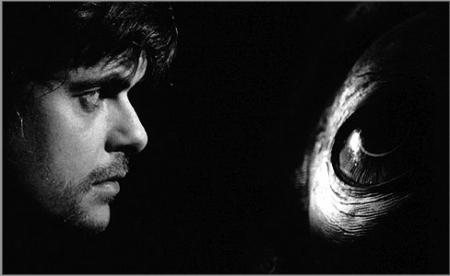
An utterly despairing look at war seen through the eyes of a 14-year old boy in the Russian army, who despite only aging a few weeks in the film by the end looks as if he has lived a lifetime. Along with Apocalypse Now, this is the greatest war film I have ever seen, and undoubtedly the most devastating, making Schindler's List or Saving Private Ryan seem fleetingly optimistic.
Never has war been more terrifyingly depicted and never has there been a more frightening depiction of evil than the village scene near the end. But what makes this movie one of the greatest ever made is that unsentimental but deeply profound final scene in which we discover that there still is a human face buried under absolute evil.
2. Mishima: A Life in Four Chapters (1985) - Paul Schrader
Based on the life of the controversial and charismatic Japanese militant Yukio Mishima, director Paul Schrader (writer of Taxi Driver) gives us one of the most unconventional and greatest biopics ever made. Mishima was clearly mildly crazy, his beliefs even crazier (his lifelong political dedication lied in "restoring" Japan to it traditional empire) and Schrader depicts him with not a hint of pathos; instead he gives us a detached and yet profoundly beautiful insight into the man's thought and life, without moralizing or demoralizing him.
Split up into three interweaving sections; scenes in the present on the final days of Mishima's life, scenes from his life (which are in black-and-white), and three adaptations of his short stories filmed with lush Brechtian theatricality (as seen in the picture above). The films masterful minimalist score by Phillip Glass and elegant cinematography is enough to see this film. But the most fascinating thing above all is observing the man himself with his sado-masochistic obsession with his own death, a theme which dominated his works, beliefs, and the film.
3. Werckmeister Harmonies (2000)- Bela Tarr
I have said quite a lot about Bela Tarr's film, calling it the best film of the past decade, but not enough can truly be said about this enigmatic and dream-like masterwork, and yet words always fail me. Running at 140 minutes and comprising of only 39 languidly paced shots, this is a meditative and hypnotic experience.
But more than just an exercise in style (as with all of Tarr's films) it is an allegory on Hungarian politics, and even more so, an atmospheric environment of coldness, dread and fear, examining the chaotic nature of man in a universe in which God has all but disappeared.
4. The Seventh Continent (1989) - Michael Haneke
The most painful and realistic portrait of suicide ever put on film, this Baudrillian examination of modern consumerist society is based on the true story of an Austrian family (a mother, father and daughter) who all commited suicide in home after systematically destroying everything they owned.
And this is what this movie is about. It is a nihilistic deconstruction of all our capitalist materialist values and ends with a quivering image of the modern man's dream, which is in itself, quite empty.
5. Hoop Dreams (1994) - Steve James
Just as Haneke's film is a ode to death, this uniquely American documentary is an ode to life and the American dream. Few films, fiction or non-fiction ever are able to display the wonderful rhythms, surprises, failures and character of life itself, this four-hour documentary does just that. This film has some of the greatest characters in recent cinema, and they are all real!
Basketball is the main subject of this documentary, as two African-American high school students try to make it to the NBA. Beneath the surface is a remarkable study about ambition, competition, race and class in our society.*
*Final sentence taken from Ebert's review.
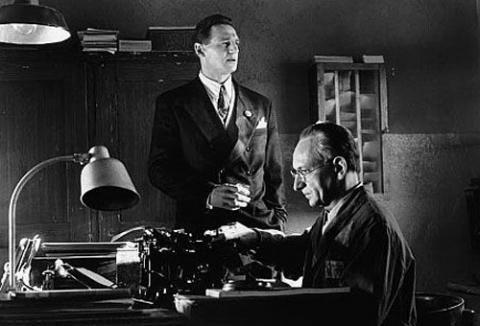
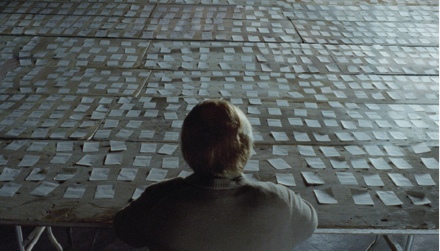
6. Schindler's List (1993)- Steven Speilberg
7. Pulp Fiction (1994) - Quentin Tarantino
8. Tarnation (2003) - Jonathan Caouette
9. Synecdoche, New York (2008) - Charlie Kauffman
10. Do the Right Thing (1989) - Spike Lee
11. The Thin Red Line - Terrence Malick
12. Mulholland Drive (2002) - David Lynch
13. Crumb (1995)- Terry Zwigoff
14. Fargo(1996) - Joel and Ethan Coen
15. Goodfellas (1990) - Martin Scorsese
16. In the Mood for Love (2000) - Wong Kar-Wai
17. Drugstore Cowboy (1989) - Gus van Sant
18. The Darjeeling Limited (2007) - Wes Anderson
19. City of God (2002) - Fernando Meirelles
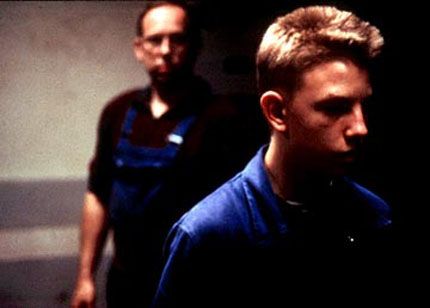
20. Le Fils (2002) - Jean-Pierre and Luc Dardenne
EDIT: This list was edited.









 Go to Profile
 Mark as Read


