


Stlukesguild
More Baroque Listening: Biber and Vivaldi
by , 06-25-2010 at 03:15 AM (4915 Views)
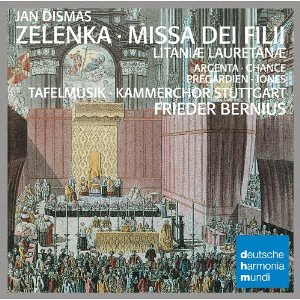
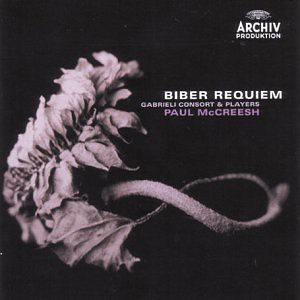
Well, today I spent fully getting back into my current obsession with classical music. Two new discs arrived in the mail:
Zelenka I have already discussed above... but I must say this latest disc is quite marvelous... and I am still impressed with the muscular, driving rhythm of Zelenka's music. Heinrich Ignaz Franz von Biber was another marvelous German composer from the time of J.S. Bach. Like Bach and Zelenka he composed a share of marvelous choral works for the church...
http://www.youtube.com/watch?v=4hTsx...eature=related
http://www.youtube.com/watch?v=2oFjx...eature=related
Biber was born in Wartenberg, Bohemia (now Stráž pod Ralskem, Czech Republic).
Little is known about his early education, other than that he may have studied at a Jesuit Gymnasium in Bohemia. Before 1668 Biber worked at the court of Prince Johann Seyfried von Eggenberg in Graz, and then was employed by the Bishop of Olomouc, Karl II von Liechtenstein-Kastelkorn, in Kroměříž. Biber enjoyed a good reputation, and his violin playing skills were very highly regarded.
In summer 1670 Karl II sent Biber to Absam, near Innsbruck, to negotiate with the celebrated instrument maker Jacob Stainer for the purchase of new instruments for the Kapelle. Biber never reached Stainer, however, and instead entered the employ of the Archbishop of Salzburg, Maximilian Gandolph von Kuenburg. Because Karl and Maximilian were friends, Biber's former employer refrained from taking any action; he was, however, very hurt by the composer's decision, and waited until 1676 to officially release him. Biber remained in Salzburg for the rest of his life. His musical and social careers flourished: he started publishing his music in 1676, performed before the Emperor (and was rewarded by him) in 1677, became deputy Kapellmeister at Salzburg in 1679 and Kapellmeister in 1684. In 1690 Biber was raised to nobility by the Emperor, with the title of Biber von Bibern. Finally, the new Archbishop of Salzburg, Johann Ernst, Count Thun, appointed Biber lord high steward, the highest social rank Biber would attain.
http://en.wikipedia.org/wiki/Heinrich_Ignaz_Biber
Like Bach, the masterful organist and harpsichordist, and Zelenka and the bass, Biber's mastery of the violin certainly influenced his compositions. For all the pomp and spectacle of the great choral works Biber composed, he is even more known for his works for violin, including the masterful Mystery or Rosary Sonatas, which tell the narrative of Christ's birth and the Passion. A unique element in this music is the technique called scordatura, deliberate mis-tuning of the violin strings for unusual effects including dissonance or near-dissonance. These sonatas are quite intense in nature, avoiding beautiful melodies and typically baroque ornamentation most of the time. Biber, rather, has a dramatic story to tell, which he does with remarkably imaginative effects:
http://www.youtube.com/watch?v=KMC8mP66BXI
http://www.youtube.com/watch?v=vrpCEiug8Ks
http://www.youtube.com/watch?v=SPj5fyQjCC0
http://www.youtube.com/watch?v=ZCSEEvEm3uc
The second composer I have listening to a great deal today has been Antonio Vivaldi:
Before the Historically Informed Performance movement delved deeper into Baroque music, Vivaldi was commonly seen as the third of the great Baroque composers along side of J.S. Bach and Handel... in spite of the fact that his known oeuvre was limited to little more than the Four Seasons and a few other concertos.
Vivaldi, however, has long had his detractors. The Four Seasons is overplayed to the point of irritation... in spite of it being a truly masterful work. Stravinsky disparagingly suggested that Vivaldi had not written 100s of concertos, but rather the same concerto 100s of times. Of course a cursory hearing of the whole of nearly any musical genre: jazz, bluegrass, Romanticism, opera, and not merely the Baroque or Vivaldi may lead one to the assumption that it all sounds alike.But the further one delves into the music, the more breadth, variety and originality one discovers.
Such has been true of the appreciation of Vivaldi as the result of relatively recent discoveries of vast previously unknown scores of Vivaldi's music... especially opera and choral works. Vivaldi's vocal works are among his most spectacular creations... among the greatest of all Baroque music. The Naive Record label has been releasing an entire series of simply stunning recordings of Vivaldi's vast repertoire with a focus especially on the previously unknown works. One of the most splendid recordings has been that of the Vespri per l'Assunzione di Maria Vergine (or the Vespers for the Assumption of the Virgin Mary):
Monteverdi, earlier, had composed a famous Vespers of 1610. Vivaldi was employed in the same city (Venice) and was known to have been commissioned to compose several Vespers... almost certainly including one for the same great cathedral (San Marco) in which Monteverdi's choral masterwork had been performed. Unfortunately, only separate elements of various whole Vespers have survived in Vivaldi's manuscripts. These, parts of various wholes, however, are inclusive enough for musicologists to construct a single whole Vespers... wholly of Vivaldi's composing. This reconstruction includes some of Vivaldi's most sublime music:
http://www.youtube.com/watch?v=Ep0ib8EIHnw
http://www.youtube.com/watch?v=5HaBQ...eature=related
The Psalm 126, or Nisi Dominus contains one of Vivaldi's most haunting creations, the unearthly Cum dederit... heard here in two equally beautiful... and yet very different performances... the first by the Polish conductor and counter-tenor, Jakub Burzyński:
http://www.youtube.com/watch?v=ceazCccMvzI
The second version... perhaps less driven and earthy... but even more frighteningly "unearthly" is by the fast rising superstar counter-tenor, Philippe Jaroussky:
http://www.youtube.com/watch?v=vVgItFV0kBY
In fact... one may here listen to the whole of the Nisi Dominus:
http://www.youtube.com/watch?v=GqQJg...eature=related
http://www.youtube.com/watch?v=oyhbQ...eature=related
http://www.youtube.com/watch?v=vVgIt...eature=related
http://www.youtube.com/watch?v=fJ7IB...eature=related



 Go to Profile
 Mark as Read


