 Subscribe for ad free access & additional features for teachers. Authors: 267, Books: 3,607, Poems & Short Stories: 4,435, Forum Members: 71,154, Forum Posts: 1,238,602, Quizzes: 344
Introduction
The Right Hon. Sir Wilfrid Laurier G.C.M.G.
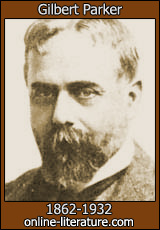
Dear Sir Wilfrid Laurier, Since I first began to write these tales in 1892, I have had it in my mind to dedicate to you the "bundle of life" when it should be complete. It seemed to me--and it seems so still--that to put your name upon the covering of my parcel, as one should say, "In care of," when it went forth, was to secure its safe and considerate delivery to that public of the Empire which is so much in your debt.
But with other feelings also do I dedicate this volume to yourself. For many years your name has stood for a high and noble compromise between the temperaments and the intellectual and social habits of two races; and I am not singular in thinking that you have done more than most other men to make the English and French of the Dominion understand each other better. There are somewhat awkward limits to true understanding as yet, but that sympathetic service which you render to both peoples, with a conscientious striving for impartiality, tempers even the wind of party warfare to the shorn lamb of political opposition.
In a sincere sympathy with French life and character, as exhibited in the democratic yet monarchical province of Quebec, or Lower Canada (as, historically, I still love to think of it), moved by friendly observation, and seeking to be truthful and impartial, I have made this book and others dealing with the life of the proud province, which a century and a half of English governance has not Anglicised. This series of more or less connected stories, however, has been the most cherished of all my labours, covering, as it has done, so many years, and being the accepted of my anxious judgment out of a much larger gathering, so many numbers of which are retired to the seclusion of copyright, while reserved from publication. In passing, I need hardly say that the "Pontiac" of this book is an imaginary place, and has no association with the real Pontiac of the Province.
I had meant to call the volume, "Born with a Golden Spoon," a title stolen from the old phrase, "Born with a golden spoon in the mouth"; but at the last moment I have given the book the name of the tale which is, chronologically, the climax of the series, and the end of my narratives of French Canadian life and character. I had chosen the former title because of an inherent meaning in it relation to my subject. A man born in the purple--in comfort wealth, and secure estate--is said to have the golden spoon in his mouth. In the eyes of the world, however, the phrase has a some what ironical suggestiveness, and to have luxury, wealth, and place as a birthright is not thought to be the most fortunate incident of mortality. My application of the phrase is, therefore, different.
I have, as you know, travelled far and wide during the past seventeen years, and though I have seen people as frugal and industrious as the French Canadians, I have never seen frugality and industry associated with so much domestic virtue, so much education and intelligence, and so deep and simple a religious life; nor have I ever seen a priesthood at once so devoted and high-minded in all the concerns the home life of their people, as in French Canada. A land without poverty and yet without riches, French Canada stands alone, too well educated to have a peasantry, too poor to have an aristocracy; as though in her the ancient prayer had been answered "Give me neither poverty nor riches, but feed me with food convenient for me." And it is of the habitant of Quebec, before a men else, I should say, "Born with the golden spoon in his mouth."
To you I come with this book, which contains the first thing I ever wrote out of the life of the Province so dear to you, and the last things also that I shall ever write about it. I beg you to receive it as the loving recreation of one who sympathises with the people of who you come, and honours their virtues, and who has no fear for the unity, and no doubt as to the splendid future, of the nation, whose fibre is got of the two great civilising races of Europe.
Lastly, you will know with what admiration and regard I place your name on the fore page of my book, and greet in you the statesman, the litterateur, and the personal friend.
Believe me, Dear Sir Wilfrid Laurier, Yours very sincerely, GILBERT PARKER.
20 CARLTON HOUSE TERRACE, LONDON, S. W., 14th August, 1900.
INTRODUCTION
The story with which this book opens, 'The Lane That Had No Turning', gives the title to a collection which has a large share in whatever importance my work may possess. Cotemporaneous with the Pierre series, which deal with the Far West and the Far North, I began in the 'Illustrated London News', at the request of the then editor, Mr. Clement K. Shorter, a series of French Canadian sketches of which the first was 'The Tragic Comedy of Annette'. It was followed by 'The Marriage of the Miller, The House with the Tall Porch, The Absurd Romance of P'tite Louison, and The Woodsman's Story of the Great White Chief'. They were begun and finished in the autumn of 1892 in lodgings which I had taken on Hampstead Heath. Each--for they were all very short--was written at a sitting, and all had their origin in true stories which had been told me in the heart of Quebec itself. They were all beautifully illustrated in the Illustrated London News, and in their almost monosyllabic narrative, and their almost domestic simplicity, they were in marked contrast to the more strenuous episodes of the Pierre series. They were indeed in keeping with the happily simple and uncomplicated life of French Canada as I knew it then; and I had perhaps greater joy in writing them and the purely French Canadian stories that followed them, such as 'Parpon the Dwarf, A Worker in Stone, The Little Bell of Honour, and The Prisoner', than in almost anything else I have written, except perhaps 'The Right of Way and Valmond', so far as Canada is concerned.
I think the book has harmony, although the first story in it covers eighty-two pages, while some of the others, like 'The Marriage of the Miller', are less than four pages in length. At the end also there are nine fantasies or stories which I called 'Parables of Provinces'. All of these, I think, possessed the spirit of French Canada, though all are more or less mystical in nature. They have nothing of the simple realism of 'The Tragic Comedy of Annette', and the earlier series. These nine stories could not be called popular, and they were the only stories I have ever written which did not have an immediate welcome from the editors to whom they were sent. In the United States I offered them to 'Harper's Magazine', but the editor, Henry M. Alden, while, as I know, caring for them personally, still hesitated to publish them. He thought them too symbolic for the every-day reader. He had been offered four of them at once because I declined to dispose of them separately, though the editor of another magazine was willing to publish two of them. Messrs. Stone & Kimball, however, who had plenty of fearlessness where literature was concerned, immediately bought the series for The Chap Book, long since dead, and they were published in that wonderful little short-lived magazine, which contained some things of permanent value to literature. They published four of the series, namely: 'The Golden Pipes, The Guardian of the Fire, By that Place Called Peradventure, The Singing of the Bees, and The Tent of the Purple Mat'. In England, because I would not separate the first five, and publish them individually, two or three of the editors who were taking the Pierre series and other stories appearing in this volume would not publish them. They, also, were frightened by the mystery and allusiveness of the tales, and had an apprehension that they would not be popular.
Perhaps they were right. They were all fantasies, but I do not wish them other than they are. One has to write according to the impulse that seizes one and after the fashion of one's own mind. This at least can be said of all my books, that not a page of them has ever been written to order, and there is not a story published in all the pages bearing my name which does not represent one or two other stories rejected by myself. The art of rejection is the hardest art which an author has to learn; but I have never had a doubt as to my being justified in publishing these little symbolic things.
Eventually the whole series was published in England. W. E. Henley gave 'There Was a Little City' a home in 'The New Review', and expressed himself as happy in having it. 'The Forge in the Valley' was published by Sir Wemyss Reid in the weekly paper called 'The Speaker', now known as 'The Nation', in which 'Sir Arthur Quiller-Couch' made his name and helped the fame of others. 'There Was a Little City' was published in 'The Chap Book' in the United States, but 'The Forge in the Valley' had (I think) no American public until it appeared within the pages of 'The Lane That Had No Turning'. The rest of the series were published in the 'English Illustrated Magazine', which was such a good friend to my work at the start. As was perhaps natural, there was some criticism, but very little, in French Canada itself, upon the stories in this volume. It soon died away, however, and almost as I write these words there has come to me an appreciation which I value as much as anything that has befallen me in my career, and that is, the degree of Doctor of Letters from the French Catholic University of Laval at Quebec. It is the seal of French Canada upon the work which I have tried to do for her and for the whole Dominion.
Volume 1
Volume 2
Volume 3
Volume 4
| Art of Worldly Wisdom Daily In the 1600s, Balthasar Gracian, a jesuit priest wrote 300 aphorisms on living life called "The Art of Worldly Wisdom." Join our newsletter below and read them all, one at a time. |
Sonnet-a-Day Newsletter Shakespeare wrote over 150 sonnets! Join our Sonnet-A-Day Newsletter and read them all, one at a time. |
