Sherlock Holmes
Yossarian (Catch 22)
Olafur Karason (World Light, Halldor Laxness)
Grendel (Grendel, John Gardner)
the unnamed narrator of Hunger by Knut Hamson

Sherlock Holmes
Yossarian (Catch 22)
Olafur Karason (World Light, Halldor Laxness)
Grendel (Grendel, John Gardner)
the unnamed narrator of Hunger by Knut Hamson
Want to know what I think about books? Check out https://biisbooks.wordpress.com/

I don't know which you are - theist or atheist. Your reason for citing it, in fact, is the second I suggested.Originally Posted by DanielBenoit

I tend to agree with you that the works have great literary importance. And I'm all for the rhetorical. Which is why I gave the 'why not' in my post.
I'm simply saying there's an argument for taking those books out of the game. I can't enforce that - and I didn't expect everyone to agree with me. But I think it would be a good idea.
Raskolnikov in Crime and Punishment (Dostoevsky).
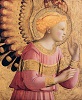
I would say the Hebrew Bible's Yahweh because he lies at the center of the three major religions in the West and has inspired controversy, literature, countless other works and re-workings, not least of all in the figures of Allah and Christ, who are pretty much reactions to Yahweh and the Hebrew Bible.
Yes, I was thinking of Yahweh/God as well after posting my suggestion of Christ or Moses. Like Jesus, Hamlet, Don Quixote, Satan, and a few other characters he lives outside of the original text as well: in Dante's Comedia, in Milton's Paradise Lost, in Blake's poems, on the Sistine, in Bach's cantatas, in Bob Dylan's Highway 61, etc... Like few other characters he also lives in other forms: as the unknown forces in Kafka, as the great whale (?) in Moby Dick, etc... Most of the other suggestions are nominations of characters that are but personally memorable, which is well and fine. There are but a few who tower over the whole of literature... and the arts as a whole.
Beware of the man with just one book. -Ovid
The man who doesn't read good books has no advantage over the man who can't read them.- Mark Twain
My Blog: Of Delicious Recoil
http://stlukesguild.tumblr.com/
obviously, mythological characters such as Christ, Buddah, J (or Y), Zeus, Ulysses, Hercules, Prometheus, Satan have a strong advantage of all others. They have millions of writers, they can have a thousand faces, the can be silly, deepth, simple, etc.
I do not give the throne to the bible so easily (even because greek mythology goes to the bible once or while), but it is easy... Quixote and Sancho are the only who go near the myths...
it's inevitable that theists will cite their religious text - which, after all, they believe to be more important and more crammed to the gills with meaning than all other books put together. And atheists will tend to cite those texts in order to make their own point, which usually comes down to the view that they're not more important and more crammed to the gills with meaning than all other books, but simply part of the broad literary canon.
The Bible is indeed a unique book in that it is indeed considered a sacred texts by a great many. I don't see this as any reason to take it out of literary discussion or automatically include it. While many theists or believers may indeed take the position that the Bible is a book above all books, I would presume that just as many would be adverse to discussing the Bible as literature. However, I would guess that it is because the Biblical texts are such a central part of Western culture that many avoid them or don't even think to include them when talking of "desert island books", the "greatest stories", the "greatest poetry", etc... It is interesting just how many readers express such shock and surprise when they truly do sit down and read the Bible as literature for the very reason that it often is quite different from what they thought it was.
The Bible, I would add, is also unique in that it is not a single book or text but rather a collection or compendium of often brilliant texts (histories, fictional narratives, lyrical poetry, aphorisms, visionary poetry) compiled by a single culture the Hebrew people (two cultures if we count the "New Testament" as a compendium of texts accepted as canonical by the early Christian Church)... As a result, there are but few books that can possibly rival the Bible... and many of them are compendiums or collections in themselves: the Mahabharata, the Arabian Nights, the collected works of Shakespeare, the great classical compendiums of Chinese and Japanese poetry etc... Of course if were to compile a similar collection of history, fictional narrative, and poetry (The collected plays of Aeschylus, Sophocles, and Euripides, Thucydides and Herodotus' histories, Plato's Republic, the poems of Sappho, Theocritus, etc... and the Epics of Homer) we might start to really rival the Bible... and we might also recognize the work for what it is.
Beware of the man with just one book. -Ovid
The man who doesn't read good books has no advantage over the man who can't read them.- Mark Twain
My Blog: Of Delicious Recoil
http://stlukesguild.tumblr.com/
I agree with you. Or you agree with me. I'm not arguing about the merit of the Bible as a part of Western literary heritage.
I'm simply saying that citing it in threads about general literature tends to divert the thread. As we are so neatly demonstrating.
It could be argued that many great works are essentially a rewriting of Judeo-Christian themes, even if not consciously. Hamlet is, after all, a martyr to a moral corrosion of state power, if anyone has seen the recent production with Patrick Stewart as Claudius. The topic question intrigues, but remains nearly impossible to answer, because most of us would frame it against the backdrop of Western tradition.
I'd select Oedipus. He represents not only the first tragic figure, but represents the need, in our culture, for a hero, whether fallen our not. We tie our fate in the west to the emperor.
Last edited by Jozanny; 01-13-2011 at 05:12 AM.

While he's not my personal favorite, I would say that Achilles is the western hero archetype par excellence.
"Post-historic man will be allergic to science for AT LEAST a hundred years!" -Dominic Matei
Not as Brad Pitt portrays him. I recently saw Troy and it was one of the best bad over the top melodramas I've seen out of Hollywood, in terms of contemporary classicism.

The character I remember the most is probably Humbert Humbert, as his full psycological portrait is painted on the pages which bring him to life. Lolita as well, but less so.


For me, Falstaff will always be a personal favorite. As will Leopold Bloom.
Also, I think Odysseus beats out Achilles as the Western hero par excellence, almost no secular character has been represented by so many different authors, from Homer to Dante to Joyce (in the character of Bloom). The figure is almost a secular Christ in that he is used to reflect aspects of the author, for Odysseus has been presented as a man of action to a man of necessity, from a Reinissance man to a political Machiavellian, from the ordinary hero to the mythical legend. He somehow encompasses a certain major part of our Western mythology (in a very general sense) and may be the most memorable secular character alongside those of Shakespeare and Cervantes.
Last edited by DanielBenoit; 01-14-2011 at 04:15 AM.
The Moments of Dominion
That happen on the Soul
And leave it with a Discontent
Too exquisite — to tell —
-Emily Dickinson
http://www.youtube.com/watch?v=TVW8GCnr9-I
http://www.youtube.com/watch?v=ckGIvr6WVw4
Huck Finn
Most characters in David Copperfield
Protagonist in Notes from Underground
Raskolnikov
Don Quixote
Protagonist in The Tell-Tale Heart (Edgar Allan Poe)
Roderick Usher in The Fall of the House of Usher (Edgar Allan Poe)
"Don't need a gun to blow your mind"
Or it could be argued that the same themes tend to crop up in all story-telling.
I have no problem discounting The Bible and its leading characters as contenders here. Whatever they did, or represent, its such a boring read, I struggled to finish it.
Of the many suggestions above, Sherlock Holmes seems to be the most memorable, with his iconic deerstalker and pipe.
 Posting Permissions

 Reply With Quote