Most of the authors mentioned were not especially intellectual; they stayed within the repetitive mold. It is my opinion that Jonathan Swift, G.C. Edmondosn, Umberto Eco, and maybe James Joyce were the most intellectual ones that I can think of.


Most of the authors mentioned were not especially intellectual; they stayed within the repetitive mold. It is my opinion that Jonathan Swift, G.C. Edmondosn, Umberto Eco, and maybe James Joyce were the most intellectual ones that I can think of.
Last edited by PeterL; 02-04-2013 at 09:55 AM.
~
W a r n i n g
Please do not personalise your comments.
Off-topic/inflammatory posts have been and will be removed without further notice.
~
~
"It is not that I am mad; it is only that my head is different from yours.”
~
I thank you.Originally Posted by Scheherazade

Nabokov? Unless we're going to go for things like Sartre and Camus.
Plato. Someone, I forget who said that most European philosophy is merely a footnote to Plato. I think Iris Murdoch should be on the list.

I think Murdoch is a fine mention as far as my understanding of the question is concerned.
You're thinking of Alfred Whitehead.

Apparently Jeeves from the P.G. Wodehouse books enjoyed reading Spinoza.
According to Aldous Huxley, D.H. Lawrence once said that Balzac was 'a gigantic dwarf', and in a sense the same is true of Dickens.
Charles Dickens, by George Orwell
Aldous Huxley was a dazzling polymath who knew his science as thoroughly as his literature (unusual for great writers). He got a first from Oxford in Literature and yet could have been a scientist (like his brother and grandfather, both very distinguished biologists- his grandfather was Darwin's chief defender and friend).
C S Lewis could read Greek, Latin, French, Italian, Old Norse and Anglo-Saxon by his mid 20s and was even able to read works written in Provencal!!
Ian McEwan can be quite impressive as well.
Despite C. S. Lewis, I would add Tolkien too.
Any animal has an intellect.
Why on earth would you want to do that?
Tolkien was an intellectual.
Most of the early twentieth-century modernists were intellectuals with the exception of Faulkner, Kafka, and Proust, and yeah, maybe Henry Miller, as well, although I don't know if that last one can be cleanly pigeon-holed within the category of literary modernism. I don't think Nabokov was an intellectual. He was more of an aesthete, although the two can perhaps overlap at times.
Last edited by mande2013; 06-11-2013 at 04:12 PM.
I'm not sure how you can name the likes of Proust or Faulkner as not intellectual. Certainly they're not the epitome, but I could think of several others (Kerouac, Hemingway, Fitzgerald, etc.) before I'd list them.
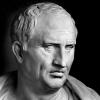
Plato
Nothing resting in its own completeness
Can have worth or beauty; but alone
Because it leads and tends to farther sweetness,
Fuller, higher, deeper than its own.
 Posting Permissions

 Reply With Quote